

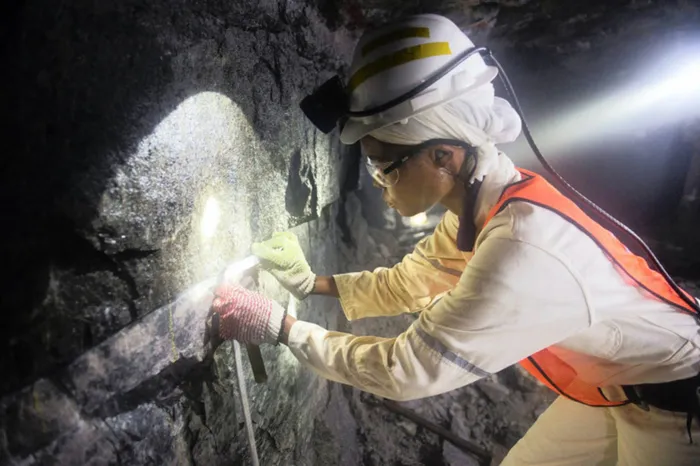
Impala Platinum's mining operations in Rustenburg. File picture: Supplied Impala Platinum's mining operations in Rustenburg. File picture: Supplied
Johannesburg - Ratings agency Moody’s says the recent wage deals between SA’s largest platinum union and the three biggest miners is credit positive.
However, this comes as both rival unions, the National Union of Mineworkers (NUM) and the United Association of South Africa (Uasa) are taking Anglo American Platinum (Amplats) and the Association of Mineworkers and Construction Union (Amcu) to the Labour Court, questioning the validity of a three-year wage agreement signed last month.
Amcu is the largest union in the platinum sector and seemingly came out of nowhere after challenging the NUM’s supremacy at Lonmin’s Marikana mine 4 years ago. The so-called “Marikana massacre” left 44 people dead and at least 78 injured, and made national headlines.
In a note, Moody’s - one of the big 3 credit ratings agencies - says the recent wage deals with Impala Platinum, Amplats and Lonmin are credit positive both for the country’s sovereign rating and mining companies.
Read also: Amplats, Amcu taken to the Labour Court
Moody’s has rated SA two levels above junk, while Fitch and S&P have the country a notch above junk. The country’s ratings will be re-assessed next month.
The ratings agency says the wage deal is credit positive because it avoids a strike and the loss of platinum production, which would have eroded mining companies’ profits and the government’s tax collection.
“Weak platinum prices are challenging mining companies, while South Africa’s tax revenue collection is at risk of falling short of budget projections amid fragile real gross domestic product growth that is marginally above zero this year and the gradual pick-up that we project for 2017 remains fragile.”
Read also: Platinum producers ink wage deals with AMCU
However, the NUM and Uasa have accused Amplats and Amcu of an unlawful, underhanded and secret salary agreement which comprised a R1 000 monthly increment for the lowest paid employees.
The unions argue the wage deal flies in the face of the rights that both of them enjoy as equal partners in terms of the Employment Relations Agreement (ERA) which bound the four parties.
Moody’s says a wage deal in the sector will bring stability, because a 2014 strike cost SA about R24 billion, or 1 percent of GDP, due to lost production.
“Mining’s importance to South Africa’s GDP is underrepresented: although the sector constitutes around 8.6 percent of the sovereign’s GDP, many sectors directly and indirectly rely on it for their revenues.”
A wage settlement will also likely benefit business and consumer sentiment, which Moody’s notes have not bounced back from 2009 lows.
IOL