

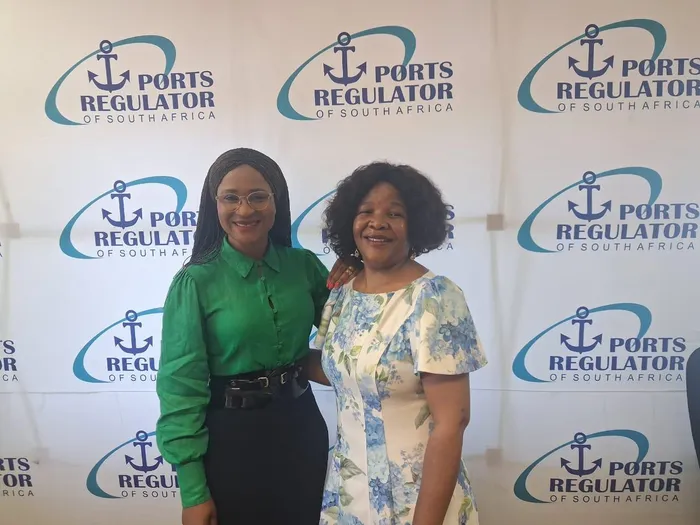
Industry experts have given mixed reactions following the Ports Regulator of South Africa's approval of a lower-than-requested tariff increase on Monday for the National Ports Authority (NPA), granting an average rise of 7.57% for the 2026/27 financial year—below the 9.61% originally proposed by the Authority.
Image: Yogashen Pillay
Industry experts have delivered mixed views after the Ports Regulator of South Africa approved a lower-than-requested tariff increase for the National Ports Authority (NPA), granting an average rise of 7.57% for the 2026/27 financial year, below the 9.61% initially proposed by the Authority.
Ports Regulator CEO Mukondeleli Johanna Mulaudzi said the NPA submitted its tariff application on 1 August 2025 in terms of Section 72 of the National Ports Act, seeking allowable revenue of R16.73 billion for 2026/27 and projecting tariff increases of 9.61% for the following two years.
After assessing the submission, public inputs, presentations, and updated inflation figures from the Medium-Term Budget Policy Statement, the Regulator authorised a revenue requirement of R17.42bn. This includes an ETIMC allocation of R800 million, resulting in the weighted average tariff increase of 7.57%.
Independent maritime consultant Dave Watts warned that despite the lower increase, industry players would remain concerned.
“Though it is less than the requested 9.61% in the Authority's application, it is approximately double the current CPI rate. Being well above the Reserve Bank's recently announced target of 3%, cargo owners, shipping lines, and other port users will feel this does little, if anything, to bring inflation down to target,” he said.
Watts added that an increase of this level will filter down to consumers as the year progresses.
“The Authority does require substantial capital expenditure as it attempts to ensure the country’s ports are fit for purpose as the economy grows and trade volumes increase. Capital expenditure authorised during the year is R2.533bn,” he said.
“Depreciation is forecast to reach R2.819bn. Taxation expense continues to be problematic with R1.508bn allowed, which will be dependent on whether the Authority is indeed corporatised during the year and, if not, on the Transnet group’s financial performance.”
Watts said that the Authority has indicated that it is satisfied with the Regulator's Record of Decision; however, industry and all port users will expect to see continued improvement in all aspects of port performance.
Ulrich Joubert, an independent economist, said that there are different categories and the tariffs applicable to these different categories vary between 7.1% and 9.6% for the coming year, 2026 to 2027.
“Fortunately, they say that there is a 30% discount on certain categories that will apply, but that still leaves us with a tariff increase of, with rough calculations indicated, close to 5.3%. If you look at the inflation rate of just more than 3% for this period, the tariff is almost double the inflation rate,” he said.
Joubert expressed concern over the broader implications for South Africa’s trade competitiveness as this tariff increase is on top of the tariff imposed by the Trump administration.
“I would almost call it a barrier to exporters and importers in South Africa. It's not a big deal however a big worry is what impact will that have on our competitiveness in international markets, especially if you look at agricultural products, which are very important to the exports of South Africa. What impact will that have on vehicle exports into a very competitive market?”
Joubert said that the Ports Authority first determines what income they want, and then they decide,
“We need a tariff increase of more than 9% for these next three years.Of course, it is a substantial increase, a substantial cost,” he said.
“The Ports Authority were not successful in having their request for more than 9% tariff increases brought down to this weighted average of 7.57%, so we can't get away from the fact that this is actually an additional very stiff increase in the cost of doing international business, whether you're an exporter or importer in Southern Africa and foreign trade to the South African economy.”
Joubert stressed that for an open economy reliant on commodity exports, maintaining competitive pricing is critical.
“I feel this is enough of an increase for the national ports regulator.”
BUSINESS REPORT