

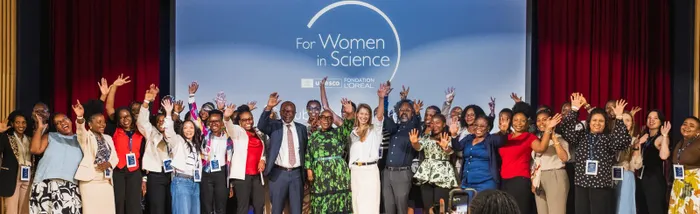
Discover how 30 extraordinary young scientists were celebrated in the 16th edition of L’Oréal-UNESCO For Women in Science Young Talents Awards, as they lead the charge in addressing Africa's critical challenges and inspire future generations.
Image: Supplied.
In a momentous event that underscores the vital role of women in scientific research throughout Sub-Saharan Africa, 30 brilliant young scientists have been honoured at the 16th edition of the L’Oréal-UNESCO For Women in Science Young Talents Sub-Saharan Africa Awards.
The celebration, held recently, shines a light on the exceptional contributions these laureates are making in addressing the continent's pressing challenges through their innovative research.
The awards, jointly announced by the Fondation L’Oréal and UNESCO, recognised 25 PhD candidates and 5 postdoctoral researchers from 18 different Sub-Saharan African countries.
Selected from an impressive pool of over 550 applicants, the winners were evaluated by a distinguished jury of scientists, including chairperson Professor Priscilla Baker, a chemistry professor at the University of the Western Cape, who herself received the prestigious L’Oréal-UNESCO For Women in Science Award in 2025.
The diversity of fields represented by the awardees is a testament to their collective talent and ambition.
Their groundbreaking research covers vital domains such as life and environmental sciences, engineering and technology, material sciences, and formal sciences.
Discover how 30 extraordinary young scientists were celebrated in the 16th edition of L’Oréal-UNESCO For Women in Science Young Talents Awards, as they lead the charge in addressing Africa's critical challenges and inspire future generations.
Image: Supplied.
Crucially, their work addresses key continental and global challenges like food security, public health, sustainable development, and the need for inclusive digital transformation—issues pertinent to the future of African nations.
As highlighted by UNESCO’s latest report, there is promising progress towards gender parity in scientific research throughout Sub-Saharan Africa.
Notably, Kenya has increased the proportion of women researchers by an impressive 12 percentage points over the past decade, rising from 25.7% in 2013 to 38.4% in 2023.
Furthermore, women now constitute the majority of university graduates in several countries, including Namibia (58%) and South Africa (60%).
However, the ratio of women scientists remains concerningly low, with only 1 in 3 researchers being women.
Thus, continued investment in programs such as the Young Talents Awards is essential for nurturing the next generation of prominent female scientists.
The Young Talents Award serves not only to recognise outstanding accomplishments but also to galvanise efforts in shaping the future of science in Africa.
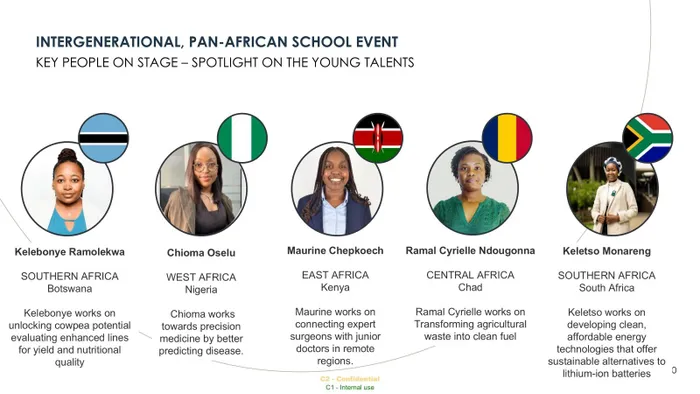
Among this year’s laureates are Margaret Murage, who has been acknowledged for her pioneering work on novel cancer treatments, and Ramal Cyrielle Ndougonna, acclaimed for her use of genomic data to identify crop varieties of cassava that are disease-resistant, nutrient-enhanced, and adaptable to the continent's arid climates—all critical for enhancing food security.
Pauline Avenel-Lam, Executive Director of the Fondation L’Oréal, stressed the importance of supporting women scientists, stating, “We believe that the future of science in Sub-Saharan Africa relies on recognising and supporting women scientists. The L’Oréal-UNESCO For Women in Science Sub-Saharan Africa Young Talents Awards showcase women scientists who are pioneering sustainable change and delivering solutions for Africa and the world.”
Lidia Brito, Assistant Director-General for Natural Sciences at UNESCO, echoed this sentiment, stating, “UNESCO champions women researchers at the heart of Africa’s scientific transformation. The L’Oréal–UNESCO For Women in Science Sub-Saharan Africa Young Talents Awards demonstrate how partnership can open doors, amplify voices, and accelerate impact.”
The L’Oréal-UNESCO For Women in Science Young Talents Sub-Saharan Africa programme, which has been operational for over 15 years, has already supported more than 270 women scientists from more than 35 countries. Each laureate receives a financial grant (€10,000 for PhD candidates and €15,000 for postdoctoral researchers) and is provided with essential training in leadership, scientific communication, and career development. Additionally, they join a global network of over 4,700 women scientists, establishing connections that promote collaboration and knowledge sharing.
BUSINESS REPORT