

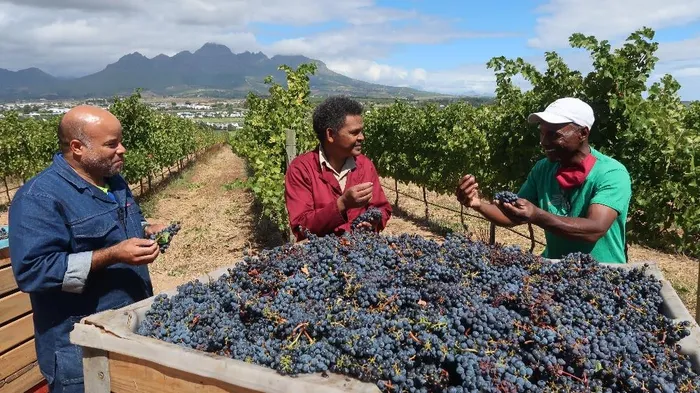
In a landscape where mentorship and diversity are interwoven at every level, South Africa’s wine industry is on the brink of a captivating renaissance. Explore how these initiatives are reshaping the sector into a more inclusive future.
Image: Supplied.
Across the sun-kissed slopes of the Cape Winelands, a transformative movement is unfolding, one that is steeped in a profound love for people, mentorship, and a commitment to diversity.
This subtle yet significant shift is challenging the traditional confines of South Africa’s wine industry, fostering a community where knowledge, ownership, and opportunity are no longer reserved for the privileged few.
Instead, they are becoming accessible to all, particularly for black South Africans who have historically faced barriers in the wine business.
The established norms of the industry have long seen wine knowledge exchanged at exclusive gatherings, through familial ties, and within clandestine networks, often neglecting those outside these circles.
The consequence? For many, a deep-rooted exclusion, not only from ownership opportunities but also from understanding the nuances of terroir, varietals, and the intricate culture surrounding wine.
However, with mentorship now at the heart of this evolution, the industry is witnessing a renaissance.
It’s a potent reminder that wine is best learnt through shared experiences – hand to hand, cellar to cellar, and harvest to harvest.
When mentorship is intentional and inclusive, it bridges gaps that have hindered genuine participation and growth, thereby paving the way for a more vibrant and diverse future.
Phil Bowes, Manager of Inclusive Growth Strategies at SA Wine, notes the remarkable growth in representation within the industry.
In just the last decade, the number of black-owned wine brands has surged by 50%, now boasting 107 brands alongside 81 black-owned farms engaged in grape production, logistics, and retail.
Beyond these figures, Bowes emphasises the emergence of a new generation of skilled owners, professionals, and producers, each better equipped to navigate the complexities of the wine sector than ever before.
Leading this charge is Bosman Family Vineyards in Wellington, home to South Africa’s largest black-owned wine company, Adama Wines.
Here, a staggering 26% of the agribusiness is owned by its workers.
One such worker is Riedewaan Thomas, who began as an intern and has ascended to become the cellar leader.
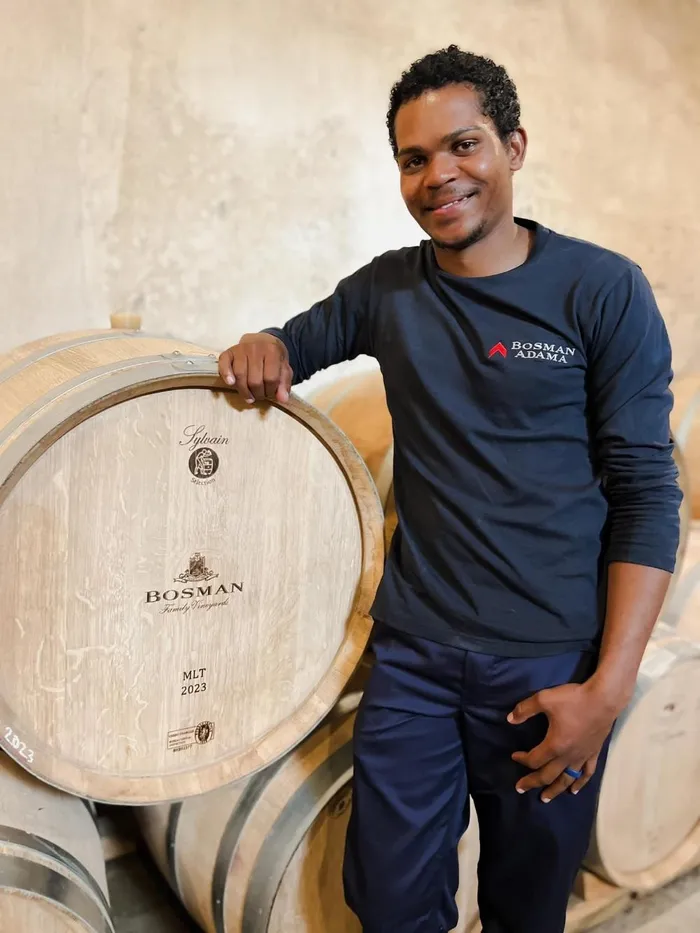
Riedewaan Thomas, who began as an intern and has ascended to become the cellar leader.
Image: Supplied.
Thomas dreams of becoming the first male winemaker at Bosman Adama, and his selection for the highly esteemed Burgundy Exchange Programme underscores the powerful outcomes of intentional mentorship.
Praised for its pioneering spirit, HER Wine Collection, founded in 2020 by Praisy Dlamini, stands as South Africa's first all-women, all-black wine brand.
Dlamini’s journey, which led her from Elsenburg to becoming a Protégé of the Cape Winemakers Guild, embodies resilience.
Committed to creating opportunities for others, HER’s Students for Change initiative provides bursaries for matriculants from farming communities, enabling connections with industry professionals and reinvesting 2% of profits into education and mentorship.
Currently, Dlamini harmoniously balances her leadership of HER Wine Collection with her role as General Manager at Adama Wines, cultivating new paths for future vintners.
Further illustrating this paradigm shift is Visio Vintners, born from a collaboration between Kleine Zalze Wines and its empowerment trust.
With 51% ownership held by the trust and all employees of Kleine Zalze as beneficiaries, Visio Vintners thrives on the principle that quality is paramount.
Winemaker Hanri Ferreira proudly points to their Icon Wine blend, which received high acclaim from UK critic Tim Atkin – a testament to the potency of empowered ownership.
This revolutionary movement is not a solitary tale; it is fortified by a robust infrastructure. Significant investments are being made, with R23.8 million directed towards enterprise development, training, and ethical trade programmes, benefiting over 1,800 individuals – including 545 youth.
The Wine Arc incubator currently nurtures 13 black-owned brands, while 2,217 learners are enrolled in 170 educational programmes via the wine industry’s Learner Management System.
BUSINESS REPORT