

Agricultural associations believe that there are important steps that need to be taken for 2026 by the Government and farmers to ensure a successful 2026 in the sector.
Image: Supplied
Agricultural organisations have called on government and farmers to take decisive action in 2026 to place South Africa’s agricultural sector on a stronger and more sustainable growth path.
Wandile Sihlobo, chief economist at the Agricultural Business Chamber of South Africa (Agbiz), on Tuesday said the start of the year presents an opportunity to refocus policy priorities and accelerate implementation in areas that could unlock significant growth across the sector.
“The prioritisation of implementation itself would also be refreshing. We are now at the start of the year, with an opportunity to redefine the path ahead in a manner that supports agribusinesses, farmers, and new entrant participants in the sector.”
Sihlobo was particularly critical of the Department of Land Reform and Rural Development’s performance in 2025, saying there had been little tangible progress beyond policy discussions.
“We did not see any meaningful progress on land reform beyond a few high-level policy statements that sought to spark more conversation rather than implementation. Under the Pro-Active Land Acquisition Strategy, the South African government has roughly 2.5 million hectares of land. This land must be released to deserving beneficiaries with title deeds.”
He warned that delays in releasing state-owned land continue to limit the participation of black farmers in commercial agriculture, contributing to their minimal share of overall agricultural output.
Sihlobo said export growth must also be a priority in 2026, noting that agriculture is a highly export-oriented sector, with exports accounting for about half of output in value terms.
“We export to a range of markets across Africa, Asia, the Middle East, the EU, the UK, and the Americas. Still, there remains a considerable need to expand export markets into new areas,” Sihlobo said.
“The Middle East and Asia are among the fastest-growing economies, with large populations, and South Africa still has low penetration in these markets. In 2026, there should be an increased focus on this area.”
However, he cautioned that South Africa’s membership of the Southern African Customs Union (SACU) may deter some potential trade partners.
“To potential partners, the customs union often appears opaque and unpredictable. Many are interested in South Africa itself, not the wider region. Pretoria should therefore press for SACU reform while preserving the development programmes that provide social support to neighbouring states,” he said.
“In today’s changing global trade environment, countries must be agile in forming new agreements that sustain their economies.”
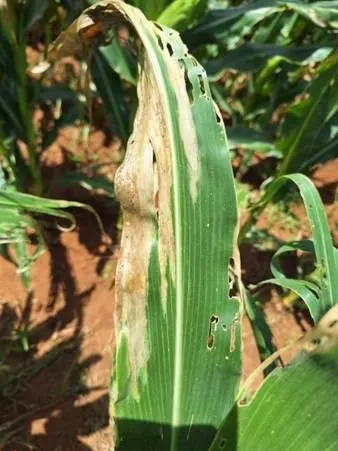
Sihlobo also stressed that access to new export markets depends on strong plant and animal health standards. He pointed to recent outbreaks of foot-and-mouth disease, African swine fever, avian influenza and plant diseases such as Goss wilt.
“In recent years, we have struggled with foot-and-mouth disease and, occasionally, African swine fever, Avian Influenza, and some plant diseases such as Goss Wilt. South Africa’s Department of Agriculture must increase its spending and focus on biosecurity. The work, which started with collaboration with the Biosecurity Hub at the University of Pretoria, amongst other organisations, must continue.”
Crime in rural areas remains another major concern, Sihlobo said, warning that it undermines investment and long-term prosperity in agriculture.
“This remains a risk to the investment and prosperity of the agricultural sector. Another issue is stock theft, which also continues to weigh on farmers, particularly the new entrant farmers. Statistics South Africa recently reported that in 2024/25, over 61 000 goats were stolen, followed by cattle (37 947) and poultry (36 486).”
TLU SA general manager Bennie van Zyl said government intervention is critical to improving the operating environment for agriculture.
“The main focus should be on how we grow the economy, and that can be achieved by investment and participation of the private sector. The government needs to create an environment where this will happen,” he said.
“I think it's also crucial that crime is addressed in South Africa and members of the public feel safe to grow the economy. We need to address this so crime can be reduced. The government also needs to improve infrastructure for road and rail so that produce can be transported to the markets for sales and our ports are managed efficiently.”
BUSINESS REPORT