

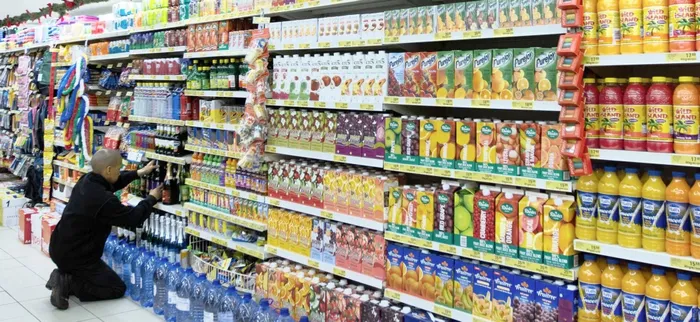
Wholesale trade sales indicated a decrease by 0.8% in November 2025 compared with November 2024.
Image: File Independent Newspapers
Wholesale trade sales indicated a decrease by 0.8% in November 2025 compared with November 2024. An economist believes that the economy is still stabilising.
Stats SA said that seasonally adjusted wholesale trade sales increased by 2.0% in November 2025 compared with October 2025. “This followed month-on-month changes of 0.1% in October 2025 and -0.9% in September 2025.”
Stats SA added that in the three months ended November 2025, seasonally adjusted wholesale trade sales increased by 0.5% compared with the previous three months. “Measured in nominal terms (current prices), wholesale trade sales increased by 1.2% in November 2025 compared with November 2024. The main positive contributor was dealers in solid, liquid and gaseous fuels and related products (5.0% and contributing 1.0 percentage point). Wholesale trade sales increased by 1.0% in the three months ended November 2025 compared with the three months ended November 2024. The main positive contributor was dealers in machinery, equipment and supplies (4.0% and contributing 0.6 of a percentage point).”
The Don Consultancy Group (DCG) chief economist Chifipa Mhango said the wholesale trade sector shows early signs of stabilisation despite persistent annual pressures. “South Africa’s wholesale trade sector exhibited tentative signs of stabilisation in November 2025, despite remaining under pressure on an annual basis.”
Mhango added that in real terms (constant 2019 prices), wholesale trade sales declined by 0.8% year-on-year, reflecting continued weakness in underlying demand conditions. “However, the sector recorded a strong month-on-month increase of 2.0% (seasonally adjusted), marking the most notable sequential improvement in recent months and signalling a possible easing in downside momentum. The November data suggests that while the wholesale sector remains constrained, the pace of contraction is slowing. The month-on-month rebound points to emerging stabilisation rather than renewed decline.”
Mhango said over the three months ended November 2025, real wholesale trade sales increased by 0.5% compared with the previous three-month period, reinforcing the view that activity is gradually consolidating rather than deteriorating further. “In nominal terms, wholesale trade sales rose by 1.2% year-on-year, driven primarily by solid, liquid and gaseous fuels, as well as machinery, equipment and supplies. These gains were partially offset by continued weakness in agricultural raw materials, textiles, and precious stones, underscoring the uneven nature of the recovery.”
Mhango added that nominal growth continues to outpace real activity, highlighting that price effects and selective sectoral strength, rather than broad-based volume growth, are underpinning headline performance. “The divergence between real and nominal trends reflects a wholesale sector still navigating tight financial conditions, subdued consumer demand, and cautious inventory management. Encouragingly, improved performance in machinery and equipment may indicate early capital replacement activity and infrastructure-linked demand, although this remains at an early stage.”
Mhango said that at the same time, the persistent contraction in agricultural-related wholesale trade points to structural constraints in primary production, logistics inefficiencies, and soft external demand, which continue to weigh on overall sector performance. “Wholesale trade activity to remain fragile but trend gradually higher into early 2026, supported by improving operational conditions rather than a sharp cyclical rebound.”
Mhango concluded that a sustained recovery will depend on three critical factors: a more accommodative interest rate environment, continued improvements in energy and logistics reliability, and a gradual recovery in real household incomes. “While November does not mark a turning point into rapid growth, it does suggest that the sector may be entering a phase of stabilisation, with the potential for modest recovery in the first half of 2026 if macroeconomic conditions continue to normalise.”
BUSINESS REPORT