

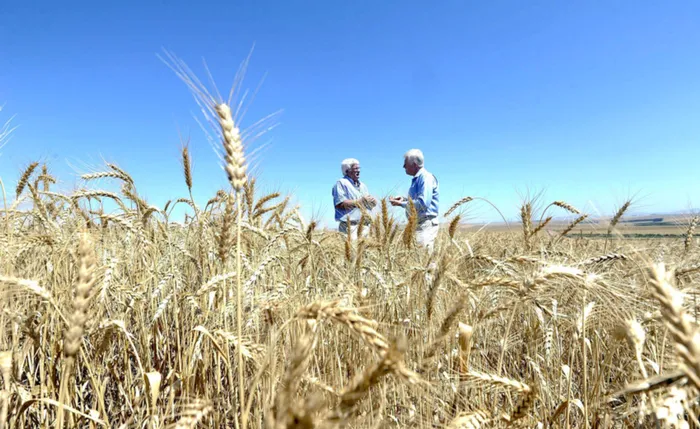
Despite El Niño weather expected later this year, agricultural experts remain optimistic for a year of growth in the agriculture sector.
Image: Leon Lestrade/Independent Newspapers
Despite the likelihood of El Niño weather conditions later this year, agricultural experts remain optimistic about growth prospects for South Africa’s agriculture sector, citing strong recent performance, improving confidence and supportive medium-term fundamentals.
This upbeat outlook emerged during Nedbank’s agricultural webinar on Wednesday, where industry analysts highlighted a better-than-expected performance in 2025 following two consecutive years of decline.
Tracy Davids, director of commodity markets and foresight at the Bureau for Food and Agricultural Policy (BFAP), said the sector exceeded early expectations in 2025 despite several headwinds.
“Positive factors that shaped a better 2025 include better weather conditions, strong summer crop recovery, and exceptional fruit crops and export volumes," Davids said.
"International meat and fruit prices were strong, with strong meat prices and lower feed costs domestically. There were also some improvements in ports noted.”
However, Davids noted that the year was not without challenges.
“Widespread foot-and-mouth disease caused havoc in the beef sector, US tariff adjustments brought great uncertainty, and lower grain prices internationally were also a cause for concern," she said.
"Despite some improvements, many input costs remain high – above inflation increases in electricity and labour.”
She said citrus exports were a standout performer in 2025, delivering large volumes and strong prices. Other products showing notable improvement from 2024 to 2025 included rice, pome fruit and grapes.
Davids added that agro-processing activity is recovering after a weak start, highlighting its central role in the agricultural value chain.
“The structure of the agricultural value in SA means that of all farm sales, around 62% is utilised by agro-processing firms. Agro-processing industries buy raw materials from farms and often also function as input suppliers to agriculture as well.”
Wandile Sihlobo, chief economist at the Agricultural Business Chamber of South Africa (Agbiz), said sentiment across the sector has improved, as reflected in the Agbiz/IDC Agribusiness Confidence Index.
“After falling for two consecutive quarters, the index increased by 5 points to 67 in Q4 2025," Sihlobo said.
"Favourable weather conditions, strong exports throughout the year on the back of ample grains, oilseeds, and horticulture harvests, as well as better port efficiencies, are among the key drivers of optimism in the sector.”
Sihlobo said the government’s announcement of a nationwide vaccination programme against foot-and-mouth disease likely also contributed to improved confidence, easing concerns around a disease that had appeared increasingly unmanageable.
“The current ACI level of 67 is well above the 50-neutral mark, suggesting that South African agribusinesses are generally optimistic about business conditions in the country,” he said.
However, Sihlobo cautioned that South Africa’s fragmented voice on global economic and trade matters poses risks to export-oriented industries.
“Agriculture is export-oriented, with roughly half of the produce exported yearly, and there is hope for a further increase in exports in the coming years. Therefore, trade matters are central to the sector’s growth and sustainability," he said.
"South Africa is embarking on a strategic reorientation of its economic diplomacy as part of a broader effort to revitalise the domestic economy and assert its leadership at both regional and global levels.”
Looking ahead, Sihlobo said agricultural recovery in 2025 is likely to be uneven, with most subsectors improving while the livestock industry remains under pressure.
The outlook for the 2025–26 production season remains broadly positive, supported by expectations of another La Niña year, which could bring favourable rainfall.
"Trade matters will continue to dominate the conversation, and the refreshed economic diplomacy, with a sharper focus on trade, not only assists the agricultural sector, but is likely to benefit the auto industry as well, which is critical for the Eastern Cape’s economy.”
Meanwhile, agricultural meteorologist Johan van den Berg cautioned that longer-term weather patterns may become less favourable.
“More El Niños than La Niñas expected in the next 5 seasons,” he said.
BUSINESS REPORT