

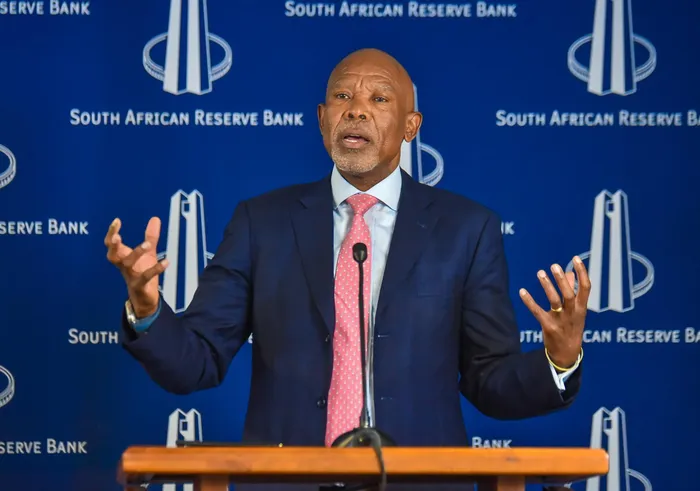
Property groups believe that sentiment still looks good for the sector following the South African Reserve Bank's decision on Thursday to hold interest rates steady at its Monetary Policy Committee (MPC) meeting.
Image: SARB | Facebook
Property groups believe that sentiment still looks good for the sector following the South African Reserve Bank's decision on Thursday to hold interest rates steady at its Monetary Policy Committee (MPC) meeting.
Lesetja Kganyago, Governor of the South African Reserve Bank, said that currently we are benefitting from low goods price inflation, supported by factors like the stronger rand.
“Goods inflation is at 3%, and core goods is at 1.2%. By contrast, services inflation is still over 4%. It is desirable to have services inflation moving closer to 3%, as low inflation becomes the new normal for South Africa.”
Kganyago added that they assess the risks to the inflation outlook as balanced. “Against this backdrop, the MPC decided to keep the policy rate unchanged, at 6.75%. Two members favoured a cut of 25 basis points, while four preferred a hold.”
Adrian Goslett, CEO and Regional Director of REMAX Southern Africa, said that as interest rates remain unchanged, it is anticipated that it will bring short-term stability to South Africa’s property market, despite buyers and industry professionals hoping for a cut to improve affordability and boost activity. “While the decision provides a degree of stability for the local housing market, many consumers and property professionals were hoping for a rate cut to offer greater financial relief and stimulate increased market activity as the year kickstarts.”
Goslett added that the SARB decision reflects a continued cautious approach, as inflation risks remain a concern and international economic conditions stay uncertain.
“Despite signs of gradual improvement in some economic indicators, the SARB appears focused on maintaining stability until conditions clearly support a sustained easing cycle.”
Samuel Seeff, chairman of the Seeff Property Group, said that the Reserve Bank's decision to keep the repo rate unchanged at 6.75% (prime at 10.25%) is hugely disappointing and a massive missed opportunity to align interest rates.
“There has been significant improvement on the economic front, and while the US Federal Reserve opted to hold its rate unchanged, local conditions are far more conducive to a rate cut. Given the positive domestic economic indicators, the Bank could easily have departed from the global trend by cutting the rate.”
Seeff added that despite the cuts last year, the interest rate remains stubbornly above pre-pandemic levels and continues to hinder economic growth, which remains well below what is needed to address the growing unemployment. “While the lower rate has eased consumer debt slightly and improved property affordability and sales.The overall volumes remain well below where they should be. Compared to 2021, transaction volumes are effectively still trading 26.5% lower (23,154 monthly transactions in 2021 vs 18,302 in 2025).”
Seeff said that they need 4–5% growth for a decade to combat unemployment and must move beyond talking to decisive action. “The goal must be to move closer to the 7% prime rate, which successfully kickstarted the economy and resulted in GDP growth of nearly 5% in 2021. Looking ahead, we strongly urge the Bank not to repeat this hesitation at its next meeting in March.”
Dr Andrew Golding, chief executive of the Pam Golding Property Group, said that while the decision was not what existing mortgage holders and prospective homebuyers seeking credit were hoping for, most market commentators believe that, with inflation remaining contained, there is scope for up to two 25bps repo rate cuts during 2026. “Positively, the demand for housing remains steady, with stock shortages in high-demand areas and signs of recovery evident across markets and regions, including Gauteng. Furthermore, according to ooba Home Loans, demand for investment and buy-to-rent properties is already surging.”
Toni Anderson, Head of Home Services at Standard Bank, said that while interest rates remain unchanged, the cumulative effect of earlier rate cuts has already begun to improve affordability and buyer sentiment. “Since the easing cycle started towards the end of 2024, Standard Bank has observed increased engagement from prospective homeowners, with steady home loan application activity reflecting renewed confidence in the market.”
Anderson added that a stable rate environment gives buyers the opportunity to plan with greater certainty and supports more balanced decision-making. “For sellers, this stability encourages realistic pricing, which remains a key driver of successful transactions in the current market. Holding rates at current levels allows households time to adjust to earlier relief while providing a supportive backdrop for sustained recovery in housing demand across select regions.”