

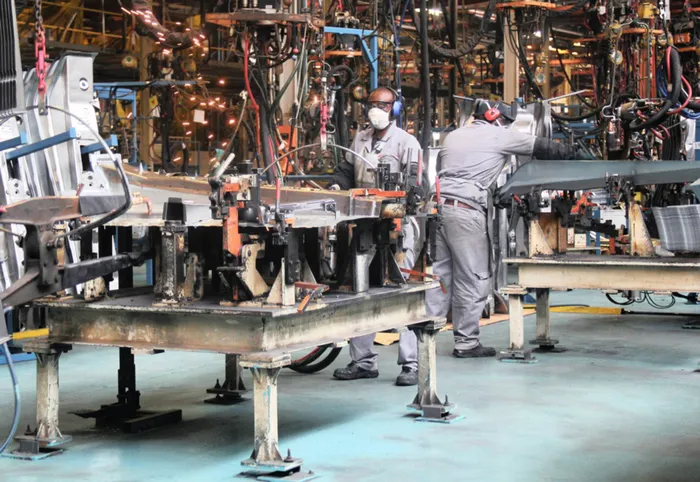
The Absa Purchasing Managers’ Index (PMI) for January 2026 released on Monday indicated a big 8.2 points increase to 48.7 in January, just short of the neutral zone.
Image: File Selaotswe Fofo Lerefolo
South Africa’s manufacturing sector showed early signs of recovery at the start of 2026, with the Absa Purchasing Managers’ Index (PMI) recording a sharp improvement in January, raising cautious optimism among economists.
The seasonally adjusted Absa PMI rose by 8.2 points to 48.7 in January, up from December’s weak reading but remained just below the neutral 50-point mark. The index is compiled by the Bureau for Economic Research (BER) on behalf of Absa.
Absa said that after a particularly bleak end to 2025, manufacturing sentiment rebounded meaningfully at the start of the new year.
“While the index can be volatile, the magnitude of this increase is significant – although it still remained below the neutral 50-point mark," it said.
"More positively, the business activity index managed to edge back above the 50-point level, suggesting that production growth could have reaccelerated in Q1.”
According to data, all subcomponents of the index improved in January compared to December. The most notable gains were recorded in business activity and new sales orders. The recovery in sales orders was driven entirely by domestic demand, while export sales declined further during the month.
Absa said export performance was likely weighed down by the stronger rand, which has reduced competitiveness in foreign markets. However, the currency’s strength has also helped lower imported input costs and contributed to declining fuel prices.
Following a sharp drop in December, the inventories index returned to more normal levels in January, providing additional support to the overall PMI reading. The purchasing price index edged slightly higher but remained close to multi-year lows, reflecting subdued cost pressures.
Expectations about future business conditions remained relatively resilient. The expected business conditions index slipped marginally to 66.4 from 68.8 in December, but remained almost 10 points above the average level recorded in 2025.
This suggests that manufacturers anticipate a meaningful improvement in conditions over the next six months, despite lingering caution in the market.
Respondents indicated that while quoting activity has increased, order confirmations remain limited, pointing to ongoing hesitancy among customers.
Economists welcomed the improvement in the PMI.
Professor Waldo Krugell, an economist at North-West University, said that though the overall index is below the 50-point neutral mark, the improvement from December is significant.
“All the sub-indices improved. Business activity is about 50 and new sales orders have improved, driven by domestic demand," Krugell said.
"In all, I hope these are green shoots for manufacturing this quarter. It will be nice to see it backed up in other numbers like the South African Chamber of Commerce and Industry (SACCI) trade conditions survey.”
North West University's Business School economist, Professor Raymond Parsons, said the PMI supports the view of a steadily improving economic outlook as South Africa enters 2026.
“There clearly are more positive factors than negative ones now supporting the steadily improving economic conditions," Parsons said.
"The Absa survey must also be read in conjunction with the latest Nedbank Capital Expenditure Project Listing for 2025. The Nedbank survey at last shows a positive recovery in private fixed investment plans in 2025 underpinning the modest economic upturn.”
Parsons added that although the fixed investment is heavily concentrated in the energy sector, it still augurs well for the overall economic outlook this year.
“The key policy challenge in 2026 remains to do what is necessary to keep the economic recovery firmly on track, despite any headwinds.”
Unisa economist Dr Eliphas Ndou said the sharp improvement in the PMI suggests the manufacturing sector is becoming more resilient, despite uncertainty in global demand.
“Therefore, continued improvements in domestic macroeconomic conditions, which include low inflation and sustained economic growth, are needed to support domestic demand and keep sentiment above 50 index points.”
BUSINESS REPORT