

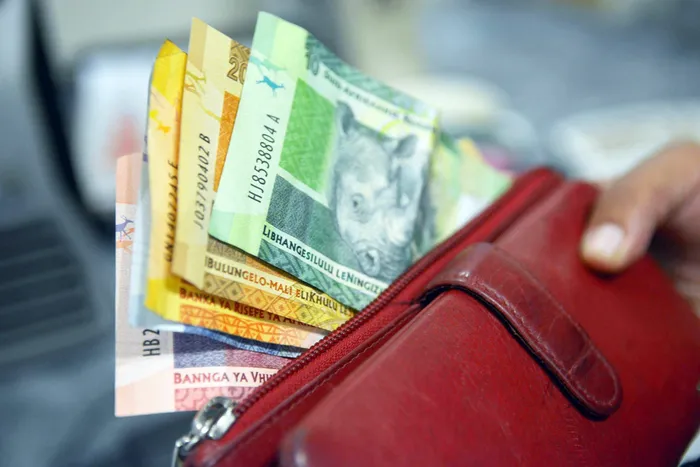
South Africa’s National Minimum Wage (NMW) will increase to R30.23 per hour from 1 March.
Image: File
South Africa’s National Minimum Wage (NMW) will increase to R30.23 per hour from 1 March, the Department of Employment and Labour has confirmed, offering relief to millions of low-paid workers but renewing pressure on employers to comply with the law.
The increase, implemented in terms of the National Minimum Wage Act of 2018, is set out in Schedule 1 of Government Gazette No. 54075 dated February 3, 2026. It represents an above-inflation adjustment of 5%, or R1.44 per hour, and is estimated to affect approximately 5.5 million workers across the economy.
The revised wage applies across all sectors, including farm and domestic workers, whose minimum hourly rates remain fully aligned with the national wage floor. Workers employed under the Expanded Public Works Programme (EPWP) will earn a minimum of R16.62 per hour, while learners under approved learnership agreements will receive updated allowances in line with Schedule 2 of the Act.
“The National Minimum Wage is not a guideline or a target, it is a legal floor,” said John Botha, Joint CEO Global Business Solutions, warning that employers who pay below the prescribed rate expose themselves to enforcement action, compliance orders and administrative fines.
The Department of Employment and Labour has urged employers, payroll administrators and contracting entities to ensure that wages, payroll systems, tenders and budgets are updated ahead of the March 2026 implementation date to avoid non-compliance.
Cosatu welcomes increase
Cosatu has welcomed the increase, describing it as a progressive adjustment that will help protect workers from rising living costs and deepen the impact of the minimum wage.
“This positive above-inflation increase raises the NMW from R28.79 per hour to R30.23 from 1 March 2026,” Cosatu said, noting that the increase amounts to inflation plus 1.5%. While the federation had proposed a slightly higher figure, it expressed satisfaction that its call for a real increase gained the support of the National Minimum Wage Commission and the Minister for Employment and Labour, Nomakhosazana Meth.
Cosatu said the Act obliges the Commission to prevent the erosion of the minimum wage by inflation, warning that failure to do so would push millions of workers deeper into debt, poverty and despair.
“This increase will help protect the value of the NMW and workers’ ability to take care of their families,” the federation said. “It will inject badly needed stimulus into the economy, spur growth, sustain and create jobs, and provide relief to nearly six million workers.”
Sectors expected to benefit most include agriculture, domestic work, construction, retail, transport, hospitality, security and cleaning services.
The labour federation pointed to the steady progress made since the NMW was introduced in 2019 at R20 per hour. At the time, domestic workers earned R15 per hour and farmworkers R18, rates that have since been equalised with the national minimum.
“The NMW is a far cry from the poverty wages farm and domestic workers were paid a few years ago, sometimes as little as R6 an hour,” Cosatu said, describing the policy as one of the most significant and transformational achievements of the democratic state under President Cyril Ramaphosa’s administration.
However, Cosatu criticised the continued exclusion of Community Works Programme and EPWP workers from the full minimum wage, calling for urgent engagement with the Presidency, National Treasury and key departments to develop a roadmap to bring these workers up to the NMW level.
“It is unacceptable that these workers remain pegged at just under 55% of the NMW. This must now end,” the federation said.
Enforcement in focus
Both government and labour have stressed that enforcement remains critical. Cosatu called for an intensified crackdown on employers who fail to comply, describing non-payment of the minimum wage as a criminal offence.
The federation welcomed Minister Meth’s commitment to employ an additional 20,000 labour inspectors, saying this would strengthen the state’s ability to act against defaulting employers.
Responding to critics who previously warned that the minimum wage would trigger widespread job losses, Cosatu said independent research has shown the opposite: that the NMW has reduced poverty and inequality while supporting economic growth, in line with international experience in countries such as the United States, Germany and Brazil.
BUSINESS REPORT