

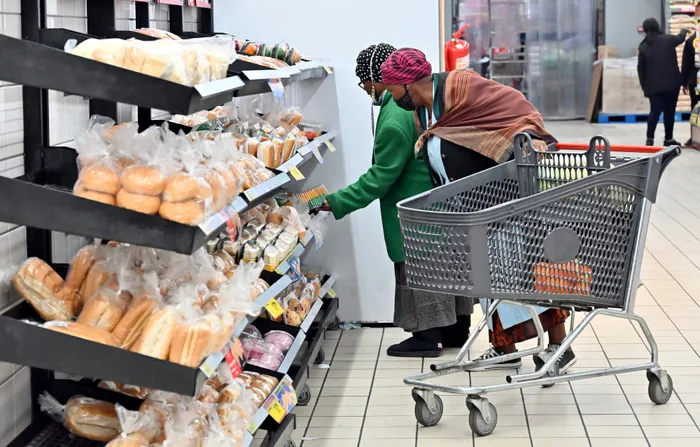
The optimism expressed during Sona 2026 starkly contrasts with the daily struggles faced by South African households, prompting urgent calls for effective economic reforms that translate rhetoric into real relief for consumers.
Image: Ayanda Ndamane/ Independent Newspapers.
In the wake of the State of the Nation Address (Sona) 2026, the tone of optimism echoed through the halls of the nation as President Cyril Ramaphosa delivered his address, appearing more energetic than he has in years.
However, for many South African households grappling with financial difficulties, the real measure of progress lies not in uplifting words but in tangible outcomes, a reality poignantly captured by Hayley Parry, a Money Coach and Facilitator at 1Life’s Truth About Money.
“Despite the easing interest rates and a stabilising Johannesburg Stock Exchange (JSE), the relief is not permeating through to consumers. In my practice, I regularly witness the disheartening reality that marginal gains are being devoured by the escalating costs of compensating for inadequate public services,” Parry stated.
Service delivery failures have burdened households with the necessity of bolstering their own essential services, from electricity and security to an increasing demand for private healthcare and, now crucially, water. What was once viewed as optional enhancements has morphed into a mandatory expenditure that continues to gnaw away at financial resilience.
“Households are now budgeting not only for everyday living costs but also for repairing crumbling systemic infrastructure. This paradigm shift fundamentally alters how families approach savings and long-term financial planning, as they attempt to establish stability on precarious ground,” Parry told Business Report.
The anticipation around the upcoming Budget is palpable, especially with economic parameters ripe for adjustment.

SONA 2026.
Image: Supplied
For years, the income tax brackets have not consistently aligned with inflationary pressures.
Even with periodic adjustments, many taxpayers find themselves subject to "bracket creep," where stagnant real wage growth pushes them into higher tax brackets, eroding disposable income just as household costs soar.
Moreover, the stagnation of the annual Tax-Free Savings Account (TFSA) limit at R36,000 per year, coupled with the lifetime cap of R500,000, represents a significant hurdle for savers.
These limits, unchanged for years, undermine the instruments’ potential value, particularly when pitted against rising costs of living.
Similarly, retirement contribution limits capping at R350,000 annually fail to support higher earners effectively, limiting the usefulness of retirement savings as a robust, tax-efficient means of enhancing financial resilience.
“If we genuinely aim to encourage consumers to save, invest, and participate actively in the economy, then substantive policy changes are essential. Consumer-centric relief must be on the table, encompassing inflation-aligned tax bracket adjustments, indexed increases to TFSA limits, and a review of retirement savings deductions,” Parry added.
Echoing the sentiment that relief must be tangible, Parry further said, “Effective relief cannot solely manifest through macroeconomic indicators, it must translate into workable monthly budgets for households across South Africa.”
Until the necessary changes are enacted, South African families will find themselves in a relentless cycle of stretching, absorbing costs, and self-funding essential services, often at the detriment of their long-term financial stability.
BUSINESS REPORT