
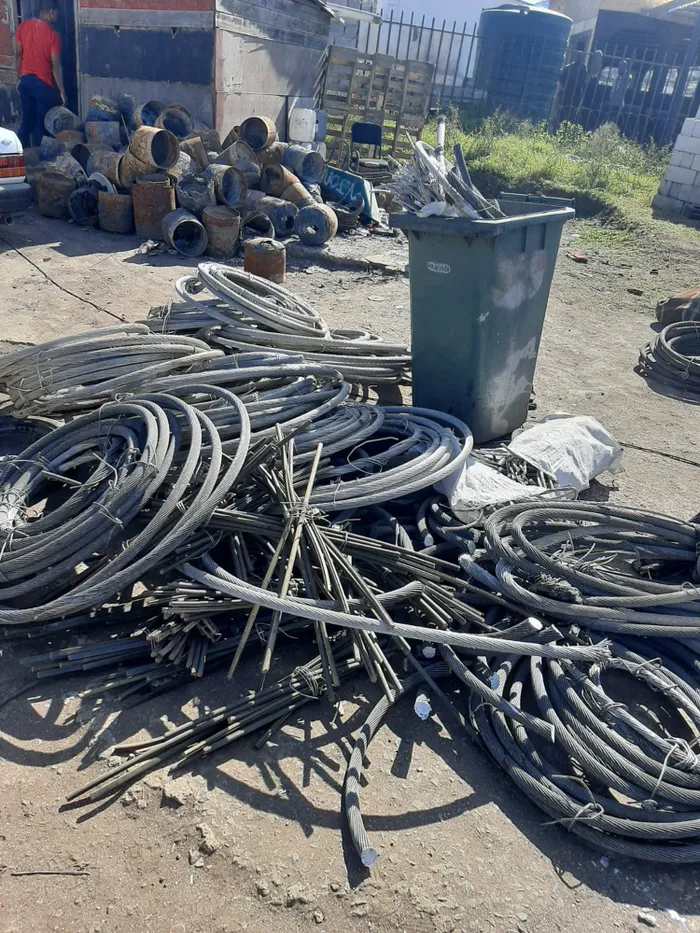
The metals recycling sector has reiterated its call for a full, independent inquiry into the policy framework governing scrap metal.
Image: File
The metals recycling sector has reiterated its call for a full, independent inquiry into the policy framework governing scrap metal, including the Price Preference System (PPS) and export-related measures. It argues that government-linked policies—particularly the PPS—have created structural distortions that may have enabled or entrenched anti-competitive conduct.
In the wake of the Competition Commission's raid on the premises of Scaw South Africa (Scaw), Cape Gate, Shaurya Steel trading as Force Steels, and Unica Iron and Steel (Unica) as part of an ongoing price-fixing investigation, the Metals Recyclers Association (MRA) said it welcomed the Commission's investigation, while also urging structural reforms.
“The sector remains under considerable strain due to policy uncertainty, depressed domestic pricing benchmarks, and regulatory instability. While we support robust enforcement against any proven anti-competitive conduct, we maintain that structural reform of the scrap metal policy framework is essential to restore investor confidence, protect jobs, and support South Africa’s broader industrial and circular economy objectives,” MRA Chairman Quintin Starkey said.
The MRA said it believes that any credible investigation into alleged anti-competitive conduct is in the public interest and necessary to restore fairness and transparency in the scrap metal value chain.
“Our call has been for a transparent, multi-stakeholder inquiry into how these policies were introduced, how they are administered, and whether they have facilitated exclusionary or cartel-like outcomes. As such, our engagement has been policy-focused and systemic in nature, rather than confined to a specific complaint. We continue to encourage whistleblowers and industry participants to come forward with information to support lawful and fair market practices,” it said.
The MRA, in collaboration with the Recycling Association of South Africa (RASA) and the Scrap Recycling Coalition (SRC), has, since the Competition Tribunal’s confirmation of a decades-long buyers’ cartel, formally demanded a comprehensive inquiry into scrap metal policies, including the PPS and export duties.
Starkey said the industry representatives have urged the Presidency, the Department of Trade, Industry and Competition (DTIC), the Competition Commission, and the International Trade Administration Commission (ITAC) to conduct a transparent review with public participation and binding recommendations.
The three recycling bodies strongly rejected the amendments gazetted by ITAC, describing them as insufficient and failing to address the fundamental structural flaws in the system.
“Our position is that minor adjustments to discount levels do not correct the underlying distortions, including:
The use of an inappropriate policy baseline;
The continued ‘seller pays transport’ requirement, which risks reinforcing market segmentation; and
The broader economic distortions affecting recyclers, informal collectors, and downstream manufacturers.”
“We have actively opposed recent amendments to the PPS. We have also highlighted the significant employment and circular economy implications of these policies, noting that the recycling sector supports hundreds of thousands of informal collectors and contributes materially to GDP,” Starkey said.
Meanwhile, the Steel Industry Federation of South Africa (Seifsa) has called for a transparent, timely, and proportionate process in the interest not only of the affected companies, but also of the stability and sustainability of the broader industry.
It said it encourages constructive engagement and full cooperation between the relevant authorities and the companies concerned, with the objective of ensuring that due process is followed and that the matter is resolved as expeditiously and fairly as possible.
“Seifsa records its concern regarding the potential anxiety and disruption that such processes may create across the sector. Experience in other industries has shown that competition-related proceedings take considerable time to conclude. Unnecessarily prolonged processes tend to introduce uncertainty that affects companies, employees, customers, and the broader value chain, particularly within the current challenging operating environment facing the metals and engineering sector,” it said.
Seifsa said it does not condone anti-competitive behaviour and, as a federation representing a broad spectrum of companies across the metals and engineering value chain, it consistently encourages all members to conduct their business strictly within the prescripts of the law, including full compliance with competition legislation and all applicable regulatory frameworks.
“The metals and engineering sector continues to operate under significant structural adverse pressures. In such an environment, extended uncertainty and/or acrimonious proceedings risk compounding existing challenges,” Seifsa said.
BUSINESS REPORT