

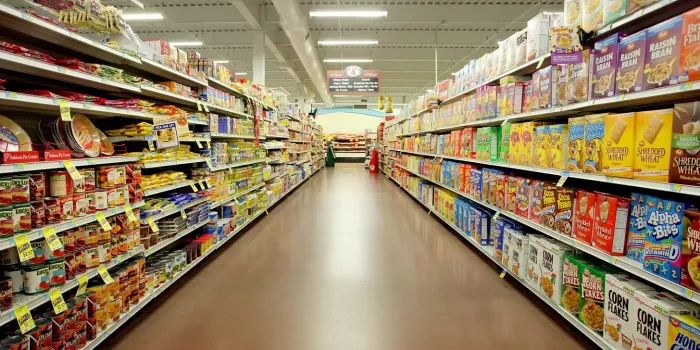
Food inflation holds steady at 4.4 % in January drawing mixed reactions from experts and civil society groups.
Image: Supplied
Food inflation holding steady at 4.4 % in January as indicated by Stats SA on Wednesday drew mixed reactions from experts and civil society groups.
Wandile Sihlobo, the chief economist at the Agricultural Business Chamber of South Africa (Agbiz), said that South Africa’s consumer food price inflation will likely moderate in 2026. “Lower grain, fruit, and vegetable prices, driven by ample domestic and global supplies and moderating vegetable oil prices, are among the factors that will underpin the softening of price inflation.”
Sihlobo added that meat may also present minimal risks to inflation. “We will likely see base effects on meat, along with continued cattle slaughter, though foot-and-mouth disease will also continue to mitigate the effects. Thus, the data released on Wednesday, by Statistics South Africa are likely on the upper end of the range for food price inflation this year. The data show that consumer food price inflation at 4.4% in January 2026, unchanged from December 2025.”
Sihlobo added that South Africa observed a slowdown in cereal product price inflation and in oil and fats. Milk, eggs and dairy products, fruit and nuts, as well as vegetables, were in deflation in January 2025. “Meanwhile, meat, fish and seafood, sugar, confectionery, and desserts increased. Regarding cereal product price inflation, South Africa experienced an abundant harvest, with the 2024-25 summer grains and oilseed harvest estimated at 20.08 million tonnes (up 30% y/y).”
Sihlobo said the new season also looks encouraging. South Africa has been receiving favourable rainfall since the start of the season. “The farmers have also planted quite a sizable area. For example, South Africa’s 2025-26 preliminary area plantings for summer grains and oilseeds are 4.54 million hectares, up 2% from the previous season.”
Sihlobo added that in parts of Limpopo and Mpumalanga, there has been severe flooding observed over the past few weeks. “But these came after the potato season had ended. There appears to be no notable vegetable damage. On meat, it is worth noting that the pace of cattle slaughter has declined somewhat, though not notably. In fact, for 2025, when foot-and-mouth disease began to intensify, cattle slaughter was down by roughly 5% from 2024.”
“Another fact worth keeping in mind is that during foot-and-mouth disease outbreaks, the country is typically temporarily closed to certain export markets, thereby increasing domestic supplies. In essence, we expect South Africa’s consumer food price inflation to slow in 2026,” concluded Sihlobo.
Mervyn Abrahams, Director at Pietermaritzburg Economic Justice and Dignity Group, said that the Household Affordability Index, which looks at 44 essential food items in 47 supermarkets and 32 butcheries across South Africa, does indicate food inflation having steadied.
“According to our data, when comparing January 2025 and January 2026, the food basket last year stood at R5 433 and this was R5 401 which represents a year-on-year decrease of 0.6%,” he said.
Abrahams added that there are indications that farmers recorded bumper harvests this past year which could mean that there should not be any scarcity of items on the market.
“If that is the case, we would expect that the effects of the good harvest also trickle down to the consumer. So, our outlook is that prices should steady or even decrease, but we are concerned about foot-and-mouth disease and the impact it may have on the availability of meat in the market. Any form of decrease in prices on commodities, food included, is always good and welcomed news when one looks at how slow the economy has grown over the years, including last year,” he said.
Evashnee Naidu, KwaZulu-Natal regional manager of Black Sash, said food inflation has held steady at 4.4 % at the beginning of 2026. “Whilst this might seem stable in outlook, to those living on social grants and on the margins of society, we do note that there have been significant increases in prices on food, most especially basic items like fruit and vegetables and meat. Whilst we look towards the 2026 Budget Speech, we know that the trajectory will be further austerity measures and impact on the poorest of the poor.”
Institute for Economic Justice (IEJ) Basic Income Researcher, Siyanda Baduza, said that easing headline and food inflation will definitely reduce the pressure on the poorest. “It at least means that the value of their social grants is somewhat protected. The impact of slower inflation is, however, limited, given that most grants are at really low levels, far lower than most measures of adequacy.”
BUSINESS REPORT