

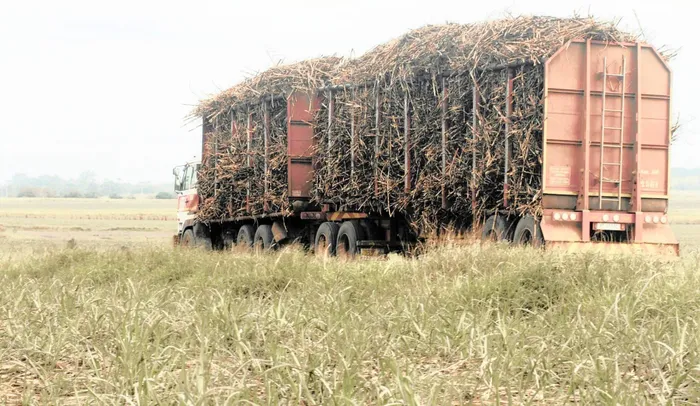
A statement by the Department of Trade Industry and Competition (DTIC) on Friday indicated that the Government would oppose the provisional liquidation of Tongaat Hulett Limited (THL) announced last week and will continue to support all lawful efforts aimed at finding a viable and durable resolution
Image: Karen Sandison / Independent Newspapers
A statement by the Department of Trade Industry and Competition (DTIC) on Friday indicated that the government would oppose the provisional liquidation of Tongaat Hulett Limited (THL) announced last week and will continue to support all lawful efforts aimed at finding a viable and durable resolution. The news comes following more calls to help Tongaat Hulett.
DTIC said that they note the latest developments relating to Tongaat Hulett Limited (THL), including the pending liquidation proceedings currently before the courts.
“Minister Parks Tau is acutely aware that the Sugar Industry remains under pressure due to difficult trading conditions, both domestically and internationally. Tongaat Hulett is a systemically important player in South Africa’s sugar value chain.”
DTIC added that the liquidation of the company would have far-reaching and devastating consequences for the sugar sector, particularly in KwaZulu-Natal, where the industry underpins thousands of jobs, small-scale farming livelihoods, rural economies and related downstream industries.
“The collapse of this ecosystem would deepen economic distress in already vulnerable communities and undermine years of investment in transformation, industrial capability and agricultural development. The government remains firmly of the view that liquidation should be a measure of last resort, particularly where there are reasonable prospects of rescuing a strategically important enterprise in a manner that protects jobs,” it said.
DTIC added that together with other organs of state, it will oppose the liquidation of Tongaat Hulett and will continue to support all lawful efforts aimed at finding a viable and durable resolution. “The government will intensify its engagements with all stakeholders, including the Industrial Development Corporation (IDC), labour, growers, financiers, investors and affected communities, to explore solutions that ensure the survival of the company and the long-term sustainability of the sugar sector.”
DTIC concluded that these engagements are guided by government’s broader policy objectives of: • Protecting jobs and livelihoods, particularly in rural and peri-urban areas;
• Safeguarding small-scale and emerging farmers who depend on the sugar value chain;
• Preserving industrial and agricultural capacity critical to food security and regional economies; and
• Ensuring accountability, transparency and good governance in all processes.
The DTIC added that it will respect the independence of the courts and the legal processes currently under way.
Tongaat Water Works treatment has been in the spotlight since the announcement of THL provisional liquidation
eThekwini Municipality’s Marketing and Communications Deputy Director Gugu Sisilana clarified that there was a Memorandum of Agreement in place between Tongaat Hulett Sugar and eThekwini Municipality on Tongaat Water Works treatment, which was signed on December 20, 2002 and commenced on January 01, 2003.
“A variation to the Memorandum of Agreement was signed on 10 December 2013 to include the takeover of the staff from Tongaat Hulett to eThekwini Municipality. After the 11 April 2022 floods, another agreement was put in place from 2023 to 2025 (three-year period and has been renewed) to lease a small portion of land on which the new Machine Control Center (MCC) for Tongaat Water Works was built,” it said.
Sisilana added that all assets at Tongaat Water Treatment Works are owned by eThekwini Water Services (EWS), and the staff operating the water treatment works are EWS staff. EWS has been responsible for the maintenance and upkeep of the infrastructure. “The land upon which the water works is built is still owned by Tongaat Hulett; EWS has been engaging with Tongaat Hulett to purchase the land; however, due to Tongaat Hulett being in business rescue, they were not able to sell the land as yet.”
Sisilana said that there are two sources of supply; the one supply is electricity generated at Tongaat Hulett sugar mill from Bagasse, and the second source of electricity is from Durban Electricity via a transformer which belongs to and is maintained by Tongaat Hulett.
“Discussion will have to be undertaken with Tongaat Hulett to understand what will be happening to the infrastructure. Tongaat Hulett is aware of the importance of the water treatment works; raw water supply cannot just be cut off, as well as electricity supply; hence processes will be in place to understand how these two items can be best managed in the interest of all parties,” Sisilana said.
BUSINESS REPORT