

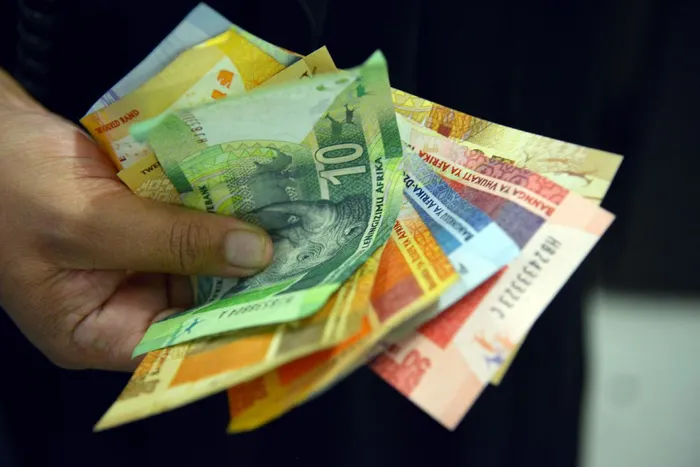
The PayInc Net Salary Index for January released on Tuesday, which tracks the nominal net salaries of an estimated 2.1 million salary earners in South Africa, indicated a marginal increase in January 2026
Image: Karen Sandison/ Independent Newspapers.
The PayInc Net Salary Index for January released on Tuesday, which tracks the nominal net salaries of an estimated 2.1 million salary earners in South Africa, indicated a marginal increase in January 2026. Economists have had some reservations about the slight increase
Shergeran Naidoo, Head of Stakeholder Engagements at PayInc, said that the average nominal salary was R21 506 in January 2026, representing a 2.2% growth from last year’s level.
PayInc said that although still early days, the data indicates that the upward trend in net salaries since 2024 has continued into 2026, driven by a gradual improvement in economic activity and the economy’s resilience, despite multiple challenges. “Given the moderate increase in consumer inflation, in real terms, the PayInc Net Salary Index declined by 1.4% compared to a year earlier but remained flat on a monthly basis in January at R20 644.”
Elize Kruger, an independent economist, said that with average consumer inflation forecast to remain moderate at 3.5% in 2026, following the 21-year low of 3.2% in 2025, even a modest salary adjustment could see a real increase in remuneration in 2026, lifting the purchasing power of earners and supporting the broader economy.
PayInc added that salary earners will be particularly interested to see if there will be any tax relief in the 2026 National Budget, due to be tabled tomorrow. “Over the past two fiscal years, tax brackets were not adjusted for inflation, resulting in salary earners receiving an increase and potentially being pushed into a higher tax category, paying a higher tax rate and forfeiting part of their increase to the taxman. SARS has estimated that this indirect tax measure could rake in R15.5 billion in additional tax revenue in FY26.”
PayInc said that South Africa’s fiscal situation has improved over the past year. “Combined with the record high commodity prices that fuelled corporate tax receipts, the stronger rand exchange and lower government bond yields have meaningfully contributed to reducing the cost of debt.”
Kruger said that Carpe Diem Research expects that the National Treasury will beat its FY25/26 budget deficit target as reflected in the Medium-Term Budget Policy Statement, deliver a faster pace of fiscal consolidation, and scrap some of the additional tax measures that are already reflected in the medium-term estimates, including the R16.5 billion to be earned from bracket creep in FY2.
Kruger added that the main focus of the 2026 Budget will be on the estimated size of the commodity windfall and government’s plans to spend this. “With SA’s debt at elevated levels, and trending sideways around 77%-78% of GDP, a prudent strategy should be in place to reduce the level of government debt, which will have the added benefit of also reducing the cost of debt.”
“The latter has already benefited from a stronger rand exchange rate, which reduces the value of South Africa’s foreign debt, as well as a notable drop in government bond yields. However, the government is likely to take a hybrid approach, reducing the funding requirement somewhat, but also spending part of the commodity windfall on pressing expenditure priorities, while the pressure to hike taxes could be softened,” she said.
Kruger concluded that a continuing trend of primary surpluses should bode well for ratings agencies’ perception about fiscal management in South Africa. “With the number of positive economic developments building, a budget reflecting prudent fiscal management will bode well for confidence levels in South Africa.”
Professor Waldo Krugell, an economist at North West University, said that it is good news that salaries are increasing, but the rate of increase is too slow.
“Around 2.2% growth in January is still below the quite low inflation rate, which means lower real incomes. It highlights the need for some tax bracket adjustments in tomorrow's Budget Speech. Some relief for taxpayers will help to shore up household finances and add to the contribution that consumer spending can make to aggregate demand,” he said.
Efficient Group Chief Economist Dawie Roodt said that this is not good news as it is below the inflation rate.
“This is not good for the average salary earner in South Africa. There are some positives; I do believe Minister of Finance Enoch Gondongwana will adjust the tax bracket, and that will give a bit of relief to personal income tax payers and that could make for a bit of a fall in salary increase. The other good news is that inflation targets are lower, and that will help as salary has not increased by as much,” he said.
BUSINESS REPORT