

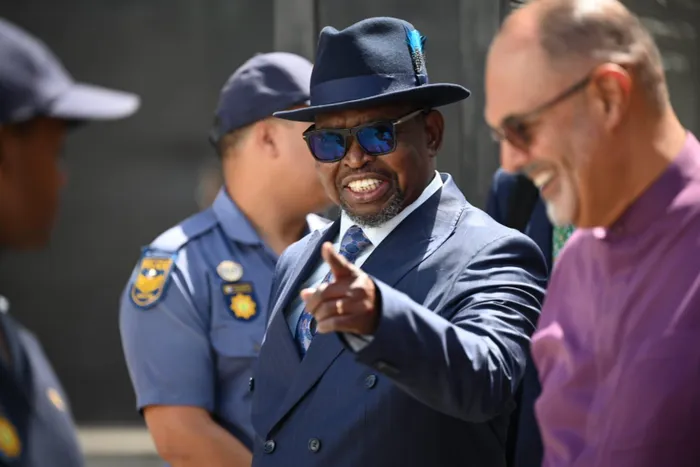
Finance Minister Enoch Godongwana delivered South Africa’s 2026 national budget speech in Parliament in Cape Town
Image: Armand Hough / Independent Newspapers
In a departure from recent years of stringent fiscal policies born from low economic growth and global disruptions like the Covid pandemic, South Africa's 2026 National Budget has brought a renewed sense of traditional budgeting practices.
Frank Blackmore, Chief Economist at KPMG Southern Africa, heralds this year’s budget as a pivotal moment, addressing items that had been deferred in the past due to revenue constraints.
This budget reflects a thoughtful adjustment, incorporating increased tax thresholds and credits which had notably lagged behind inflation.
Key measures include adjustments to tax brackets for individuals, enhancements in medical tax credits, expansions of tax-free savings accounts, and increments in retirement fund deductions.
Small businesses also benefit from an increased VAT registration threshold and enhanced capital exemptions.
Blackmore noted that these adjustments are a long-overdue correction, returning to stable budgeting principles which align fiscal outputs with inflation over the years.
In his analysis, he described the budget as “good” due to its restraint; there are no drastic increases or cuts, but rather a measured response aimed at sustainable growth.
The KPMG economist said, "On a macroeconomic perspective, what I found positive was the continued focus on economic growth as well as fiscal sustainability, and although debt went up quite considerably in last year's budget, as a percent of GDP to 78.9%, from that point, from year onwards, we see a decrease in that in that proportion, as well as in the deficit payments. That means more of the budget is going to be available for service delivery items. So, debt and deficit were great."
He added, "There were some attempts on reducing red tape specifically for SMMEs, as you heard with the VAT registration threshold as well as capital gains exemption on that side. As for concerning items in the budget, there were very few, but the increased spending of SOEs and PRASA in specific, in this budget, were noticeable."
Budget 2026 logo. As South Africa gears up for its vital budget, what can consumers expect?
Image: File.
Blackmore said that the public sector wage bill increasing by 4.6% from last year to this year was worrying.
"Given that inflation was at 3.2%. Debt service cost is still massively high, at 21.3 cents per each rand of revenue, and tax to GDP ratio remains massively high in terms of, if we add back your consolidated budget revenue and take that as portion of GDP, we are above 29%. This ratio should be closer to 25% and on the small tax base in South Africa, that kind of shows you the stress that the tax base is under," he said.
"All in all, I think it was a good budget, nothing flashy, no noticeable increases or decreases. A lot of government internal organisation to create what I would hope to be a more efficient State. A lot of reviews are taking place on how to manage municipalities, etc, but the underlying initiatives of that economic growth, translating into investment in infrastructure ongoing, we just need to see a bit more of the implementation of that infrastructure spending taking place, and then the sticking to the fiscal sustainability theme is also very important from this budget," Blackmore added.
Follow Business Report on Facebook, X and on LinkedIn for the latest Business and tech news.