

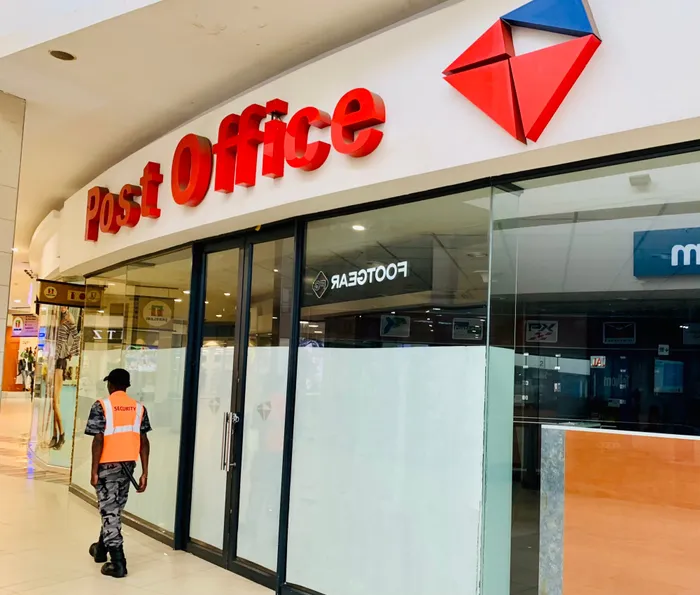
The South African Post Office (SAPO) had asked for R3.8 billion to help it out of business rescue, but no funds were allocated to it in the 2026 Budget by the National Treasury.
Image: Independent Newspapers Archives
The South African Post Office (SAPO) had asked for R3.8 billion to help it out of business rescue, but no funds were allocated to it in the 2026 Budget by the National Treasury. Instead, SAPO would receive funds from the Department of Communications and Digital Technologies for its universal service obligations to provide postal services in underserviced areas.
In the 2025/6 fiscal year, SAPO is set to receive R572.4 million, rising to R595.5 million in 2026/7 and R619.3 million in 2027/8.
SAPO was placed in business rescue on July 10, 2023. In 2023/24, SAPO reduced costs and met some operational targets, yet it remains financially stressed due to high net losses and low revenue. SAPO used the R2.4 billion allocated in 2022/23 to implement a business rescue plan. As part of this plan, it closed 354 branches and retained 657 branches.
Budget 2026
Image: Logo
For over a decade, most state-owned companies (SOC) listed under schedule 2 of the Public Finance Management Act (1999) have not met the legal requirements to maintain sustainable profitability, manage risks effectively and generate returns while ensuring prudent use of public resources. Various initiatives, including turnaround plans agreed with government, are under way, but progress has been mixed.
In the most recent financial year, the finances of major state-owned companies improved, with return on equity shifting from -15.6% in 2023/24 to 3.7% in 2024/25. Profitability was supported by efforts to improve efficiency, strengthen revenue generation and optimise balance sheets. However, this relied heavily on government support, particularly at Eskom and Transnet.
Poor quality management and the adoption of mandates that are not financially feasible should also be addressed. The Treasury said that failure to make proactive decisions will result in continued fiscal pressure or financial collapse, leading to service disruptions and large job losses.
In the interim, state-owned companies continue to use the majority of their cash to meet debt obligations. Cash flows remain insufficient to cover operational costs, financial obligations and capital requirements. Consequently, these companies are unable to effectively fulfil their mandates.
Arms manufacturer Denel remains unable to meet its financial obligations. The November 2025 Medium-Term Budget Policy Statement (MBTPS) noted that it has not submitted audited annual financial statements for four years, but it was recapitalised with R3.4 billion, of which R914 million was placed in an escrow account to support its turnaround plan.
“Despite reported progress on the execution of its turnaround plan, the entity lacks working capital. Consequently, government granted Denel access to the remaining recapitalisation funds and provided R660 million in guarantees to support project execution. As noted in previous statements, broader policy decisions, including strategic partnerships, are required for Denel's long-term sustainability. While short-term liquidity pressures have eased slightly, the entity's financial position remains fragile and the risk level is elevated,” the MTBPS said.
The increase in spending on arms as a result of various conflicts around the world should provide Denel with revenue growth going forward.
In his first Medium-Term Budget Policy Statement (MTBPS) in November 2021, Finance Minister Enoch Godongwana said he would practice “tough love” when it came to State Owned Corporations (SOC) bailouts and that came through again in his media briefing ahead of his actual October 2024 MTBPS speech.
“SOC bailouts have cost the government R520 billion over the past few years. That has meant that this money must come from somewhere and that in most cases has come from the reduction in social services, so there is an opportunity cost to SOC bailouts. One must ask what is the immediate future of the Post Office and is it sustainable in the future,” he asked.
BUSINESS REPORT