

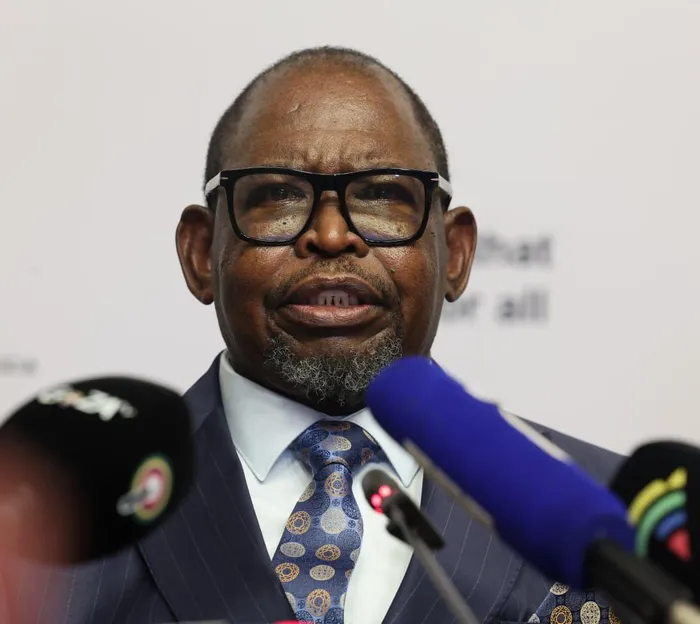
Property groups have responded positively to the adjustment of personal income tax brackets announced in the National Budget Speech by Finance Minister Enoch Godongwana on Wednesday.
Image: Supplied
Property groups have responded positively to the adjustment of personal income tax brackets announced in the National Budget Speech by Finance Minister Enoch Godongwana on Wednesday.
Dr Andrew Golding, the chief executive of the Pam Golding Property group, said that the National Treasury’s 2026 Budget strikes an appropriate balance, placing strong emphasis on a fiscal strategy that promotes inclusive growth, macroeconomic stability, and the long-term sustainability of public finances. “Equally importantly, it also delivers meaningful tax relief to consumers. The tax relief measures announced provide welcome support to consumers at a time of sustained cost pressures. Adjustments to personal income tax brackets and rebates to counter bracket creep, together with higher tax-free savings and retirement contribution thresholds, will help protect disposable income and encourage greater long-term financial resilience.”
Golding added that for the residential property market, any improvement in household cash flow is significant.
“Increased disposable income enhances affordability, supports buyer confidence and strengthens the ability of first-time purchasers to enter the market. The adjustment of personal income tax brackets and rebates to account for bracket creep, together with the increase in the annual tax-free investment limit from R36,000 to R46,000, provides welcome relief to households. The raising of the tax-deductible retirement fund contribution cap from R350,000 to R430,000 per annum further incentivises long-term savings and financial planning,” he said.
Property groups have responded positively to the adjustment of personal income tax brackets announced in the National Budget Speech by Finance Minister Enoch Godongwana on Wednesday.
Image: Supplied
Golding said that in addition, increasing the VAT registration threshold for small businesses to R2.3 million will ease administrative pressures on entrepreneurs, while the higher capital gains tax exemption on the sale of a small business by older persons offers further targeted relief. “These measures acknowledge the sustained and rising cost challenges facing South Africans, particularly increasing municipal rates and tariffs for essential services such as water and electricity. From a housing perspective, any improvement in disposable income sends a positive signal to the residential property market. First-time buyers, in particular, continue to demonstrate resilience.”
Samuel Seeff, the chairman of the Seeff Property Group, said that they welcome the stabilisation of the country’s finances, debt and plans to bring the debt and monthly interest payments down which drain the fiscus and detract from service delivery.
“The higher economic growth outlook of 1.6% (from 1.4% in 2025) is welcomed, although it is still too low for any meaningful growth and vital job creation. Welcome news includes the adjustment of the personal income tax brackets and medical tax credits for inflation, and the news that there are no major tax hikes, although the higher fuel levies will impact consumers and business,” he said.
Seeff added that other positives include the increase in the tax-free savings limit (R46,000 from R36,000) and retirement contributions (R350,000 to R430,000), and the increase in social grants, which are vital for general stability. “We are disappointed, though, that the minister did not take the opportunity to provide relief to first-time homebuyers and the property market by adjusting the transfer duty exemption threshold and the CGT tax rates. Relief here could boost transaction volumes, and provide an economic injection and higher revenues for the government. We also note the formal announcement of the lower inflation target of 3% (with a 1 percentage point tolerance band) aimed at bringing the interest rate down. The higher than necessary interest rate remains a key factor for the property sector and an impediment to the market's recovery back to 2021/2 volumes.”
Adrian Goslett, the CEO and Regional Director of REMAX Southern Africa, said the stabilisation of public finances and the emphasis on infrastructure-led growth can be seen as a strong signal of confidence for investors and property owners. “While economic growth remains modest at a projected 1.6% for 2026, sustained structural reform and improved service delivery at local government level can assist in improving real estate performance and long-term stability within the property market.”
BUSINESS REPORT