

: Kagiso Trust has labelled the recent increase in education funding as insufficient, warning that South Africa's future economic stability is at risk without more robust investment in early childhood development and vocational training. Read on to discover how the organisation advocates for transformative changes in the education sector.
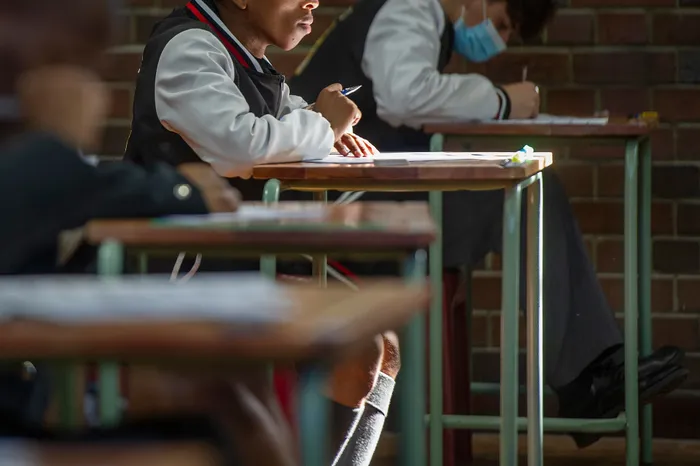
Image: Armand Hough / Independent Newspapers
Kagiso Trust expressed disappointment at the recent 2.44% increase in education funding announced by Finance Minister Enoch Godongwana.
With the cumulative allocations to basic and higher education remaining significantly below the levels required to address systemic issues, the Trust cautioned that South Africa's economic future hangs in the balance if these inequalities are not rectified.
In his Budget Speech, Godongwana allocated R358.5 billion to basic education and R155.8 billion for higher education.
Despite recognising education as a critical lever for breaking the cycle of poverty, Kagiso Trust Chief Financial Officer Mzomhle Nyenjana said that these funds fall short of necessitating transformative change.
“The scale of the challenge demands far greater investment. Inequality within our education system is an economic threat that will limit our growth for generations to come,” he said.
Addressing early childhood education, a sector where inequality begins, the government will invest an additional R12.8 billion over the next three years, expanding early childhood development (ECD) capacity for 300,000 more children.
While this initiative received praise from the Trust, Nyenjana highlighted that the necessary infrastructure, teacher training, and nutrition programmes to deliver quality ECD services at scale are notably underfunded.
“Children who miss out on quality ECD are already behind when they start Grade 1, and most never catch up,” he said.
Despite anticipated spending increases of 22.28% and 17.35% for ECD in the next two years, the Trust expressed concern that the government had not allocated sufficient resources to expand the National School Nutrition Programme, currently benefiting 9.9 million learners across 19,800 schools.
“You cannot build an economy on a foundation of malnourished, under-stimulated children,” Nyenjana warned.
The budget also reported a 60% increase in infrastructure funding for technical and vocational education and training (TVET) institutions by 2026/2027, followed by 177% increase the following year. These investments are seen as a necessary step to address South Africa’s skills mismatch crisis, where a surplus of unemployed graduates stands in sharp contrast to the demand for critical skills.
Nyenjana added, “This will go a long way to deal with the mismatch crisis. Elevating TVET as a respected, viable pathway requires substantial investment in infrastructure, equipment, lecturer training, and workplace partnerships.”
While the moves towards restructuring the training landscape are welcome, assurances of quality improvements in technical training must accompany these investments. The increased return of the skills development levy to employers, from 20% to 40%, signals potential for workplace-based learning, but only if training quality sees significant enhancement.
Kagiso Trust raised the alarm over a projected 6.68% reduction in the National Student Financial Aid Scheme (NSFAS) allocation in 2026/2027.
With subsequent years reflecting slight increases, the Trust remains concerned this will not bridge the gap for the “missing middle” students whose families earn too much to qualify for NSFAS yet lack the means for exorbitant tertiary fees.
While acknowledging President Ramaphosa’s directive to tackle the shortage of student accommodation, the Trust insisted that innovative financing partnerships with financial institutions must evolve swiftly from directive to implementation.
With vast numbers of schools still lacking basic amenities such as reliable electricity, water, and sanitation, Nyenjana underscored that reduced allocations to infrastructure pose a grave risk.
Despite the R1.2 billion earmarked for sanitation improvements in several provinces, he remains cautious about the promise of eradicating pit latrines within the next year.
“You cannot deliver quality education in buildings that leak, classrooms without electricity, or schools where children use pit latrines,” he said. He sternly noted that infrastructure investment requires more than a mere annual 0.6% increase over the next three years," he said.
Amid these fiscal constraints, Nyenjana reiterated the urgency of adequately addressing educational disparities, “We cannot trade away our future. The education system poses as much of a threat to South Africa’s future as energy security or national debt.”
Despite a commendable 88% matric pass rate, the figure belies a more complex picture where only half of students progress to this level, exacerbating overcrowded classrooms and inadequate teacher training.
Kagiso Trust said it is determined to advocate for targeted investments in early childhood development, TVET, and comprehensive support for learners, stressing that South Africa's greatest asset lies within its classrooms.
“Investing in human capacity isn’t charity. It’s how nations become competitive, innovative, and prosperous. That’s the budget conversation we need to be having,” Nyenjana said.
Follow Business Report on Facebook, X and on LinkedIn for the latest Business and tech news.