

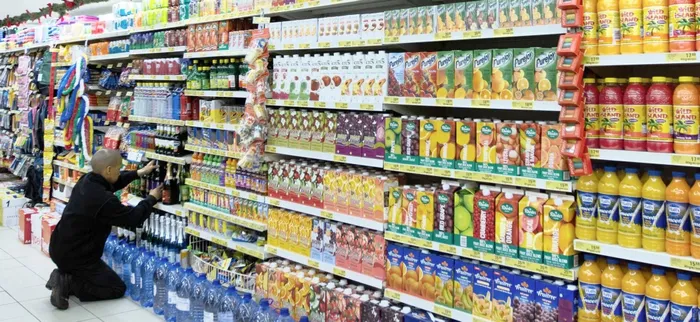
Stats SA said that the annual producer price inflation report on Thursday. (final manufacturing) was 2.2% in January 2026, compared with 2.9% in December 2025.
Image: IFile ndependent Newspapers
Stats SA said that the annual producer price inflation report on Thursday was 2.2% in January, compared with 2.9% in December 2025.
Stats SA said that the producer price index (PPI) decreased by 0.2% month-on-month in January 2026.
“The main positive contributors to the headline PPI annual inflation rate were food products, beverages and tobacco products (2.4% and contributing 0.7 of a percentage point) and furniture and other manufacturing (12.2% and contributing 0.5 of a percentage point)," it said.
Stats SA added that the main negative contributor to the monthly rate was coke, petroleum, chemical, rubber and plastic products (-2.3% and contributing -0.5 of a percentage point). “The annual percentage change in the PPI for intermediate manufactured goods was 10.5% in January 2026, compared with 10.1% in December 2025.”
Stats SA said that the annual percentage change in the PPI for intermediate manufactured goods was 10.5% in January 2026, compared with 10.1% in December 2025.
Stats SA added that the main positive contributor to the monthly rate was basic and fabricated metals (5.9% and contributing 3.0 percentage points). The annual percentage change in the PPI for electricity and water was 16.7% in January 2026, compared with 16.9% in December 2025. The index increased by 0.3% month-on-month.
Stats SA said that the annual percentage change in the PPI for mining was 28.4% in January 2026, compared with 25.7% in December 2025. “The index increased by 5.1% month-on-month. The positive contributors to the annual rate were non-ferrous metal ores (51.3% and contributing 22.3 percentage points) and gold and other metal ores (23.9% and contributing 6.6 percentage points).”
Lara Hodes, Investec Economist, said that headline producer price inflation (PPI) decreased by -0.2% month on month (m/m) in January, translating to 2.2% when measured on a year-on-year basis, from 2.9% y/y logged at the end of 2025.
“Specifically, the petrol price fell by -66c/litre in January, while the diesel price decreased by -R1.37/litre aiding inflation lower during the month. The coke, petroleum, chemical, rubber and plastic products grouping (in which fuel price dynamics are measured) detracted -0.5% from the monthly outcome and -0.2% from the annual headline result,” she said.
Hodes added that further cuts in both the petrol and diesel price were announced in February; however, a pick-up in the global oil price to over $70/bbl could see hikes reinstated in March.
“Moreover, manufactured food price inflation eased notably to 0.8% y/y from 1.7% y/y in December. This is in line with international agricultural commodity price movements, which affect local prices through export/import parity. Global food prices fell by -2.1% m/m in January (Economist commodity food price index) while the rand strengthened by 3.4% m/m against the US dollar,” she said.
Hodes said that the contribution from the food products, beverages and tobacco products category, which comprises 29.2% of the PPI basket, was accordingly -0.1%, while its contribution to the annual headline reading eased to 0.7%, from 0.9% previously.
“A disaggregation of the food basket indicates that while meat and meat products’ inflation eased further from 14.8% y/y, it still remains somewhat elevated at 12.5% y/y. The domestic cattle industry continues to grapple with foot-and-mouth disease; however, widespread vaccination remains a priority,” she said.
Hodes added that by the end of March, a total of over five million vaccines will have entered the country from the three international suppliers, the Department of Agriculture has noted. “Locally, the Agriculture Research Council (ARC) has committed to producing 20,000 vaccines per week and scaling up to 200,000 per week in 2027.”
Nedbank Group Economic Unit said that the outcome was lower than their and the market’s expectations.
“The numbers are based on reweighted components of inflation. The downward pressure emanated mainly from a drop in fuel prices and a moderation in food inflation. These outweighed the acceleration in prices of metals, machinery and equipment,” Nedbank said.
The Unit added that they expect PPI to rise moderately in the coming months, primarily reflecting a normalisation off last year’s low base and higher food and fuel prices. “Muted PPI against a backdrop of patchy domestic demand and excess capacity in some industries implies that the pass-through to consumer inflation should remain limited in the short term.”
BUSINESS REPORT