

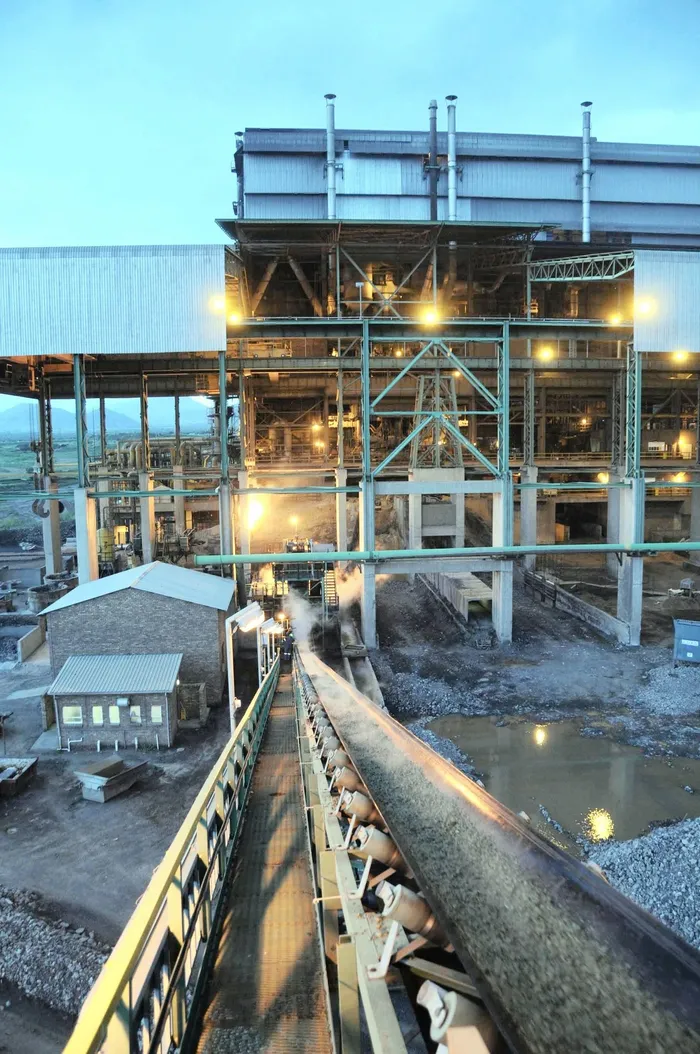
A section of the Glencore Merafe Chrome Venture.
Image: Supplied
Eskom has committed to identifying viable pathways toward a more appropriate price trajectory for industries in distress, as labour called for building on the processes that led to the Glencore-Merafe Chrome Venture and Samancor being granted a 62 cents per kilowatt-hour tariff.
This tariff is expected to secure about 11,000 jobs and reopen 69 smelters by the end of the year, helping to address the many other challenges facing various manufacturing sectors.
Eskom indicated that the package being prepared for Glencore-Merafe Chrome Venture and Samancor would form the basis of a standard smelter offer that could be extended to other ferroalloy producers, including smelters that process manganese and vanadium.
The Eskom offer follows an announcement by the Minister for Electricity and Energy, Kgosientso Ramokgopa, who said the initial relief would target two smelters that had begun retrenchment processes. He added that the government was considering broader tariff support for the sector.
“As a result of this intervention, we expect that by December of this year, we’re going to have 45 smelters operating, and by December 2027, we will have 49 smelters operating. So this is significant,” Ramokgopa said.
The current Eskom standard tariff is 195.95c/kWh, which includes subsidies for industrial customers that have secured a negotiated price agreement with the utility.
Eskom’s Group Chief Executive, Dan Marokane, said, “Eskom’s priority remains balancing industrial support with our responsibility to ensure a sustainable electricity supply. We remain committed to working with government, labour, and industry to safeguard jobs while maintaining financial discipline. The proposed contract and framework aim to stabilise the ferrochrome industry by supporting its recovery. Meanwhile, Eskom is identifying viable pathways toward a more appropriate price trajectory for distressed industries, subject to Nersa approval.”
Trade union Solidarity said the 62c tariff could mark a significant turning point and urged sustainable solutions for all participants in the sector. The union supports engagement between government and other stakeholders to ensure the industry’s viability.
Willie Venter, Deputy General Secretary of Solidarity, said, “However, we hope that the intention will be extended to safeguard jobs at smelters other than those belonging to Glencore and Samancor. This is, therefore, not yet a comprehensive solution for the broader steel and manufacturing industry, and urgent work remains necessary to find solutions for the broader sector as well.
"We urge the employers benefiting from this positive change to now take the necessary steps to bring the 45 smelters scheduled to be online by the end of 2026 into operation, and the remainder by the end of 2027. These smelters now have a significant responsibility to operate sustainably, create jobs, and protect employment," he said.
The Congress of South African Trade Unions (Cosatu) said that once approved by the National Electricity Regulator of South Africa (Nersa), the tariff would provide welcome relief to workers at these companies while simultaneously enabling them to reopen previously mothballed smelters.
The details of the package, including its structure, duration, take-or-pay commitments, and any risk-and-reward sharing mechanisms, will be known after Eskom concludes its negotiations with the sector and submits the agreement to the Nersa for approval of the discounted tariff.
BUSINESS REPORT