

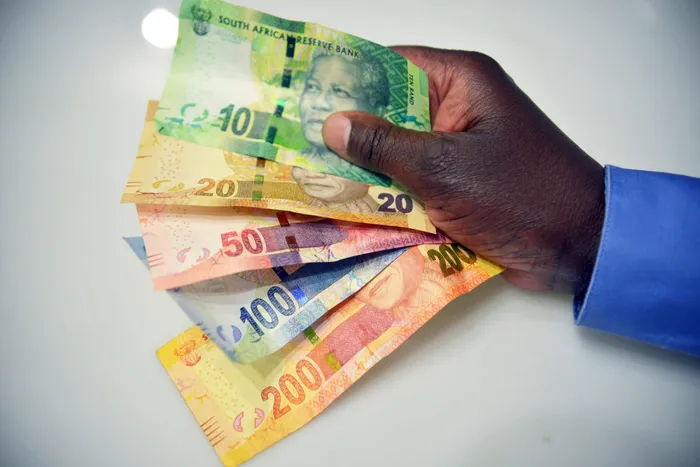
The rand faces neutral to weaker risks of impact from the US and Israel war in Iran.
Image: File
The rand faces neutral to weaker risks of impact from the US and Israel war in Iran, said analysts at BMI, highlighting though that higher gold prices are poised to offer some sort of support to offset the full impact of rising energy import costs.
The war in Iran has disrupted trade and shipping routes, pushing up oil and gas prices for South Africa and other regional and international markets that are reliant on imports of these commodities. Further escalation into a prolonged geo-political conflict could have an impact on Sub-Saharan African countries although the impact was likely to be uneven.
The analysts BMI, a Fitch Solutions company, said the balance of risks of the war in Iran on the rand would be “neutral to weaker”. nonetheless, oil exporters such as Nigeria, and to a lesser extent Angola would likely benefit from higher crude prices.
“Net importers such as Kenya and South Africa would face depreciatory pressures driven by weaker terms of trade and risk off sentiment,” said BMI.
For South Africa, higher gold prices are expected to offer some support. South Africa gold producers such as Pan African Gold, Harmony Gold and Sibanye-Stillwater have raked in increased revenues on the back of higher gold prices.
The positive impact of bullion prices would, however, be “offset by rising imported energy costs” for South Africa. Fitch Solutions said recently that South Africa’s economic growth prospects have firmed amid reforms to the logistics sector, enhanced confidence in economic policy and monetary easing. Nonetheless, after the outbreak of the war in Iran, risk aversion could weigh on the rand, given the currency's “traditional status as a bellwether emerging-market” asset.
“South Africa's historically close ties with Iran would also further strain relations with the US, pushing up political risks and weighing on foreign demand for South African assets,” the BMI analysts said.
Elsewhere in Africa, a sustained rise in global oil prices could be a net positive for the Nigerian naira as the West African economic powerhouse now has substantial domestic oil refining capacity.
Still, a flight to safe haven assets could dent portfolio inflows which have, in recent quarters, been a major driver of Nigeria's improved external buffers, said BMI.
Higher energy import costs are expected to erode external buffers for non-oil exporters, with the DRC and Mauritius facing vulnerabilities linked to potential shortages. Zimbabwe had already hiked fuel prices effective March 5, the Zimbabwe Energy Regulatory Authority (ZERA) confirmed.
“Broadly speaking, we consider countries with an already-strained external position and considerable currency overvaluation (in real effective exchange rate terms) to be at most risk of weakness in an escalatory US-Iran conflict scenario,” said the BMI analysts.
The Zambian kwacha was also set to weaken in an escalatory scenario, with Lusaka’s surge in energy prices inflating the import bill and reigniting domestic FX liquidity pressures. Moreover, Zambia has benefitted from a surge in foreign demand for its assets, especially domestic government debt.
Renewed risk aversion would prompt capital outflows from Zambia, exerting depreciatory pressure on the kwacha currency. Positively though, elevated copper prices are projected to provide some support, limiting downside risks.
BUSINESS REPORT