

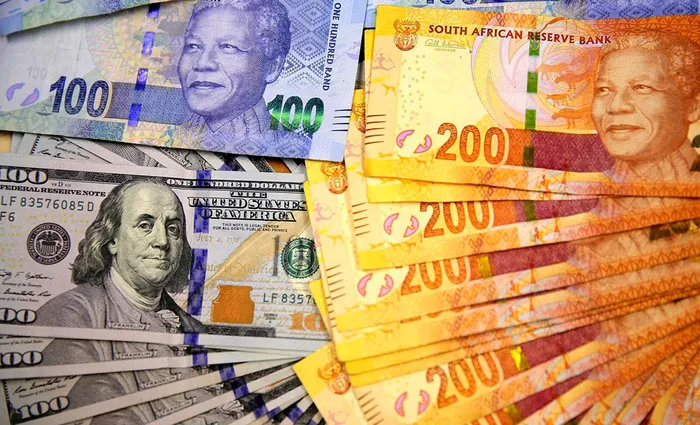
Total municipal consumer debt rose to R467.2bn, compared with R405.1bn a year earlier.
Image: Reuters
National Treasury says municipalities’ weak 39% spending of conditional grant allocations in the second quarter of the 2025/26 financial year points to unrealistic cash-flow projections and inadequate project readiness.
In its latest report on municipal allocations and expenditure, Treasury said several municipalities were not sufficiently prepared to implement planned projects due to Supply Chain Management (SCM) inefficiencies and capacity constraints, which delayed project execution.
Capacity-building conditional grants also underperformed, with the exception of the Expanded Public Works Programme (EPWP) grant, where municipalities spent 46.5% of allocations by the end of the second quarter.
The Infrastructure Skills Development Grant and the Financial Management Grant (FMG) recorded spending of 40.5% and 39.4% of their R172.8 million and R585.9m allocations respectively.
Treasury said municipalities’ ability to collect revenue remains a key challenge.
“There is a relationship between municipalities’ ability to collect outstanding debtors and the payment of creditors. Delays in collecting debtors affect cash flow and result in delayed payments to suppliers,” Treasury said.
Municipal creditors amounted to R160.8 billion as of December 31, 2025, up from R127.9bn in the same period of the 2024/25 financial year. Most of the debt — R135.9bn (84.5%) — has been outstanding for more than 90 days.
Municipalities collectively budgeted for R706.6bn in revenue for the 2025/26 financial year and had realised R360.7bn (51%) by the end of December.
Total expenditure reached R312bn against an adopted budget of R698bn, representing 44.7% performance.
Operating expenditure stood at R283.9bn, accounting for 45% of the R619.2bn operating budget, while capital expenditure reached R28.1bn, representing 35.6% of the R78.9bn capital budget.
Treasury said the capital spending target for December 31 was R36.3bn, leaving municipalities R8.2bn (22.5%) behind target.
Historically, capital spending tends to accelerate in the fourth quarter, although reporting inaccuracies — including some municipalities recording negative capital expenditure — continue to distort performance.
The wage bill accounts for 27.9% of the total operating budget, while 50 municipalities reported negative cash balances during the second quarter.
Revenue collection also fell short of expectations. While municipalities had budgeted for a 78.6% collection rate by the second quarter, actual collections were 69% of billed revenue.
Total municipal consumer debt rose to R467.2bn, compared with R405.1bn a year earlier, with R5.4bn (1.1%) written off as bad debt.
Businesses owe municipalities R94.7bn (20.3%), while organs of state owe R27.6bn (5.9%).
Treasury said municipalities must strengthen credit control and debt collection measures to improve financial sustainability.
To support infrastructure development and service delivery, the 2025/26 Division of Revenue Act (DoRA) allocates R52.1bn in infrastructure conditional grants, rising to R55bn in 2026/27 and R54.8bn in 2027/28 under the medium-term expenditure framework (MTEF).
By the end of the second quarter, R28.9bn (67.9%) of infrastructure grants had been transferred to municipalities, while R19bn (44.5%) had been spent from an allocation of R42.7bn, excluding the Urban Settlements Development Grant (USDG) and Urban Development Financing Grant (UDFG).
Treasury said the largest municipal debts relate to bulk electricity (R87.9bn or 55%), followed by trade creditors (R35.5bn or 22%) and bulk water (R27.3bn or 17%).
Debt owed for bulk electricity alone increased by R19.2bn (28%) compared with the same period in the 2024/25 financial year.
BUSINESS REPORT