

Global fuel market dynamics play an enormous role in determining fuel prices. Supply and demand remains very relevant in what the (global) customer is prepared to pay for a barrel of oil, as well as the perceived shortage that drives a buying spree and thus the price for a barrel.
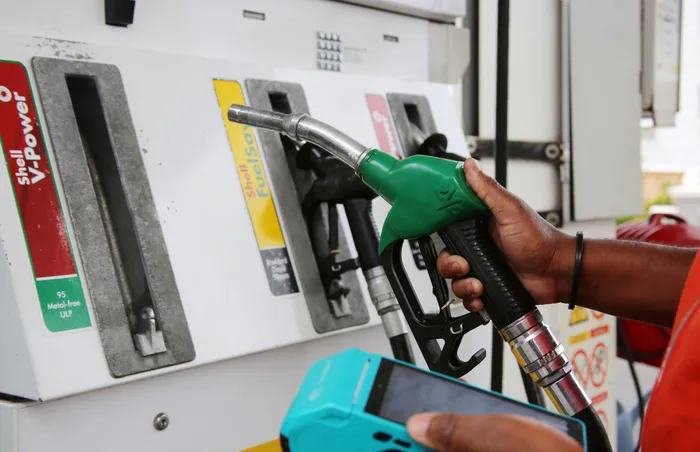
Image: Tumi Pakkies / Independent Newspapers
Why is South Africa so vulnerable to petroleum supply issues and global fuel price trends? But, more importantly, how do we protect ourselves in the future?
Global fuel market dynamics play an enormous role in determining fuel prices. Supply and demand remains very relevant in what the (global) customer is prepared to pay for a barrel of oil, as well as the perceived shortage that drives a buying spree and thus the price for a barrel.
Secondly, as oil is primarily bought with US Dollars – the value of the Rand against the Dollar plays a further (in our case) negative role in resulting in more expensive fuel at the pump.
Unfortunately, most petroleum products (crude oil and refined petroleum products) consumed in South Africa are imported, and this directly results in the domestic fuel cost either rising or falling.
The March increase was primarily caused by the increasing global oil prices, geopolitical concerns, and the growing instability in the global supply of energy networks. The political turmoil in major oil producing countries has now caused increased volatility to the market, which has led to worries about possible interruptions to the major distribution and transportation routes.
Oil markets typically react quickly to geopolitical risks, pushing crude prices higher and driving up the cost of refined fuel products downstream. For an economy like South Africa that imports oil, the outcome is often inevitable: higher domestic energy prices.
Unfortunately, the fuel price increase does not end with the consumer at the pump . Once fuel prices increase, the cost of moving goods from agricultural / mining / production sites to manufacturing / processing / distribution centres and finally to retailers is exposed to these input price increases.
Road freight logistics plays a crucial role in the long-distance moving of goods among ports, factories, warehouses, and retail locations. These will all feel the effect of increases.
Companies need to remain financially viable, and thus transport companies must choose whether to increase their rates (by a variety of factors of either full fuel price increase or a percentage thereof), or whether they have the financial reserves to withstand the increases.
The latter will place pressure on cashflow and reserves. Rate adjustments are often inevitable due to the recurring fuel price strain, even if some transport operators may temporarily withstand the cost to preserve contracts and relationships with clients.
The fuel price increase in March illustrates how vulnerable the country’s transport sector is to international energy trends – with some really frightening figures being bandied about for April – should the current trajectory of increases and Rand weakness continue.
1. Why can we not produce enough of our own (synthetic) fuels?
2. Where are we with alternative fuel / energy resources?
3.The fuel levy – how can it help?
One must remember that the fuel levy is seen by Treasury as general income into the fiscus – and it is a rather large one. It has not been “ringfenced” for road users’ requirements (one can argue that those who buy fuel and pay the levy, require well maintained roads). Those who buy fuel (especially diesel) and use it for farming or shipping are able to claim the fuel levy back via SARS.
At the onset of the Ukraine war in 2022, there was hot debate about reviewing the Basic Fuel Price methodology which had the (then) Department of Mineral resources and Energy (DMRE) and Treasury announcing a temporary R1.50 reduction in the general fuel levy. More importantly – there was a proposal for reviewing the Regulatory Accounting System (RAC).
To the best of the knowledge of the Association, the RAC was not reviewed – and perhaps it is time to review this together with the questions posed by the Association.
It is important to consider that the fuel levy is termed a “general fuel levy” and that this implies that portions of the generated funds through the levy are applied to various aspects of the fiscus. Thus, any relaxation in the level (amount) of the levy would have a material effect on the funding requirements of Treasury.
South Africa certainly cannot continue to remain vulnerable to international fuel prices when it has both the means and the ability to fairly quickly, and reasonably affordably, build the infrastructure to secure its own energy (fuel) needs.
Gavin Kelly, CEO of the Road Freight Association.

Gavin Kelly, CEO of the Road Freight Association.
Image: Supplied.
Follow Business Report on Facebook, X and on LinkedIn for the latest Business and tech news.