
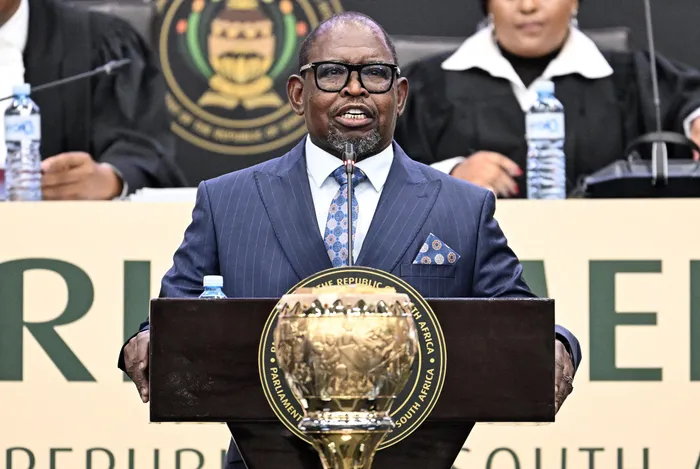
The comments came as Parliament’s finance committees reviewed public submissions on the 2026 National Budget, with several civil society organisations and policy analysts calling for additional measures to increase revenue from high-net-worth individuals.
Image: GCIS
The National Treasury has pushed back against renewed calls for a wealth tax, arguing that the country already has one of the most progressive tax systems in the world and that additional taxes on wealth could undermine economic growth and investment.
Officials from the National Treasury told Parliament during budget oversight hearings on Friday that South Africa’s existing tax framework already captures wealth through a combination of personal income tax, capital gains tax and estate duties.
Chris Axelson, head of tax and financial sector policy at the Treasury, said introducing a dedicated wealth tax would likely bring administrative complexities and may not generate sufficient revenue to justify the costs of implementation.
“We already have a comprehensive personal income tax system,” Axelson told lawmakers. “When you combine that with capital gains tax and estate duties, wealth is already being taxed in a number of different ways.”
The comments came as Parliament’s finance committees reviewed public submissions on the 2026 National Budget, with several civil society organisations and policy analysts calling for additional measures to increase revenue from high-net-worth individuals.
Proponents of a wealth tax argue that the policy could help reduce inequality while generating resources for social spending in a country with one of the widest income gaps in the world.
However, Treasury cautioned that the country’s tax base is already narrow and heavily dependent on a relatively small group of taxpayers.
South Africa’s personal income tax system is highly progressive, meaning higher-income earners pay a disproportionately larger share of taxes. According to the Treasury, a small number of taxpayers already contribute a significant portion of the country’s revenue through personal income tax.
Treasury's presentation also noted that the country’s tax-to-GDP ratio is currently at record highs and is projected to increase further over the medium term.
“The level of tax that we collect relative to the size of the economy is already very high,” Axelson said. “While we would always want revenues to grow, we have to consider the potential impact of higher taxes on economic growth.”
Treasury emphasised that expanding the tax base through stronger economic growth remains the most sustainable way to increase government revenue.
Under a progressive tax system, rising incomes automatically lead to higher tax collections. If economic growth accelerates and household earnings rise, the tax-to-GDP ratio will naturally increase without the need for new taxes.
Treasury also highlighted that international tax cooperation has strengthened in recent years, making it easier to track offshore assets and income.
South Africa now receives financial account information from other jurisdictions as part of global tax transparency initiatives. This information is used by the South African Revenue Service (Sars) to monitor high-net-worth individuals and ensure they comply with local tax obligations.
Treasury said these mechanisms have significantly improved the ability of tax authorities to identify hidden wealth and close loopholes in the system.
“We continue to review the tax system every year to identify gaps and potential avoidance strategies,” Axelson said. “Where we see loopholes, we move to close them.”
Among the changes being considered are adjustments to prevent individuals who become non-residents from transferring large sums of money offshore through donation structures without paying appropriate taxes.
Treasury also defended existing tax mechanisms aimed at supporting household financial stability and long-term savings.
For example, retirement fund deductions are structured as a tax deferral rather than a permanent tax break. While taxpayers receive a deduction when contributing to retirement savings, those funds are taxed when individuals withdraw them during retirement.
Similarly, the medical tax credit system provides a fixed credit amount regardless of income level, which Treasury officials say benefits middle- and lower-income earners proportionally more than high-income taxpayers. According to Treasury data, more than 60% of medical tax credit claims come from individuals earning less than R500,000 per year.
Despite these arguments, the debate around wealth taxation is likely to continue as policymakers grapple with the challenge of funding social spending while maintaining fiscal sustainability.
Treasury reiterated that balancing these priorities remains a central goal of the budget process, warning that while raising taxes may appear to offer a quick solution to fiscal pressures, policymakers must carefully consider the broader economic implications.
“The key objective is to strike a balance between generating revenue for essential services and maintaining an environment that supports economic growth and investment,” Axelson said.
BUSINESS REPORT