

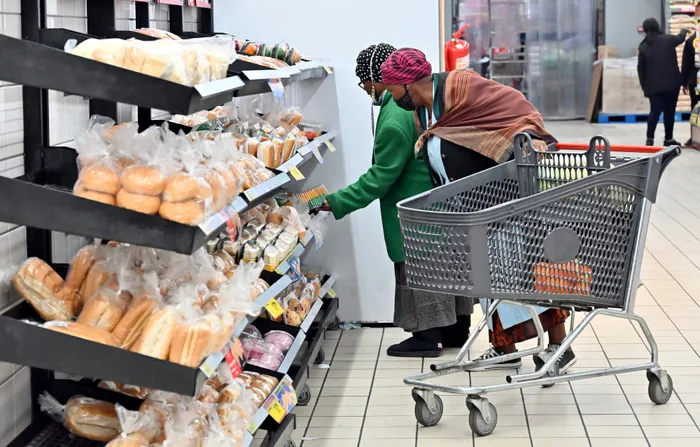
Experts believe that CPI inflation will remain below 4% ahead of Stats SA's announcement of CPI for February 2026 on Wednesday.
Image: Ayanda Ndamane/ Independent Newspapers.
Economists expect South Africa’s inflation rate to remain below 4% when the February 2026 consumer price index (CPI) figures are released on Wednesday by Statistics South Africa, although rising global oil prices could create renewed inflationary pressures in the months ahead.
Several analysts say the upcoming data is likely to reflect relatively moderate inflation levels, largely because it captures a period when the rand was still relatively strong and before the recent surge in international oil prices.
Professor Bonke Dumisa, an independent economic analyst, said the inflation rate will remain in control under 4% because it is for the period when the rand was still very strong and before the international Brent crude oil prices skyrocketed.
Shannon Bold, senior economist at Bureau for Economic Research (BER), said that they expect headline inflation to slow to around 3.2% year-on-year in February.
“The recent spike in global oil prices could push fuel costs higher in the near term, likely resulting in a temporary uptick in inflation rather than a sustained shift in the overall inflation trajectory," Bold said.
Professor Waldo Krugell, an economist at North-West University, said that the Bloomberg poll has economists expecting a decline in the CPI inflation rate to 3.1% before the higher oil price and weaker rand-dollar exchange rate, and it does not reflect current reality.
"Some other good and outdated news is that inflation expectations also declined in Q1. The BER has average five-year inflation expectations at a record low of 3.6%. I hope that as soon as the war passes, we can get back to this.”
Neil Roets, the CEO and co-founder of Debt Rescue, said the upcoming inflation figure should be interpreted cautiously.
“Even if the headline number reflects some short-term relief, the broader outlook remains uncertain, particularly if global oil prices continue to rise. This uncertainty also makes it less likely that consumers will see interest rate relief in the near term,” Roets said.
“Some economists have indicated the possibility of annual inflation slowing again in February, potentially easing to around 3.1% from 3.5% in January. This expected moderation is largely linked to statistical base effects and the petrol price decrease that came into effect at the beginning of the month. However, that does not necessarily mean that underlying price pressures have disappeared or that consumers are experiencing meaningful relief."
Roets said that monthly inflation is expected to show a slightly stronger increase than the previous month, highlighting the ongoing volatility in price movements.
“Food inflation has also remained relatively contained recently, partly supported by favourable global price conditions, which has helped prevent sharper increases in some grocery items. At the same time, there are emerging risks that could shift the inflation outlook in the months ahead.”
Roets added that rising global oil prices linked to conflict in the Middle East, together with currency pressures, could push fuel costs higher again. He said what matters most is how inflation translates into real household pressure.
“Even when the official inflation rate appears moderate, many South Africans continue to feel the incredible strain of rising living costs, particularly when it comes to essentials such as food, transport, and electricity," Roets said.
"In this environment, even small increases in the cost of basic goods can have a significant impact on already stretched household budgets.”
BUSINESS REPORT