

Every platform extracts something. The question is whether you get to choose what.
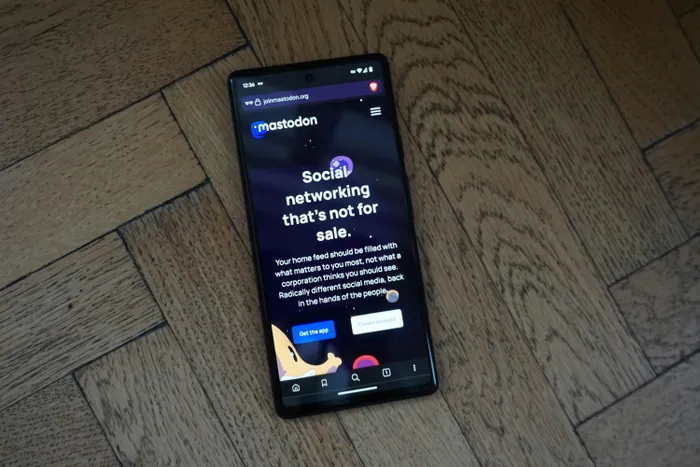
Image: Rolf van Root on Unsplash.
Something I have been building quietly went public last week. I am the Executive Editor of Future in the Humanities (FITH), an open exchange platform I am constructing alongside Founding Chair Professor Iginio Gagliardone, out of the SA–UK SARChI Chair in Digital Humanities at Wits University.
We are building in public, with the kind of candour that makes institutional communications teams nervous. Our opening salvo, an op-ed by Dr Rejoice Malisa-van der Walt in Business Day on what the drone strikes on Dubai should mean for African policymakers silent on AI-powered military systems, is already resonating in South Africa’s defence research community.
What follows is an invitation behind the curtain. Gagliardone and I recently discussed Mastodon, the decentralised social media platform, and why it matters for how FITH shows up in the world. We didn’t agree on everything. That is the point.
Gagliardone’s argument begins with sovereignty. When an African academic, politician or activist posts on X, the value of that interaction is extracted and monetised by a company headquartered in the United States. In a recent Forbes Africa feature by Tamsin Mackay on Africa’s AI divide, he pointed out that the United States Clarifying Lawful Overseas Use of Data Act, aka the US CLOUD Act, compels American-headquartered companies to share stored data on demand from US law enforcement, even when that data sits outside the United States. Data sovereignty is not an abstraction. It is a live policy concern.
Mastodon offers a structural alternative. It is not a platform in the conventional sense but a protocol: a federated network of independently hosted servers communicating through ActivityPub. If a university, government department or any African institution hosts a Mastodon instance, conversations remain on that server. No extraction. No algorithmic curation designed to maximise engagement at the expense of wellbeing. No billionaire owner whose political allegiances might reshape the terms of participation overnight.
Robert W. Gehl, in his 2025 book Move Slowly and Build Bridges (Oxford University Press), frames the Fediverse (the broader decentralised network Mastodon belongs to) as a covenantal project: small, self-governing communities connecting through shared ethical commitments rather than commercial imperatives.
Gagliardone takes that further. Mastodon, he contends, is “by definition not a hegemonic project.” It does not aspire to replace X. It aspires to demonstrate that a plurality of ways of being online can coexist. For him, as for Gehl, this is not a platform preference. It is a political position.
I find the argument compelling and insufficient in almost equal measure.
I have gone on record, including on camera in TechTides: The Take, as being an active user and, yes, a fan of LinkedIn and pre-acquisition Twitter, with serious qualifications. LinkedIn is the only platform where I’ve built professional relationships that translated into real opportunities. Not followers. Not clout. Actual connectivity.
African Tech Roundup led to BBC engagements, international consulting and a career-defining introduction for my wife Sithabiso that emerged from a conversation initially unrelated to her work. Pre-X Twitter gave me verified credentialisation back when it wasn't purchasable for USD 8 a month.
These outcomes happened (at least in part) because the platforms had scale, reach and, in LinkedIn’s case, professional norms that made predictably unpredictable (but undoubtedly impactful) connections possible.
Mastodon has fewer than 700,000 monthly active users globally. It peaked at roughly 2.5 million in late 2022 and has been declining since.
A platform that purposefully doesn’t keep you longer than you want to stay is admirable. But a platform nobody joins is effectively an empty room with excellent house rules.
FITH is showing up on LinkedIn, with more spots on the web set to go live in the coming weeks (think Substack and podcast vibes).
We are, however, decidedly not on X — nor will we ever be.
That is the founding Chair's line in the sand, rooted in the sovereignty and extraction arguments above, and I take it seriously. But the tradeoffs deserve naming.
LinkedIn’s recent algorithmic overhaul, well documented by brand strategist Justin Oberman, now filters content through AI-driven semantic embeddings before your network sees it.
Original thinking that does not match established engagement patterns becomes structurally invisible.
We're poised to build a great deal of FITH's public presence on a platform that may be quietly working against the kind of work we produce.
Consistently reaching followers who sign up to our page, and new audiences who don't yet know they'd benefit from our feed, gets harder when an algorithm decides what exists before a human being ever sees it.
Unless, of course, we cough up cash to LinkedIn for the privilege of targeting exactly who gets to view our posts.
My deeper reservation about Mastodon concerns what happens once you’re inside. Gagliardone describes its community governance as the equivalent of basic civility: you do not need to be told not to spit on someone’s floor when you walk into their home.
I am less sanguine. At what point does healthy community moderation tip into doctrinal enforcement? Gehl’s book documents this directly: the politics of defederation, instances blocking other instances over ideological disagreements, the burnout that accompanies collectively governing a space where the rules are written by the inhabitants.
These aren’t hypothetical risks. They’re documented features of the system.
Gagliardone argues that absolute freedom online is overrated and points to X as evidence. I partly agree. Freedom is, after all, an unwieldy and inconvenient currency. The truth is that the brokenness visible on X is not solely a product of its design, or even a product of its notorious overlord Elon Musk.
It reflects something about human nature that no protocol can engineer away.
The question is whether, in correcting for the worst of platform capitalism, we create alternatives that demand a level of ideological buy-in the average user has neither the time nor the inclination to provide. Or worse, we unwittingly trade one worryingly fickle overlord for another.
Mastodon’s argument appears strongest when directed at institutions. I reckon a university or government department with the resources and mandate to host an instance and steward a community has a genuine case to make.
Gagliardone has plans to experiment with exactly that: testing the viability of Mastodon deployment in an institutional-led setting through collaborations orchestrated by the Chair. You best believe I will be riding shotgun to bring you updates on how that goes.
For individuals building careers and livelihoods across the African continent, the calculation remains different. The least convenient option often ends up being the most constructive one. But it has to be accessible before it can be constructive.
In the meantime, FITH will continue to build in public, on the platforms where our audience already is, while interrogating the terms on which those platforms operate. This isn’t a manifesto. It’s a working position, subject to revision.
Andile Masuku is co-founder and executive producer at African Tech Roundup. He serves as executive editor of Future in the Humanities (FITH), powered by the SA–UK Chair in the Digital Humanities at Wits University. Connect and engage with Andile on X (@MasukuAndile) and via LinkedIn.

Andile Masuku is co-founder and executive producer at African Tech Roundup. He serves as executive editor of Future in the Humanities (FITH), powered by the SA–UK Chair in the Digital Humanities at Wits University. Connect and engage with Andile on X (@MasukuAndile) and via LinkedIn.
Image: Supplied.
Masuku also serves as strategic advisor to Professor Gagliardone's SA–UK SARChI Chair in Digital Humanities at Wits University.*
Follow Business Report on Facebook, X and on LinkedIn for the latest Business and tech news.