

The 2026 Grain SA Congress held recently said that there is a clear message from the congress that there is a widening gap between the cost of production and the returns producers receive.
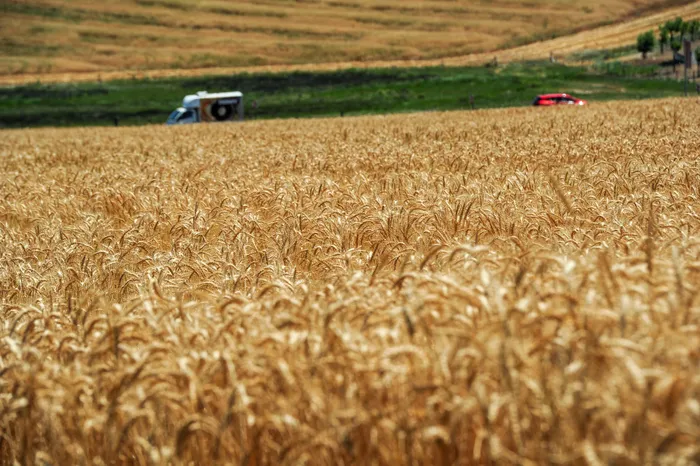
Image: Picture: Henk Kruger Independent Newspapers
The 2026 Grain SA Congress held recently warned of a widening gap between the cost of production and the returns producers receive.
Grain SA on Thursday said that South African grain farmers are resilient and innovative, but the current operating environment is placing unsustainable pressure on profitability and long-term viability.
“One reality stood out: grain producers are being squeezed from every direction. Input costs remain high, grain prices have come under pressure, policy uncertainty continues to weigh on planning and investment, and global volatility is increasingly finding its way to the farm gate.”
Grain SA added that producers made it clear that food security cannot be separated from farm profitability.
“If producers cannot remain commercially viable, the country’s wider food system becomes more fragile. Fertiliser continues to account for a major share of production costs, often between 35% and 50%, while fuel makes up another 12% to 18%," it said.
"Producers were warned that further pressure is likely, with rising shipping risk premiums, renewed geopolitical instability and a projected diesel increase placing even greater strain on already thin margins.”
Grain SA added that this comes at a time when many producers are harvesting or preparing to plant into markets that are markedly weaker than when input decisions were made.
“In practical terms, many farmers are now carrying the cost of an expensive crop into a cheaper market. For producers, however, the issue is not only risk. It is unpredictable," it said.
"Grain farmers are accustomed to managing weather and market cycles, but Congress highlighted that policy uncertainty, delayed administrative decisions and failing infrastructure are now compounding normal business risk.”
Grain SA said that producers are not asking for protection from markets, but for an enabling environment in which markets function predictably, infrastructure works, and government decisions are implemented clearly and on time.
“A major point of concern was the ongoing pressure in the wheat value chain. Congress heard that South Africa remains structurally dependent on imported wheat for roughly 40% to 50% of its domestic needs, while local wheat producers continue to battle under conditions that many regard as no longer economically sustainable.”
Grain SA added that the Congress reinforced its call for a more predictable, responsive and transparent tariff environment, warning that delays in tariff implementation create avoidable volatility.
“Infrastructure was another dominant theme. Grain producers emphasised that poor roads, costly logistics and the continued decline in rail efficiency are no longer secondary irritants but direct threats to profitability. Every delay, breakdown and additional kilometre travelled on damaged roads adds cost to the value chain and reduces the producer’s margin.”
Grain SA said the call to action following Congress is clear: Government must move faster to create a more predictable policy environment, remove avoidable regulatory bottlenecks and implement tariff and administrative decisions without delay.
“Infrastructure reform must reach the farm gate through better roads, improved freight systems and more efficient logistics. South Africa must accelerate access to innovation and new technology so that grain producers can remain globally competitive.”
Francois Rossouw, CEO of Southern African Agri Initiative (Saai), said grain farmers are under severe profitability pressure at the moment.
“While farmers have shown real resilience through better technology, improved cultivars, conservation practices and sharper management, the cost side has escalated faster and more unpredictably than output prices in many seasons, especially diesel, fertiliser (notably nitrogen), chemicals, finance costs and transport, with added risk from exchange-rate swings, logistics constraints and increasing climate variability,” he said.
Rossouw added that even when grain prices are supportive, margins are often squeezed because input inflation, yield risk and market volatility reduce the ability to plan and reinvest, which ultimately threatens long-term viability unless efficiency gains, better risk management and a more supportive operating environment help restore more stable margins.
BUSINESS REPORT