

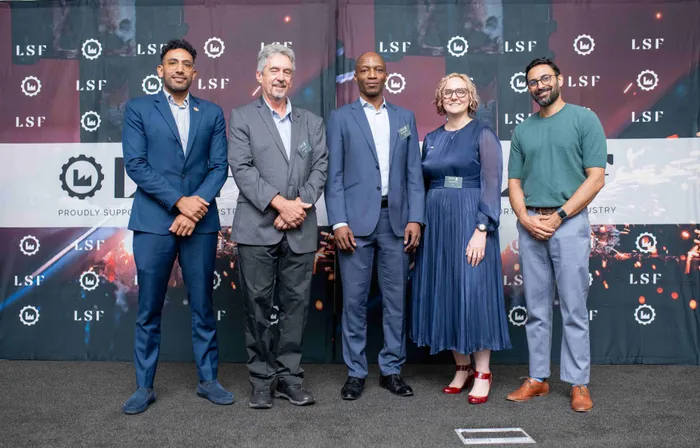
The Localisation Support Fund (LSF) said South African-produced Lithium Iron Phosphate (LFP) cells can achieve price competitiveness with imported alternatives, including those from lower-cost East Asian producers.
Image: Supplied
The Localisation Support Fund (LSF) has released a comprehensive feasibility study that addressed the need for battery cell manufacturing and for the establishment of a gigafactory of between 5 and 10 GWh annual capacity in South Africa.
The LSF said that there is a rapidly expanding regional market for Battery Energy Storage Systems (BESS). The study was conducted by Ernst & Young Advisory Services (EY-Parthenon), serving as an independent advisor to the LSF.
The Fund said an analysis of South Africa's manufacturing cost profile demonstrates that, under the scenarios assessed and with appropriate tariff support set within World Trade Organization (WTO) bound rates, South African-produced Lithium Iron Phosphate (LFP) cells can achieve price competitiveness with imported alternatives, including those from lower-cost East Asian producers.
The LSF said that the driving force behind the feasibility case is demand.
“The Southern African region is projected to require 55 GWh of battery capacity by 2034 — a compound growth rate of roughly 30% annually — fuelled primarily by the accelerating deployment of BESS infrastructure for grid stabilisation and renewable energy integration.”
The LSF added that South Africa’s 2025 Integrated Resource Plan (IRP 2025) targets over 105GW of new generation capacity by 2030, with BESS positioned as a critical enabler of that programme.
“The analysis finds that domestic demand alone could support two to three local manufacturers operating at scale by 2034," read the study.
"The BESS segment — encompassing utility-scale storage, commercial and industrial behind-the-meter applications, and critical infrastructure — is identified as the highest-demand market, with a strong customer preference for local supply where cost and quality are competitive under certain assumptions.”
The LSF said that interviews with off-takers across these segments confirmed that local sourcing is actively valued for supply chain resilience, operational independence, and reduced exposure to global logistics disruptions.
“The project directly supports South Africa's broader energy and industrial policy framework, including the South African Renewable Energy Masterplan (SAREM), which targets 70% component localisation in the renewable energy supply chain by 2030.”
The LSF added that while the immediate market opportunity is concentrated in stationary storage, the study also points to the longer-term potential of battery electric vehicles (BEVs) as a second demand wave.
“The government has signalled its support for this transition, retaining a 150% tax deduction for EV production investment within its broader industrial strategy.”
The LSF said that South Africa’s mineral endowment provides what the study describes as a structurally distinctive foundation for LFP cell manufacturing.
“The country holds substantial domestic reserves of iron ore, phosphate, and copper — core inputs in LFP cell chemistry — alongside broader strategic mineral wealth that positions it as a preferred partner in global battery supply chain strategies," it said.
"The study identifies local refining and beneficiation as a medium-term opportunity to extend the value chain upstream, reducing input costs and import dependency simultaneously.”
The feasibility study assessed five SEZ locations against a weighted criteria framework covering infrastructure readiness, proximity to ports, incentive depth, available space, grid reliability, water security, and access to talent.
The LSF said the Atlantis SEZ in the Western Cape emerged as the top-ranked location, scoring highest on proximity to South Africa’s densest cluster of battery pack assemblers and integrators, which provide an immediate anchor customer base for locally manufactured cells.
The LSF said that the establishment of a domestic gigafactory carries significant employment and skills development implications.
“The study modelled a workforce of over 560 direct employees at the 5 GWh scale, concentrated in equipment operation, maintenance, quality assurance, and engineering roles," it said.
"The project could contribute materially to the government’s target of creating 25,000 new jobs in the green economy by 2030, with additional multiplier effects across the upstream mineral processing and downstream systems integration value chain.”
LSF concluded that the study identifies partnerships with established international cell manufacturers as critical enablers of successful market entry.
“Such partnerships would accelerate technology transfer, provide access to world-class R&D, and offer proven manufacturing processes that reduce the risk and timeline of reaching commercial scale.”
BUSINESS REPORT