

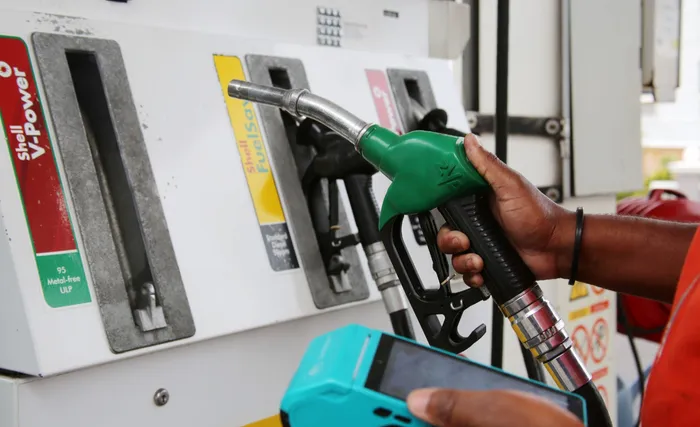
The Department of Mineral and Petroleum Resources (DMPR) said on Friday that they have noted with concern the circulation of statements and messages by certain organisations and individuals encouraging members of the public to rush to filling stations due to a perceived fuel shortage and anticipated fuel price increases.
Image: Tumi Pakkies / Independent Newspapers
The Department of Mineral and Petroleum Resources (DMPR) said on Friday that they have noted with concern the circulation of statements and messages by certain organisations and individuals encouraging members of the public to rush to filling stations due to a perceived fuel shortage and anticipated fuel price increases.
DMPR said that the Department and Fuels Industry Association wish to firmly reiterate that South Africa’s fuel supply remains stable in the immediate term, and there is no basis for panic-buying. “While there may be isolated localised logistical challenges affecting the movement or availability of fuel in certain areas, these are operational in nature and do not constitute a national supply shortage. These issues are being actively managed through established industry and regulatory channels.”
DMPR added that it is therefore incorrect and misleading to link such isolated domestic logistical matters to broader geopolitical developments. “Such claims risk creating unnecessary alarm and confusion among the public. Calls for the public to rush to the pumps are irresponsible. They place undue pressure on supply systems, congestion at service stations, and anxiety among consumers.”
DMPR said that calls for the public to rush to the pumps are irresponsible. “They place undue pressure on supply systems, congestion at service stations, and anxiety among consumers. Members of the public are encouraged to continue purchasing fuel in the normal course and to rely on official government communication for accurate and verified information.”
DMPR concluded that consumers who experience fuel-related challenges or wish to lodge complaints are encouraged to report these to fuel.complaints@dmpr.gov.za, enabling the department’s inspectors to respond and intervene where necessary. “The Department and the Fuels Industry Association will continue to monitor the situation closely and will communicate any confirmed developments through official channels.”
Wandile Sihlobo, Chief Economist at the Agricultural Business Chamber of South Africa (Agbiz), said that understandably, some stakeholders may want to buy more fuel now, before any notable increases in April. “Still we must avoid stockpiling, as this short-term artificial demand may cause temporary supply friction in some areas.”
Sihlobo added that generally, fuel supplies remain healthy in the country, but there may be unusual demand ahead of April price adjustments. “It is for this reason, amongst other things, that one may see reports of supply disruptions. Ideally, a normal buying pace would help immensely.”
Sihlobo said that fuel accounts for a notable share across various agricultural value chains, and harvesting and planting are the periods of highest use. “For example, fuel accounts for roughly 13% of the grain farmers’ input costs. Farmers will start planting winter crops from the end of April in the Western Cape and later in other provinces.”
Sihlobo added that farmers will also start harvesting grain in May, and citrus around the same time. “These are high-fuel-use periods and will put immense financial strain on farmers. We also transport 80% of our grains by road, which adds immense costs to agribusinesses, and we transport various agricultural products by road.”
Sihlobo said that at the moment, we face cost challenges and fewer general supply constraints across most of the country. “This adds a strain on businesses. The availability of fertiliser supplies is the same; we have normal supplies and don’t foresee any supply challenges in the near future. All said and done, the cost pressures on the farming sector remain a considerable concern.”
BUSINESS REPORT
https://businessreport.co.za/