

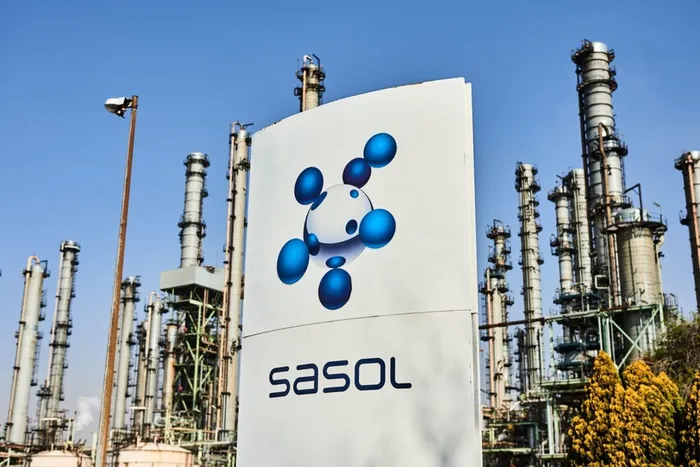
Amidst escalating global tensions affecting oil supply, South Africa must ask: Can Sasol lead the charge towards true energy independence?
Image: Supplied
The world is once again being reminded, brutally, that energy security is national security.
The escalating war involving Iran has triggered what many analysts describe as one of the most significant disruptions to global oil supply in decades, with critical infrastructure across the Middle East under threat and the Strait of Hormuz - through which roughly a fifth of the world’s oil flows - at risk of severe disruption.
Oil prices have surged, supply chains are tightening, and the ripple effects are being felt across every major economy. In this moment of global vulnerability, South Africa faces a stark and urgent question: what would it take to ensure that our energy future is not held hostage by events unfolding thousands of kilometres away?
For years, South Africa’s energy debate has been dominated by electricity - load shedding, Eskom, and the urgent need to scale renewable power. Yet this focus, while necessary, tells only part of the story.
True energy independence goes beyond keeping the lights on. It includes fuel security - the ability to produce petrol, diesel, and chemical feedstocks domestically. And in this domain, South Africa holds a largely overlooked strategic advantage: an asset that has already achieved a remarkable degree of fuel independence under far more constrained conditions. That asset is Sasol.
At the height of international sanctions during the apartheid era, South Africa faced severe restrictions on crude oil imports.
In response, Sasol pioneered coal-to-liquids (CTL) technology at scale - turning abundant domestic coal into synthetic fuels.
At its peak, Sasol supplied a substantial share of South Africa’s liquid fuel needs, the country achieved a high degree of fuel self-sufficiency, and a globally unique industrial capability was built under extreme constraint.
This was not just an engineering achievement - it was a strategic one. South Africa became one of the few nations in the world capable of producing fuel without relying on imported crude oil.
Fast forward to today, and the landscape has shifted dramatically.
While progress is being made in renewable electricity, South Africa remains heavily dependent on imported crude oil and refined fuels.
This exposes the economy to global oil price volatility, exchange rate risk, and supply chain disruptions linked to geopolitical tensions.
Ironically, as we move toward cleaner electricity, our fuel vulnerability has increased. This is where Sasol re-enters the strategic conversation.
The answer is: yes - but not in the same way as before.
The future is not about doubling down on coal-based fuels.
That would be economically and environmentally untenable in a carbon-constrained world. Instead, Sasol’s role must evolve across three critical fronts:
Any discussion about Sasol must confront a difficult reality: its legacy business is carbon-intensive.
Yet, the choice is not binary. South Africa does not have the luxury of choosing between energy security, economic growth, and environmental sustainability.
It must pursue all three - simultaneously. This requires a pragmatic transition:
In this context, Sasol is not the problem - it is part of the solution.
A National Strategy, not a Company Strategy
For Sasol to play this role, alignment is critical.
South Africa needs a coherent national energy strategy that integrates electricity and fuel policy, supports innovation in synthetic and green fuels, and provides regulatory certainty for long-term investment.
This is not about supporting a single company - it is about leveraging a national asset for national gain.
South Africa’s path to energy independence will not be built on renewables alone.
It will require a diversified energy mix, resilient infrastructure, and strategic industrial players. Sasol has done it before - under far more difficult circumstances.
The question is not whether it can contribute again.
The question is whether South Africa has the vision to reimagine Sasol’s role in a 21st-century energy system: cleaner, more resilient, and globally competitive.
If it does, Sasol could once again help power the nation—not just with fuel, but with possibility.
Follow Business Report on Facebook, X and on LinkedIn for the latest Business and tech news.