

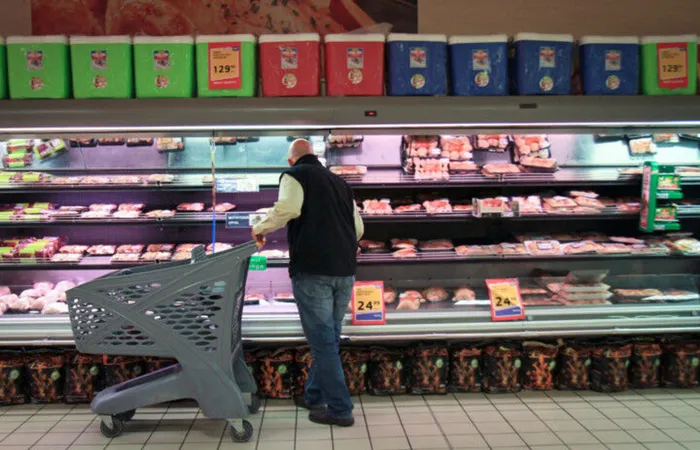
Economists welcomed Stats SA Producer Price Inflation (PPI) release on Thursday which indicated that PPI eased from 2,2% in January 2026 to 1,8% in February 2026.
Image: File
South Africa’s producer price inflation (PPI) provided a brief reprieve in February, easing to 1.8% year-on-year from 2.2% in January, according to data released by Statistics South Africa (StatsSA) on Thursday.
However, economists caution that this relief is likely to be short-lived, with a sharp uptick expected in April driven largely by rising fuel costs and global pressures.
Stats SA said the main positive contributors to the headline PPI annual inflation rate were food products, beverages and tobacco products and furniture and other manufacturing.
The annual percentage change in the PPI for intermediate manufactured goods was 7.8% in February, compared with 10.5% in January.
“The index decreased by 0.7% month-on-month. The main positive contributors to the annual rate were basic and fabricated metals and sawmilling and wood,” said StatsSA.
Lara Hodes, Investec economist said that February’s headline print was flat in line with their forecast.
Hodes added that specifically, the petrol price fell by 65c/litre in February, while the diesel price decreased by 50c/litre, aiding inflation lower during the month.
“The coke, petroleum, chemical, rubber and plastic products grouping (in which fuel price dynamics are measured) accordingly detracted -0.2% from the monthly outcome and -0.7% from the annual headline result,” she said.
Hodes said that moderate increases in both the petrol and diesel price were announced in March adding mild inflationary pressure during that month.
“However, in April significant fuel price increases are building, as a result of the conflict in Iran which has led to a surge in the oil price and the depreciation of the rand.”
Hodes added that manufactured food price inflation, another key driver of producer price inflation, eased further to 0.4% from 0.8% in January and 1.7% recorded in December.
“International agricultural commodity prices which affect local prices through export/import parity have remained well contained, while the rand strengthened over the month,” she said.
Hodes said that the contribution from the food products, beverages and tobacco products category, which comprises 29.2% of the PPI basket, remained at 0.7% of the headline reading.
A disaggregation of the food basket indicates that while meat and meat products’ inflation eased further from 12.5% y/y it still remains somewhat elevated at 11.2%.
The accelerated pace of vaccination against foot-and-mouth disease is key, as the cattle industry remains under immense financial pressure, according to Agbiz.”
Hodes added that inflation within the grain mill products category of the PPI basket and the starches, starch products and animal feeds segment fell further into deflationary territory, contracting by -9.2% y/y and -12.3% y/y respectively, supported by favourable weather conditions and accordingly a robust harvest.
“Going forward however, elevated fuel prices as a result of the conflict in Iran remains a major upside risk, as it accounts for a substantial share of food product distribution costs,” Hodes said.
Nedbank said that PPI outcome was in line with the market’s expectations, but marginally higher than our forecast of 1.7%.
It said the downward pressure emanated mainly from a sharp drop in fuel prices and a moderation in food inflation.
"These outweighed the acceleration in prices of metals, machinery and equipment. The outlook has deteriorated sharply amid global price pressures stemming from the war in Iran," Nedbank said.
"We now forecast PPI to average 3.3% in 2026, revised up from 2.6% previously.”
Efficient Group chief economist, Dawie Roodt, said that on the face of it this is good news.
“The real concern is when PPI is released in April and it will be significantly higher and it is going to filter through to the CPI and onto the consumer in essence this is like the calm before the storm,” Roodt said.
BUSINESS REPORT