

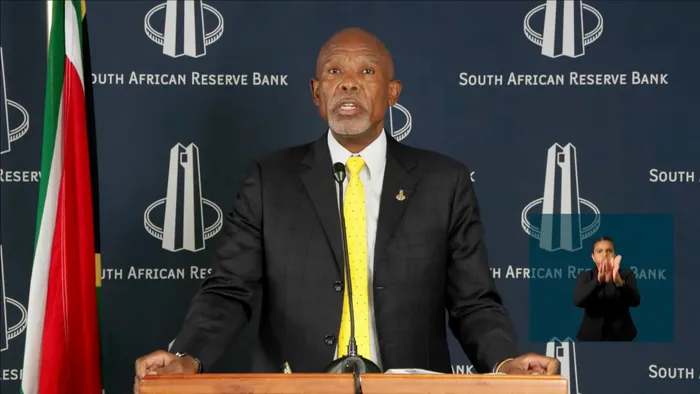
As the South African Reserve Bank holds interest rates steady at 6.75%, rising global tensions highlight the economic challenges facing South Africans. Explore the potential ripple effects of this decision.
Image: File.
The South African Reserve Bank (Sarb) opted to keep the repo rate unchanged at 6.75% this past week, a decision heralded by rising uncertainties on the global stage, notably the ongoing conflict in the Middle East.
This consensus emerged post a meeting of the central bank's Monetary Policy Committee (MPC) on Thursday, with all members advocating for the current rate amidst concerns over inflationary pressures stemming from the war in Iran.
Frank Blackmore, Lead Economist at KPMG South Africa, articulated the central bank's delicate balancing act, emphasising that the persistence of the Iranian conflict could lead to more pronounced inflationary impacts.
"If this situation unfolds over a more extended timeframe, we could see inflationary pressures mount," Blackmore stated, adding that if the situation were transitory, the repercussions might remain manageable.
Governor Lesetja Kganyago underscored the significance of the latest inflation figures, which recorded a relatively stable rate of 3% in February and a Producer Price Index (PPI) of 1.8%.
"While these numbers are on target, we must not overlook the turbulence introduced by the Middle Eastern turmoil, which could nudge inflation towards the 4% mark,” Kganyago cautioned.
Kganyago added that rising commodity prices, especially for crucial resources such as oil, gas, and fertiliser, have set off alarm bells across financial markets.
With ongoing broad losses noted in equities, bonds, and currencies, it seems that only a select few assets have emerged as safe havens during this tumultuous period.
"We are merely weeks into this geopolitical shock, with conditions remaining highly uncertain," Kganyago reflected.
He outlined a grim outlook where higher global inflation in the short term appears inevitable, coupled with anticipated disruptions in economic growth due to supply-chain challenges and rising costs.
Blackmore also echoed this sentiment, noting the inherent risks of second-round effects such as wage increases that could further inflame inflation.
As it stands, the Reserve Bank's commitment to maintaining the current interest rates suggests a cautious economic approach, with no immediate stimulus expected from lower rates to invigorate growth.
Speaking on future expectations, Kganyago mentioned that major central banks globally have largely opted to maintain their rates while awaiting more clarity on the international economic landscape.
He remarked, "The markets have seemingly adjusted, dropping expectations for imminent rate cuts in major economies, whilst the odds for rate hikes have notably risen.”
Looking forward, the SARB will evaluate decisions on interest rates on a case-by-case basis, signifying a need for constant monitoring of the evolving economic situation.
Neil Roets, CEO of Debt Rescue, weighed in on the implications of this decision, highlighting the hidden yet potent challenges facing consumers amidst global uncertainty and local economic strain.
Roets said that while the decision itself was expected, the real concern lies in the escalating pressure on South African households.
With interest rates elevated, the cost of servicing debt continues to eclipse disposable incomes, leaving families with severely constrained budgets.
“The financial flexibility of consumers is at a historic low,” Roets said, cautioning that even minor adjustments in living costs could tip the balance for many households.
The outlook appears increasingly dire as fuel prices are forecasted to see a significant rise in the forthcoming week.
This anticipated spike, fuelled by soaring global oil prices and a depreciating rand, threatens to push up costs across the board.
Roets said, “Fuel is a foundational cost in the economy. When it rises, it pushes up the price of almost everything, from food to basic household goods, because of higher transport and production costs.”
Additionally, consumers are preparing for an increase in electricity tariffs, forming what Roets describes as a “perfect storm.”
The culmination of skyrocketing living costs and persistently high borrowing rates jeopardises the financial stability of many households.
As families navigate these compounded pressures, increasing reliance on credit to cover day-to-day expenses is becoming a harsh reality.
“In reality, consumers are facing a prolonged period of financial strain, with no immediate relief and multiple cost shocks still to come,” Roets said.
As the pressure mounts, it is increasingly likely that more households will struggle to keep up with their financial commitments, highlighting the profound impact of these economic factors on everyday life in South Africa.
Follow Business Report on Facebook, X and on LinkedIn for the latest Business and tech news.