

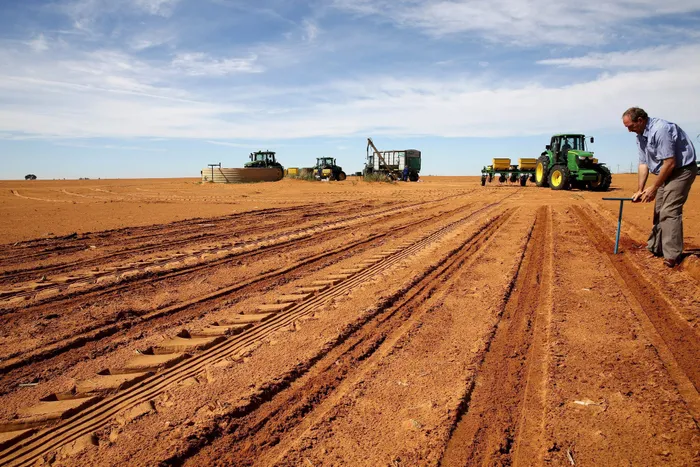
Grain SA and Fertilizer Association of Southern Africa ( FERTASA) have warned ongoing conflict in the Middle East has raised oil prices and will impact South African farmers with higher fertiliser and diesel prices.
Image: Siphiwe Sibeko Reuters
South Africa’s grain producers are facing mounting cost pressures as escalating conflict in the Middle East drives up global oil prices, with industry bodies warning of knock-on effects for fertiliser and diesel prices.
Grain SA and the Fertilizer Association of Southern Africa (Fertasa) warned on Monday ongoing conflict in the Middle East has raised oil prices and will impact South African farmers with higher fertiliser and diesel prices.
In a joint statement, the organisations said international oil benchmark Brent crude oil has surged above $100 per barrel amid fears of disruptions to critical shipping routes such as the Strait of Hormuz. This volatility is already feeding into fertiliser markets, especially nitrogen-based products, with further price increases expected.
The groups warned that South African farmers are particularly exposed due to the country’s heavy reliance on imported fuel and fertiliser.
“Rising diesel costs are expected to increase the cost of planting, harvesting and transport, while fertiliser price pressure - driven by disruptions in a key global supply region - will further strain already tight production margins,” they said.
“In addition, exchange rate pressures and heightened market volatility are expected to complicate planning and input procurement decisions.”
At a time when many farmers are already operating under constrained margins, the organisations stressed the need for responsible conduct across the agricultural value chain.
“As partners within the same value chain, there is a shared responsibility to support sustainable production and to avoid placing additional strain on primary producers during periods of short-term market volatility.”
Grain SA and Fertasa urged farmers to take proactive steps to manage risk without resorting to panic. These include reassessing fertiliser application strategies based on soil conditions and realistic yield expectations, improving fuel efficiency through better operational planning, and updating financial plans to reflect changing cost structures.
Producers were also encouraged to consider risk management tools such as forward pricing or diversification, while closely monitoring global developments as conditions remain fluid. Where financially feasible, early procurement of fertiliser and fuel may help mitigate further price increases.
The orginsations said while current conditions present clear challenges, proactive management and coordinated support across the value chain will be critical to safeguarding farm profitability and ensuring the long-term sustainability of South Africa’s grain sector.
“Grain SA and Fertasa will continue to monitor global developments and engage stakeholders to support producers during this period of heightened volatility.”
Wandile Sihlobo, chief economist at the Agricultural Business Chamber of South Africa (Agbiz), said farmers will bear the brunt of rising costs, as they are largely unable to pass increases on to consumers.
“This also means farmers will be under immense strain if the fertiliser prices remain elevated for some time. Fertiliser accounts for 35% of grain farmers’ input costs,” he said.
Sihlobo added that the latest inflation figures, for February, were compiled before the Iran conflict precipitated a sharp rise in fuel prices.
“In essence, we expect South Africa’s consumer food price inflation to slow in 2026, but fuel prices remain a major upside risk, as they account for a substantial share of the distribution costs of food products.”
BUSINESS REPORT