

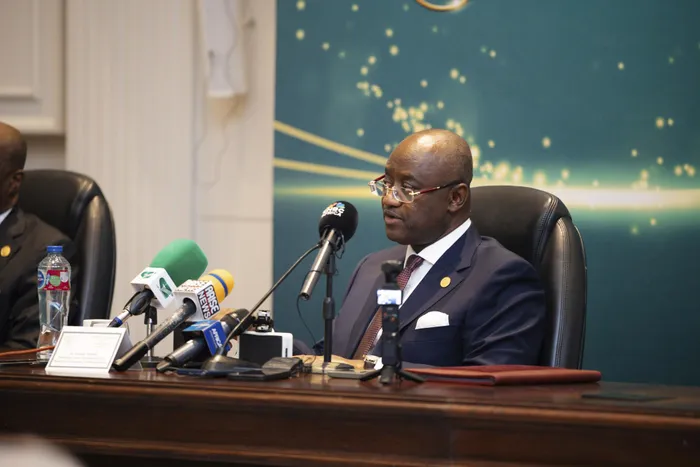
Dr George Elombi, president and chairman of Afreximbank, said this crisis response programme is in tune with the bank's DNA. Beyond short-term relief, Afreximbank aims to use the facility to strengthen long-term resilience.
Image: Supplied
The African Export-Import Bank (Afreximbank) has approved a $10 billion emergency funding facility to cushion African and Caribbean economies from the escalating economic fallout of the Middle East conflict, which has disrupted global supply chains and driven up the cost of essential imports.
The Gulf Crisis Response Programme (GCRP), launched on March 31, comes as the conflict—intensifying since late February—continues to send shockwaves through global energy, food and logistics markets.
Economies across Africa and the Caribbean are among the most exposed, given their reliance on imports of fuel, fertilisers and food, as well as their dependence on key shipping routes such as the Strait of Hormuz.
The programme is designed to provide urgent foreign exchange liquidity to help countries sustain critical imports, including fuel, liquefied natural gas, pharmaceuticals and food supplies. This support is expected to stabilise domestic markets and prevent shortages amid rising global prices and disrupted supply channels.
Beyond short-term relief, Afreximbank aims to use the facility to strengthen long-term resilience. The GCRP will support African exporters in the energy and minerals sectors to scale up production and benefit from elevated commodity prices and shifting trade flows.
Financing tools such as pre-export finance, working capital and inventory support will be deployed to boost output and trade capacity.
“This crisis response programme is in tune with our DNA. We understand how our economies work and the pain points associated with these transitory crises,” said Dr George Elombi, president and chairman of Afreximbank.
“he programme will support African countries in adjusting smoothly to the crisis while strengthening their resilience to future shocks through interventions that transform the structure of their economies.”
The initiative also provides targeted assistance to sectors hit by the downturn in global travel, particularly tourism and aviation in affected regions.
Afreximbank is working alongside key institutions including the United Nations Economic Commission for Africa, the African Union Commission, the African Continental Free Trade Area Secretariat and the Caribbean Community to coordinate a broader response focused on energy security, trade resilience and supply chain diversification.
The programme builds on the bank’s previous crisis interventions, reinforcing its role as a key financial backstop for member states navigating global economic shocks.
BUSINESS REPORT