

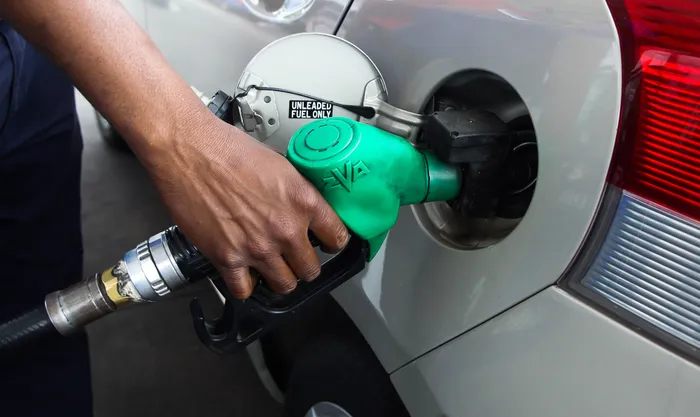
Concern has been raised as a petrol station owner spoke about shortage of petrol due to alleged non-delivery in the Western Cape area.
Image: Jacques Naude / Independent Media
Concerns over fuel availability in the Western Cape have intensified after a long-time petrol station owner alleged irregular supply deliveries just days before April’s fuel price increase.
Makkie Isaacs, 70, owner of the Weltevreden petrol station in Mitchells Plain, Cape Town, says his business—along with several others—has faced repeated fuel shortages despite longstanding relationships within the industry.
With over 45 years of experience, Isaacs claims the current situation is highly unusual and deeply concerning.
“The concern I have is that Engen is one of the only companies that have not supplied their service stations regularly.”
Serving a community of nearly one million people in Mitchells Plain, Isaacs explained that the lack of fuel has created mounting pressure not only on operations but also on safety. He said when the fuel goes up and you can’t supply customers, tensions rise, people become frustrated, and that can put staff and management at risk.
Isaacs further alleged that deliveries were not just delayed but potentially withheld. According to industry norms, petrol stations are expected to maintain at least three days’ worth of fuel reserves to cushion against disruptions. However, he claims his station ran completely dry multiple times in recent weeks.
“We noticed that delivery was not coming on time. We know that the conflict in the Middle East has pushed the price but still we need delivery of petrol. I have been made aware that more petrol stations in Cape Town have not received petrol,” he said.
“The law says that we need to have capacity for three days. For example, my petrol station needs to have petrol to accommodate for three days especially if there are any issues. However, our service station reached a point where Engen was not supplying us even when the station was completely dry. One petrol station has been dry five times in three weeks.”
Isaacs said that they are serving the Mitchells Plain where there are disadvantaged community members.
“When the fuel goes up and you can't supply them, they can be very aggressive and it can affect our safety as management,” he said, adding that the other issue is that they have staff to pay.
“Workers have families to support and when they are given shifts, they will report for duty and they still have to be paid. We can't tell them there’s no pay if there is no petrol. There is also a ripple effect: most petrol stations have convenience stores, which customers make use of while filling petrol. If there is no petrol, then these stores and the workers are also going to suffer. Even currently, after the rise in fuel, the delivery of petrol still has not improved.”
Gavin Smith, Engen's external communications manager, noted that in the days leading up to the recent fuel price adjustment, they experienced an unusual surge in demand across parts of their network, which placed temporary pressure on stock levels at some sites.
“Our teams are actively working to restore optimal supply across our network, with replenishment well underway and additional measures in place to stabilise availability during the busy Easter weekend,” he said.
Smith added that Engen remains committed to maintaining reliable fuel availability and supporting customers throughout the Easter period.
“We encourage motorists to plan ahead and refuel when convenient, and we thank our customers for their continued patience and support.”
Ulrich Joubert, an independent economist based in Hermanus, Western Cape, said that he has read the reports that there have been shortages of petrol, especially in rural towns.
“Especially diesel shortages have been noted. The problem is that due to the expected rise in diesel and petrol, people bought fuel in advance," he said.
"The demand for fuel was much higher than anticipated and because of the increase in demand, this well could have led to the shortages in petrol and diesel.”
Joubert said it could be possible that some of the fuel deliveries were delayed until the price increase came into effect.
“According to some reports, it is believed that some service stations increased the price before Wednesday’s fuel price increase. If there are fuel shortages, it has a major impact and this is much more concerning than the increase in the fuel price," Joubert said.
"It is just as bad as having a situation where there is loadshedding or water outages. The farming community can also be severely impacted by this.”
BUSINESS REPORT