

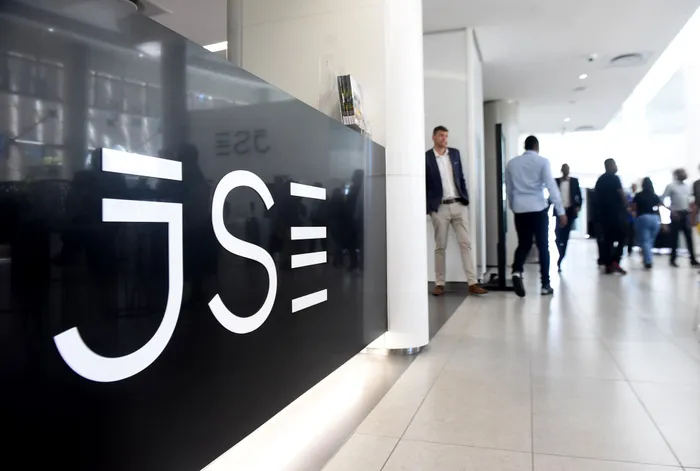
According to the latest Bank of America (BofA) equity strategy report, South Africa continues to rank highest among its regional peers, supported by strong dividend yields, improving earnings momentum and relatively attractive valuations compared to historical levels.
Image: Supplied
South Africa has emerged as the top-performing market in the Europe, Middle East, and Africa (EEMEA) region, even as global uncertainty and geopolitical tensions begin to weigh on investor sentiment.
According to the latest Bank of America (BofA) equity strategy report, South Africa continues to rank highest among its regional peers, supported by strong dividend yields, improving earnings momentum and relatively attractive valuations compared to historical levels.
The BofA's strategist team, led by Vladimir Osakovskiy, said South Africa’s number‑one position is underpinned by strengthening dividend profiles, supportive valuations relative to history, and a growing concentration of high‑quality materials and financial stocks, even as global investors navigate heightened geopolitical uncertainty.
The government has welcomed the recent ranking, saying this recognition represents a strong vote of confidence in South Africa as an attractive and competitive investment destination.
"This endorsement by a leading global financial institution reflects the underlying resilience and sophistication of South Africa’s financial system. Despite a challenging global environment, our financial markets continue to demonstrate stability, depth, and strong regulatory oversight, reinforcing South Africa’s position as a trusted hub for investment on the African continent," said the government.
"This ranking serves as further evidence that the economic reforms undertaken by the government are yielding positive results. Ongoing efforts to stabilise energy supply, improve logistics, and strengthen fiscal management are contributing to renewed investor confidence and improved market performance."
The country’s resilience comes at a time when emerging markets are grappling with shifting capital flows and the lingering effects of global conflict. The report highlights that while investor optimism toward emerging markets remains intact, it is increasingly fragile.
Recent weeks have seen a reversal of earlier equity inflows into the EEMEA region, driven largely by fading hopes of a swift resolution to geopolitical tensions. Although these outflows remain modest compared to earlier inflows, they signal growing caution among global investors.
Despite this backdrop, South Africa has maintained its leading position. The country’s equity market benefits from a combination of strong earnings growth projections and favorable dividend dynamics. In fact, South Africa’s forward earnings growth is among the strongest in the region, reinforcing its appeal to yield-seeking investors in a high-inflation environment.
The report also notes that South African companies dominate the top-tier investment screens. Of the top 20 stocks identified through a quantitative ranking system, more than half are South African firms, particularly in the materials and financial sectors.
Companies such as Northam Platinum, Sibanye Stillwater and Ninety One feature prominently, reflecting the country’s deep exposure to commodities and financial services.
Materials stocks, buoyed by elevated global commodity prices, have delivered strong earnings and cash flows, while financial firms continue to benefit from improving balance sheets and robust dividend payouts. Together, these sectors form the backbone of South Africa’s equity market strength.
However, the broader regional picture is more mixed. Türkiye has climbed back into the top three markets, driven by attractive valuations and high equity risk premiums, while Hungary maintains a strong position due to favorable investor positioning. In contrast, markets such as Saudi Arabia and Kuwait continue to lag, weighed down by weaker relative valuations and lower investor interest.
The report underscores that geopolitical developments remain a key risk factor. Prolonged conflict could disrupt global energy supplies, keeping oil prices elevated and exacerbating inflationary pressures. This, in turn, could dampen global growth and trigger further volatility in capital flows within emerging markets.
Indeed, recent data shows that equity inflows into the EEMEA region peaked earlier in the year before turning negative in March. South Africa itself experienced outflows during this period, alongside Türkiye, suggesting that even top-performing markets are not immune to global shocks.
Nevertheless, some markets, including the United Arab Emirates, Qatar and Czechia, have continued to attract inflows, indicating that investors are becoming more selective rather than retreating entirely from the region.
Looking ahead, the trajectory of global markets will depend heavily on the duration and resolution of geopolitical tensions. A de-escalation could reignite investor appetite for emerging markets, particularly if it is accompanied by a weaker US dollar. Conversely, a prolonged conflict scenario could deepen outflows and test the resilience of even the strongest performers.
BUSINESS REPORT