

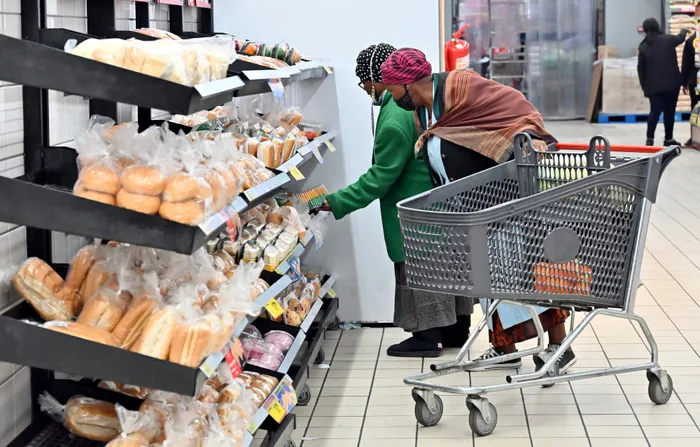
As global tensions rise and fuel prices spike, South Africa faces an economic crossroads. How will these changes impact household budgets and inflation? Read on to explore the unfolding narrative that promises to reshape the country's financial landscape.
Image: Ayanda Ndamane/ Independent Newspapers.
As the conflict in the Middle East escalates, South Africa finds itself grappling with a potential economic storm that threatens to derail its fragile recovery from inflationary pressures.
Just a week into the renewed hostilities, global energy markets reacted sharply, with the price of brent crude soaring from under $60 to nearly $120 per barrel, a stark indication of the volatile landscape looming ahead.
The implications of these surging fuel prices are particularly severe for South Africa, an energy import-dependent nation.
As energy costs surge, cascading effects are likely to ripple through broader economic sectors, escalating prices not just in fuel and transport but also in food and manufacturing inputs. Consumer Price Index (CPI) figures released by StatsSA earlier this year suggested a momentary easing in inflation, but recent developments may soon render that relief a fleeting apparition.
In February 2026, headline inflation fell to 3.0%, a modest reprieve from January’s rate of 3.5%.
This decrease was accompanied by an encouraging monthly CPI increase of just 0.4%.
Key staples like meat and food categories underwent slight deflationary trends, offering a glimmer of hope for lower-income households.
However, this short-lived respite appears to be in jeopardy as rising global oil prices set the stage for renewed inflationary strains, according to insights from Eighty20, a South African-based consumer analytics, strategy, and research consultancy.
South Africa's CPI, constructed from a representative basket of nearly 400 goods and services, provides vital insight into how everyday costs are evolving.
Analysts depend on this data to decipher inflation trends at various levels, honing in on specific geographical areas and detailed item categories.
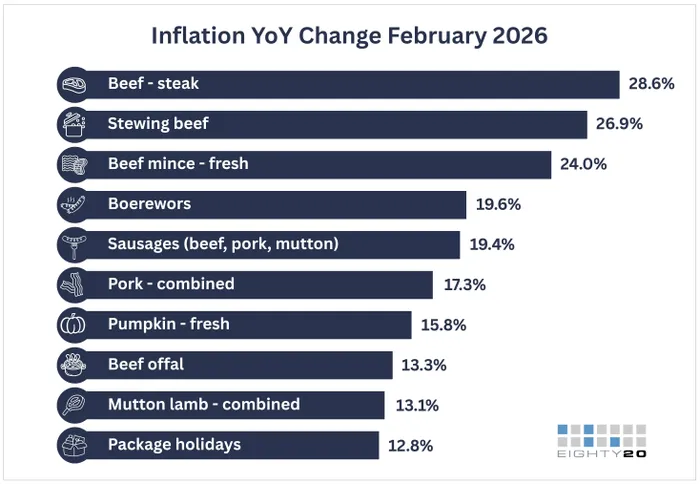
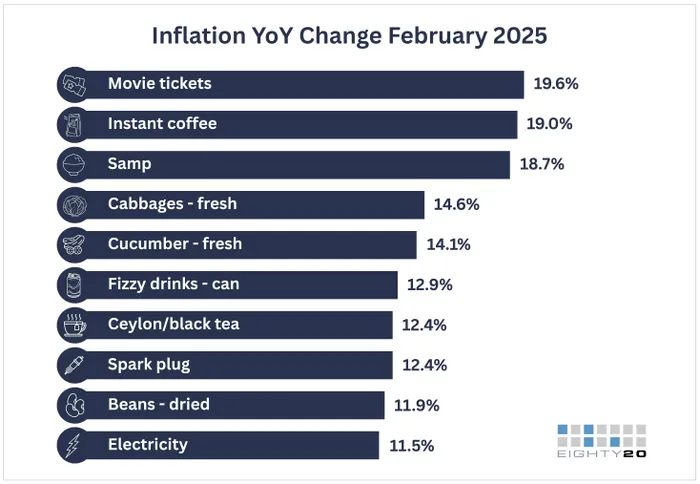
In comparing inflation trends from February 2025 to February 2026, it is revealed that meat products dominated the inflation narrative, with seven of the top ten categories reflecting pronounced price hikes.
Notably, lower-income households may find some comfort as staples like samp, dried beans, and electricity prices have abated, a much-needed reprieve for those whose spending is heavily skewed towards basic sustenance.
However, the past five years have painted a grimmer portrait.
From the emergence of the pandemic to geopolitical tensions in Europe, essential items like instant coffee and electricity have experienced staggering increases of 85.7% and 74.7%, respectively.
Innovations in technology, however, have led to declining costs in consumer electronics, indicating a diverse pricing landscape amid generally rising costs.
Looking to the near future, the most immediate economic concern remains the escalating fuel prices.
South Africa imports over 20 billion litres of crude oil and refined petroleum products each year, all subject to US dollar pricing, making the nation particularly vulnerable to geopolitical upheaval.
This impending fuel crisis could lead to record price increases; compounded by the new 21-cent fuel tax coming into effect on April 1, South Africa’s wallets are bracing for strain.
Furthermore, the ripple effects on food inflation are expected to materialise, with rising fertiliser costs threatening agricultural viability.
The Gulf region’s status as a major fertiliser producer places South Africa in a precarious position, as supply chain disruptions and soaring shipping costs proliferate amidst longer voyage distances.
As global tensions rise and fuel prices spike, South Africa faces an economic crossroads. How will these changes impact household budgets and inflation? Read on to explore the unfolding narrative that promises to reshape the country's financial landscape.
Image: Supplied.
The South African Reserve Bank, which had initially been anticipated to initiate rate cuts in 2026, may now need to reconsider its stance.
Some analysts speculate that a 25-basis-point hike could replace expected cuts, given the rising tide of inflation.
Investec’s chief economist, Annabel Bishop, forecasts that oil prices around $110 per barrel, paired with a weakening rand, could elevate consumer inflation above 4% year-on-year in Q2 2026, undermining the progress made towards the Reserve Bank's inflation target.
“Hopefully, South Africa's 2026 Budget, which struck a careful balance of scrapping previously planned tax hikes, protecting the social wage, and maintaining fiscal discipline will provide a degree of stability that could help cushion the economy in the short term against these external shocks,” Eighty20's report stated, urging caution as the country navigates this uncertain economic terrain.
As global tensions rise and fuel prices spike, South Africa faces an economic crossroads. How will these changes impact household budgets and inflation? Read on to explore the unfolding narrative that promises to reshape the country's financial landscape.
Image: Supplied.
Follow Business Report on Facebook, X and on LinkedIn for the latest Business and tech news.