

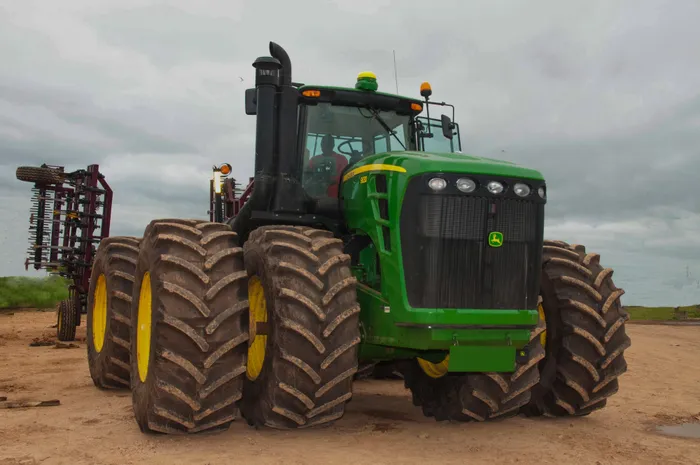
Agricultural machinery sales recorded a decline in March 2026 for the first time in 14 months, as released on Thursday.
Image: File
South Africa’s agricultural machinery sales recorded their first decline in over a year in March 2026, signalling a pause in momentum amid rising input costs and ongoing uncertainty in the farming sector.
According to data released by the South African Agricultural Machinery Association, tractor sales fell by nearly 8% year-on-year to 618 units in March, down from 671 units sold in the same month last year. Combine harvester sales also declined sharply, dropping to 29 units from 37 units a year earlier.
Willie Human, chairman of the association, said the slowdown reflects a combination of external pressures weighing on farmers’ investment decisions.
“On a year-to-date basis, tractor sales are now approximately 2% up on last year. Twenty-nine combine harvesters were sold in March, eight fewer than the 37 units sold in March last year,” he said.
Human added that on a year-to-date basis, combine harvester sales are now approximately 6% up on last year.
“Although market sentiment remains positive, several external factors, such as the value of the rand and the current diesel and fertiliser prices, are currently holding farmers back from buying capital equipment.”
Human said that summer crop production estimates are, in general, good.
“This is having an adverse effect on commodity prices. Farmers will soon start harvesting, and they will then be in a better situation to evaluate conditions going forward into the next cropping season.”
Human concluded that industry predictions for tractor sales for the 2026 calendar year suggest they will be similar to, or marginally lower than, those in 2025.
Wandile Sihlobo, chief economist at the Agricultural Business Chamber, cautioned against overinterpreting a single month’s decline. He said tractor sales were down 8% year-on-year, to 618 units. At the same time, combine harvester sales fell by 22% from March 2025 to 29 units.
“Moreover, the March tractor and combine harvester sales levels remain well above the long-term averages. Therefore, the base effects are also another factor to consider when interpreting these data,” he said.
Sihlobo noted that the Middle East conflict and concerns about fuel prices have negatively impacted the sector, as reflected in the first-quarter results of the Agbiz/IDC Agribusiness Confidence Index.
“We will need a bit more time to gain a clear understanding of the sales path. Importantly, we are in a year where agricultural conditions remain broadly mixed.”
Sihlobo added that the cattle industry and pork producers are facing challenges from foot-and-mouth disease and African swine fever, which are negatively affecting their performance.
“But the field crops, fruits, and vegetable production face much better production conditions. For example, South Africa’s 2025-26 summer grains and oilseeds production is forecast at 20.3 million tonnes, down 1% from the 2024-25 production season, and is quite decent.”
Sihlobo said that the 2024-25 summer grains and oilseeds were the second-largest on record; therefore, being marginally lower than they were is not cause for concern but rather for comfort.
“This production figure comprises maize, sunflower seed, soybean, groundnuts, sorghum, and dry beans. In fruits, an example of improved production is citrus, where South Africa’s total citrus exports across all varieties are expected to increase by about 3% to 5%, reaching a total of 210-215 million 15kg cartons.”
BUSINESS REPORT