

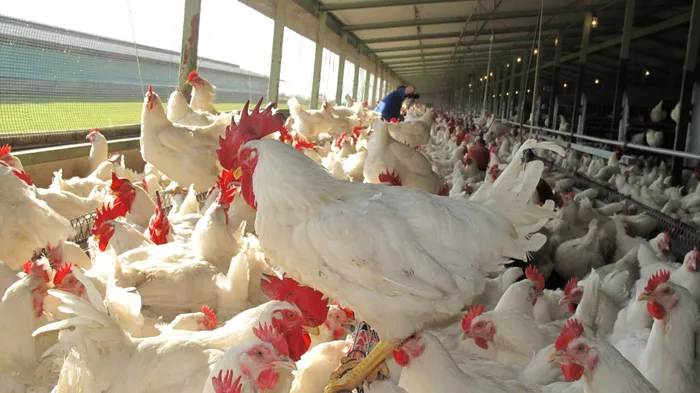
Conflict in the Middle East is inflating fertiliser costs, which in time will drive up grain and animal feed prices, impacting everything on supermarket shelves, from vegetables to meat.
Image: supplied
South Africans are facing a growing food security emergency on multiple fronts, with skyrocketing red meat prices, combined with transport cost pressures on all food necessitating urgent government action before the situation worsens.
A severe Foot and Mouth Disease outbreak, which has been widely reported, has led to widespread cattle slaughter across the country, driving red meat prices up and pushing many meat protein products beyond the reach of millions of low-income households.
Concurrently, conflict in the Middle East is inflating fertiliser costs, which in time will drive up grain and animal feed prices, impacting everything on supermarket shelves, from vegetables to meat.
Additionally, pork prices are rising due to outbreaks of African Swine Fever, resulting in targeted culling.
Rising diesel costs, the largest single increase in South African history, are further driving up food transportation costs, which will soon reflect in significantly higher supermarket bills.
This affordability squeeze is particularly severe for tens of millions of South Africa’s low-income consumers.
In this challenging landscape, of concurrent animal health crises and increasing input costs, affordable imported chicken is a crucial pillar in helping to protect household food security. Any disruption to this supply adversely affects millions of low-income families who rely on products like polony and vienna sausages as their primary protein sources.
These items, made from Mechanically Deboned Meat (MDM) derived from chicken, contribute to approximately 100-million meals weekly in South Africa and South Africa is reliant on imports for 94% of MDM it uses.
Yet, our agricultural regulatory framework remains woefully inadequate in making sure that there is a reliable flow of meat imports into the country when there are isolated disease outbreaks in other countries.
This stark reality was highlighted in 2025 when a single confirmed case of avian influenza in one Brazilian state triggered a four-month ban on all chicken imports from Brazil, including MDM.
This indiscriminate ban was entirely avoidable; polony and vienna prices soared, placing the full burden of this policy failure on low-income households.
Despite the disease being confined to just one farm, the ban was applied to an entire country, until the timely intervention of the Minister of Agriculture, John Steenhuisen,
However, since that intervention the Department of Agriculture has dragged its feet in formalising a longer-term regionalisation agreement with Brazil.
Under a regionalisation framework, import bans would apply only to regions where disease has been confirmed, allowing unaffected areas to continue trading.
Brazil's vast agricultural systems, which include sophisticated tracking and tracing mechanisms, provide no scientific justification for treating a single farm outbreak as a national crisis.
I have written recently to Minister Steenhuisen urging him to make sure that his department prioritises regionalisation to avoid disruptions to Brazilian imports when there is an inevitable case of bird flu.
The Department of Agriculture had previously committed to initiating regionalisation talks with Brazil, but that process has stalled.
With a technical visit by South African scientists to Brazil on the horizon, there is a clear and immediate opportunity to conclude these negotiations and establish the necessary frameworks. This window should not be wasted.
Additionally, South Africa stands to benefit beyond trade policy.
Brazil has successfully eradicated Foot and Mouth Disease, the very disease currently devastating our red meat sector, and can share valuable technical lessons on this front.
However, the uncomfortable truth is that South Africa often scrambles to respond to food crises instead of building systems to prevent them.
With meat prices continuing to rise and broader food price inflation still to come, we cannot afford another reactive response.
I call on Minister Steenhuisen and his technical experts to embrace what we can learn from our BRICS partner who are the largest exporters of chicken and red meat products in the world.
South African could proactively learn from Brazilian knowledge and proven science-based systems to ensure the food security status of South African families, while dealing with the red meat production recovery.
An upcoming technical meeting between local and Brazilian scientists is expected in Brazil this month and is a good place to formalize a regionalisation agreement.
The time to modernise our import protocols is before the next outbreak, not during it.
South Africans, particularly those who can least afford to go without, deserve a government that anticipates these challenges and addresses them head-on.
Georg Southey, Manager, Merlog Foods.

Georg Southey is the manager at Merlog Foods.
Image: Supplied
Follow Business Report on Facebook, X and on LinkedIn for the latest Business and tech news.