

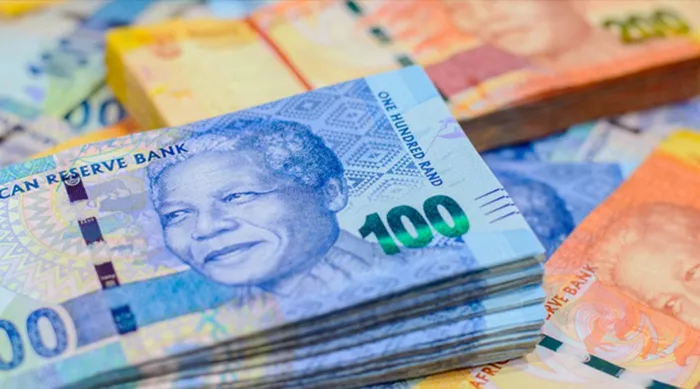
The PayInc Economic Index was released on Wednesday, showing a big increase of 0.9% on a monthly basis to reach an index level of 104.7 in March but economists warn that Middle East tension will impact the South African economy
Image: File
South Africa’s economy showed renewed momentum in March, with the PayInc Economic Index recording a strong monthly increase, but economists warn that escalating geopolitical tensions could derail the fragile recovery.
The index, compiled by PayInc, rose by 0.9% month-on-month to reach 104.7 in March, placing it 4.6% higher than a year ago. The indicator tracks the value of electronic transactions processed through PayInc, offering a high-frequency snapshot of economic activity.
According to Shergeran Naidoo, head of stakeholder engagements at PayInc, the latest reading reflects improving activity across the economy. However, he cautioned that the gains should be viewed in context.
Elize Kruger, an independent economist, said that the latest developments signal strong momentum for the first quarter of 2026.
“It is evident that the cumulative impact of the tailwinds supporting the economy since 2025 has lifted economic activity.These include moderating inflation, real wage increases, interest rate cuts, and improved confidence levels," Kruger said.
Other indicators reinforced this positive trend. Vehicle sales data from the Automobile Business Council showed total sales rising by 17.3% year-on-year in March, with new car sales up 18.2%.
Meanwhile, the S&P Global South Africa Purchasing Managers’ Index climbed to 50.8, signalling the first expansion in business conditions in six months.
Despite the encouraging data, Kruger warned that the strong March performance may represent “the calm before the storm,” as the global economic environment deteriorates.
“The Iran war has disrupted the economic scenario envisaged for South Africa and the world. In its latest World Economic Outlook report, the International Monetary Fund (IMF) has downwardly revised global economic growth by 0.2 percentage points to 3.1%, citing the negative impact of the war on inflation and growth," he said.
"For South Africa, the IMF has downgraded growth to only 1.0% in 2026, slicing off 0.4 percentage points, marginally below the Carpe Diem Research view.”
Kruger noted that the full extent of the war’s impact remains uncertain but warned that ripple effects are already being felt across the economy, particularly through rising fuel costs.
Consumers and businesses have been hit by record fuel price increases, with petrol rising by more than R3 per litre and diesel by over R7 per litre at the start of April. Although a temporary fuel levy subsidy of R3 per litre has softened the blow, it is costing the fiscus an estimated R6 billion per month in lost revenue.
Further increases appear likely. Month-to-date data shows under-recoveries of more than R3 per litre for petrol and nearly R10 per litre for diesel, suggesting another price shock could be on the horizon.
Kruger added that the daily under-recoveries compared to the current pump prices signal that another fuel price shock is in the making for the adjustment on 6 May, particularly for diesel users.
"It will be impossible for companies to absorb the extent of these projected fuel price increases that will not only cause a spike in consumer inflation but also likely to trigger a widespread upward adjustment in prices across the economy.”
The PayInc Cash Index, which tracks developments in the cash industry, also pointed to shifting dynamics. The index declined by 1.9% in the fourth quarter of 2025, with cash supply dropping significantly both quarter-on-quarter and year-on-year.
Despite this, cash remains widely used. The South African Reserve Bank estimates that 62% of South Africans still rely on cash for daily transactions, highlighting the continued importance of physical currency even as digital payments expand.
Professor Waldo Krugell, a North West University Business School economist, said the recent data shows that the economy retains underlying resilience.
“No-one knows how long the war will last and how wide the impact of the fuel price spike will be,” he said.
BUSINESS REPORT