

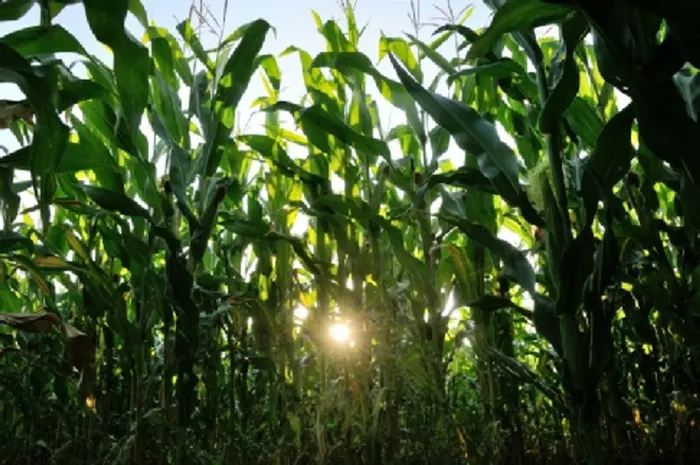
South Africa had a large maize harvest in the 2024-25 production season, but exports were slow in the marketing year that corresponded to this production year.
Image: Supplied
A sharp decline in South Africa’s white maize prices has drawn mixed reactions from across the agricultural sector and consumer groups, highlighting a growing divide between relief for households and rising pressure on farmers.
According to Wandile Sihlobo, chief economist at the Agricultural Business Chamber of South Africa, white maize spot prices have dropped by 39% year-on-year, currently trading at around R3,118 per ton.
Sihlobo said that among other things, South Africa had a large maize harvest in the 2024-25 production season, but exports were slow in the marketing year that corresponded to this production year.
“In essence, we have ample supplies. The outlook for the 2025-26 production season we are in also looks promising, with an expected harvest of 16.5 million tons, down 1% from the previous season but well above the long-term average,” he said.
"Importanly, this expected harvest is well above South Africa’s annual maize usage of 12.0 million tons. The 1% expected annual decline in the harvest is due to lower yields in some regions, despite higher plantings than in the previous season.”
Sihlobo explained that the surplus includes approximately 8.8 million tons of white maize and 7.7 million tonns of yellow maize, alongside significant carryover stocks from the previous season.
“Such a maize crop, combined with likely large carryover stocks from the current season, signals that South Africa will yet again remain a net exporter of maize in the 2026-27 marketing year that begins in May (this corresponds with the 2025-26 production season),” he said.
“We face higher fuel prices, but various agricultural input costs are under pressure, which, at least in the near term, helps lessen, to some extent, the surge in product prices resulting from higher energy costs. The ample supplies are not limited to maize; they include other products as well.”
Sihlobo added that from a farmer perspective, this is a challenge.
“Unlike in 2022, when, at the start of the Russia-Ukraine war, higher energy and fertiliser prices were accompanied by rising grain prices, helping farmers to an extent, we now face a surge in input costs while commodity prices are under pressure.”
Sihlobo said that the farmers are, and some will soon be under financial strain.
“Even more worrying is that we will soon be heading into the 2026-27 production season with likely higher input costs and a possible El Niño drought. If commodity prices are like this, one has to wonder what planting decisions farmers will make. The environment looks immensely challenging.”
In contrast, downstream industries such as poultry are welcoming the price decline.
Izaak Breitenbach, CEO of the South African Poultry Association, said lower maize prices—an essential component of animal feed—are helping to reduce production costs.
“These reduced feed prices assisted us once again to improve our competitiveness as an industry and to continue to supply chicken at globally competitive prices to our consumers.”
Breitenbach added that the poultry industry came from years of high feed prices but at last they can give the benefit of lower feed prices through to the consumer.
Consumer groups have also reacted positively.
Mervyn Abrahams, director at the Pietermaritzburg Economic Justice and Dignity Group, said the drop in maize prices is welcome news for households.
“It is encouraging that there was something of a bumper harvest of maize because it means that there is more of this essential food source in the market and we believe that it will lead to decrease in maize and other related products,” he said.
Abrahams added that maize is an important food source in the market and ensures that products such as maize meal, canned corn as well as corn flour are used regularly by consumers because they are an essential food source.
“That is why a decrease in maize price is something that we would welcome.”
BUSINESS REPORT