

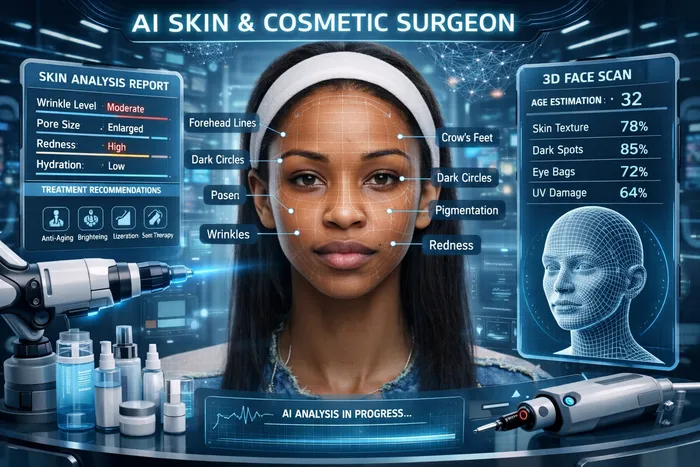
As AI beauty apps proliferate, consumers must navigate a landscape filled with promise and peril. Can technology deliver on the dreams it sells, or will it create a divide between expectation and reality in cosmetic surgery?
Image: Supplied.
In an age where technology promises to transform the landscape of cosmetic medicine, the advent of artificial intelligence (AI) beauty apps has sparked a surge of interest and concern among both patients and professionals.
With just a few taps on a smartphone, users can generate highly visual simulations of potential surgical outcomes, leading many to approach cosmetic consultations armed with AI-derived images.
However, as enthusiasm for these tools grows, one of South Africa’s leading plastic surgeons is sounding the alarm over the potential for misunderstanding and misapplication of this technology.
Professor Chrysis Sofianos, a triple board-certified plastic surgeon and the Academic Head of the Division of Plastic and Restorative Surgery at the University of the Witwatersrand, identified a worrying trend: patients are arriving at his clinic with expectations shaped by AI-generated images that often bear little resemblance to medical reality.
"It’s an image – a surface-level visual estimate based on patterns, not rigorous scientific modelling," said Professor Sofianos.
"In some cases, it’s simply a marketing tool used to sell a product or service. While the entertainment value of such apps is clear, it should not translate to realistic expectations of what can be achieved, even with technology used in the theatre rapidly advancing," Sofianos said.
As South Africa's AI market is projected to grow tenfold by 2033, coinciding with a doubling of the country’s aesthetic surgery sector, the implications of this rapid expansion raise important questions about the understanding and application of AI in medical contexts.
Professor Sofianos highlighted that while AI tools can enhance surgical planning and patient education, the risks intensify when these systems are employed without the guiding expertise of trained professionals.
In his practice, Professor Sofianos encounters persistent myths that skew patients' perceptions of AI in cosmetic surgery.
Three of the most common misconceptions include:
Despite the potential benefits of modern cosmetic technology, such as improved precision and faster recovery times, Professor Sofianos advocates for a cautious approach.
"We must recognise that it remains a limited and highly flawed tool still early in its development," he warned.
With the power of AI comes the responsibility to educate both practitioners and consumers on its appropriate use, especially in the realm of cosmetic surgery.
He urged anyone considering surgery to treat AI-generated results as informational rather than definitive medical advice.
"A proper consultation with a qualified surgeon remains the only reliable way to understand what is possible," Professor Sofianos added.
As the intersection of technology and beauty continues to evolve, the importance of informed decision-making and a strong doctor-patient relationship becomes ever more paramount.
Follow Business Report on Facebook, X and on LinkedIn for the latest Business and tech news.