

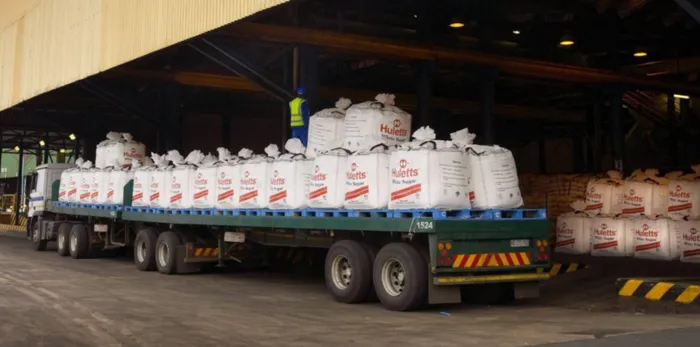
There has been a welcome reaction to Thursday’s postponement of Tongaat Hulett Limited (THL) liquidation hearing in the Durban High Court to June.
Image: Supplied
A wave of cautious optimism has followed the postponement of the liquidation hearing of Tongaat Hulett Limited (THL), with stakeholders welcoming the decision while warning that uncertainty continues to weigh heavily on farmers and the broader sugar industry.
The Durban High Court last week adjourned the matter to mid-June, granting a temporary reprieve after THL’s business rescue practitioners filed for liquidation in February. The move had been opposed by the Department of Trade, Industry and Competition, the Industrial Development Corporation of South Africa Ltd (IDC), and several industry players.
The South African Farmers Development Association (Safda) welcomed the court’s decision, saying it offers a critical window to explore a long-term solution. The organisation pointed to Judge Rithy Singh’s remarks, which underscored the far-reaching socio-economic consequences of liquidation.
Safda added that the court further recognised the critical role played by Tongaat Hulett, describing the company as a lifeline to the province’s economy.
“The adjournment allows for a long-term solution to be explored between now and the date of the next hearing for the main case and the counter application.”
For thousands of small-scale and emerging sugarcane farmers, the delay brings temporary relief.
Safda noted that growers have been anxiously awaiting clarity on whether THL’s mills will operate during the current season, especially as they contend with additional pressures such as rising sugar imports.
“Tongaat Hulett remains a key player in the sugar value chain, providing a vital market for sugarcane growers, as well as supporting livelihoods across rural communities,” it said.
However, Safda cautioned that significant challenges remain in the interim. Farmers continue to grapple with cash flow constraints, uncertain payment timelines and difficulties in planning for harvesting and planting cycles. The delay in resolving the company’s future means growers must operate under strained conditions for longer.
“We urge all stakeholders to prioritise stability within the value chain to ensure that farmers are not further disadvantaged during this period.”
Meanwhile, Vision Sugar Group also welcomed the postponement, describing it as an opportunity to advance efforts to rescue the embattled sugar producer.
The group highlighted key points confirmed during court proceedings, including that its business rescue plan has not failed, but rather that certain sale-of-business agreements had lapsed and could be revived with amendments. It further emphasised that the Vision plan remains the only formal proposal currently under consideration.
Vision, a major secured lender, said it retains significant influence in creditor discussions and remains confident that a structured rescue is achievable.
“We have consistently maintained that THL can be rescued, that its operations remain viable, and that the consequences of liquidation, for thousands of employees, for more than 15,000 small-scale cane growers, and for the rural communities of KwaZulu-Natal that depend on THL’s continued operation would be devastating and have lasting consequences,” said Vision.
The organisation added that it has put forward several proposals to the IDC, business rescue practitioners and other stakeholders in recent weeks, arguing that a negotiated outcome would better serve all parties.
Vision also indicated that it has access to both internal and external funding to implement its turnaround plan and stabilise THL’s operations. It noted that the IDC, in line with its developmental mandate, has expressed willingness to consider appropriate funding proposals.
“We remain steadfast in our commitment to the survival and long-term viability of Tongaat Hulett and to providing a clear alternative to the uncertainty of liquidation.”
BUSINESS REPORT