


Former VBS Mutual Bank auditor Sipho Malaba faces disbarment and a hefty fine, highlighting the urgent need for reform in South Africa's auditing practices to combat corruption and protect workers' savings.
Image: File photo
An important notch in the nation’s war against corruption was scored this week with former VBS Mutual Bank (VBS) auditor, Sipho Malaba’s disbarment and R10 million fine by the Independent Regulator Board for Auditors (IRBA) for his disgraceful role in whitewashing its capture and the rampant looting of millions of Rands of workers and pensioners’ monies.
IRBA’s action was long overdue.
Mr. Malaba was the lead auditor employed by KPMG to audit VBS’s financial records. It is a victory for workers and pensioners who lost so much.
Mr. Malaba’s role not only helped cover up and whitewash one of South Africa’s most shameful instances of fraud, corruption and theft, it enabled this to continue for several years.
This criminal heist of epic proportions saw thousands of VBS clients, mostly pensioners and workers, lose millions of Rands in hard earned savings.
It saw the collapse of VBS built up over many years through workers and pensioners’ investments. It saw innocent junior staff at VBS lose their jobs and their ability to take care of their families.
Whilst the Congress of South African Trade Unions (Cosatu) is heartened that Mr. Malaba may never again practise as an auditor, a role he is clearly ethically unfit for, it is not enough.
Justice demands that the South African Police Service (SAPS) charge and the National Prosecuting Authority (NPA) prosecute him for his role in the VBS heist.
Such persons should not be allowed to get away with the theft of workers and pensioners’ hard-earned monies. If we are to win this battle against state capture, corruption and criminality and to rebuild society’s moral fabric, then the SAPS and NPA need to act.
It is critical that National Treasury, IRBA and Parliament, expedite commitments made during extensive public hearings in the 5th and 6th Parliaments to amend and strengthen the Auditing Profession Act to require the mandatory rotation of auditing firms every five years to prevent incestuous and often very corrupt relationships developing between auditors and auditing firms with the very companies over whom they are employed to provide honest and credible audits of.
Amendments to the Act that came into effect in 2023 included several progressive provisions strengthening the powers of IRBA to oversee auditors and hold errant members accountable, including conducting search and seizure operations, and fining and debarring those who transgress.
The current provisions in the Act whilst a welcome improvement, are not enough in a country that has felt the pain of rampant corruption and state capture, of which many auditors were deeply implicated. Although a step in the right direction, the current mandatory rotation provisions of the Act need to be amended. Mandatory rotations should not simply be an ad-hoc internal rule of IRBA but set in law.
Currently the provisions require the mandatory rotation of auditing firms contracted by public interest companies every ten years.
This is deeply flawed for several fundamental reasons.
Firstly, it should not be limited to public interest companies.
That is too vague and narrow. Crime and corruption are a cancer that threatens every sector of the economy and should be tackled as such and not simply in the public sector or areas of public interest.
Steinhoff, VBS and Tongaat-Hullett are prime evidence of the insidious nature of this cancer.
Secondly the mandatory rotation needs to be strengthened to require auditing firms to internally rotate auditors during the period of their auditing contract if it lasts more than two years. This is key to preventing auditors becoming complacent or susceptible to bribes as they become familiar with their clients.
Thirdly, a decade is too long. As we witnessed during the decade of state capture and corruption, the wholesale capture of key state and private institutions was done within a matter of years.
Once the damage is done, it takes years to repair and rebuild, if at all. Eskom, Transnet, Metro Rail, South African Airways, VBS amongst many others bear witness to this.
Such mandatory rotations must be required every five years if we are to ensure that public and private institutions and companies’ funds are safe, financial reports are clean and credible and workers and pensioners’ monies are safe.
Perpetual auditing contracts over companies compromises the integrity of their audits and provides a direct conflict of interest for these auditing firms.
In some instances, the same auditors and auditing firms are paid to audit the same companies for decades. Why would such auditors rock the boat and endanger often very lucrative auditing contracts?
VBS, Steinhoff and countless other financial crime scenes are examples of the very real dangers to workers, pensioners and society of allowing these financially incestuous relations to develop.
Accountants too must now be included under a stricter regime of oversight and accountability.
This further tightening of the Auditing Profession Act would be in line with the King Reports’ recommendations.
South Africa has made substantial progress under President Cyril Ramaphosa, and the African National Congress led administrations to put in place measures to deal with collusion and corruption.
This is not only about safeguarding workers, pensioners and public funds, but also about assuring investors, domestic and foreign, that their monies are safe here. This is key to attracting the investment needed to raise economic growth from the anemic 1% it’s been stuck at for more than a decade to the 3% plus needed to tackle our dangerously high 41.1% unemployment rate.
Whilst we are encouraged by progress made, we cannot afford to be complacent when corruption and criminality remain rampant, and where there are some who seek to reverse the painstaking gains made.
Cosatu will continue to engage with and push National Treasury, IRBA and Parliament to ensure that this long overdue tightening of the Auditing Profession Act is revived and fast tracked. This will be key to boosting our collective efforts to cleanse the state, private sector and society of the cancers of state capture, corruption and criminality.
Zingiswa Losi is the President of Cosatu.
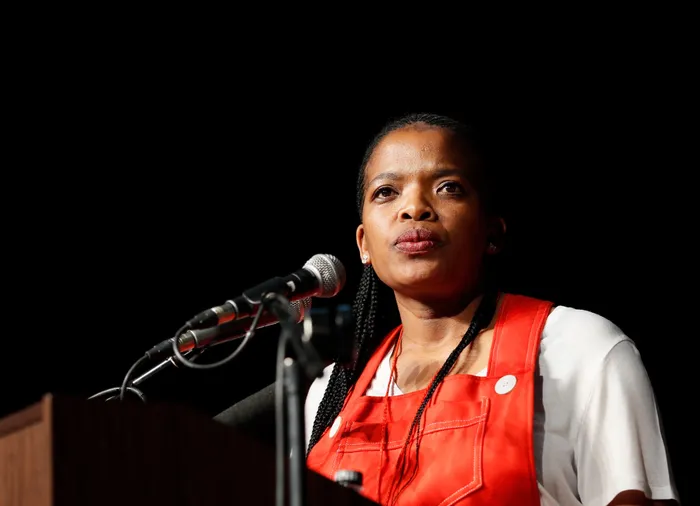
Zingiswa Losi is the president of Cosatu.
Image: Independent Newspapers
Follow Business Report on Facebook, X and on LinkedIn for the latest Business and tech news.