

Explore the ongoing debate in South Africa about podcast regulation and the constitutional implications of state licensing. This article examines the perspectives from a recent parliamentary roundtable and highlights the need for a balanced approach to oversight.
Image: Pexels.
South Africa is in the middle of a serious debate about whether to regulate podcasts, and the conversation has moved well past theory.
On 24 March 2026, Parliament's Portfolio Committee on Communications and Digital Technologies convened a formal roundtable with podcasters, legal experts, civil society groups, and platform representatives.
Chairperson Khusela Sangoni-Diko pointed out that thinking about how to regulate over-the-top (OTT) content, meaning audio and video delivered via the internet rather than broadcast signals, has been underway since at least 2020, when a first draft policy framework was developed.
The White Paper on Audio and Audiovisual Media Services and Online Content Safety, however, has not yet been finalised. The roundtable is expected to produce a report that will feed into the final version before Parliament votes on it.
Industry-wide, the roundtable produced a striking convergence around co-regulation rather than licensing.
ICASA Chairperson Mothibi Ramusi cautioned that policymakers must "first define the problem before proposing solutions," questioning whether regulation should attach to platforms or content creators.
Academic and podcaster Sizwe Mpofu-Walsh argued that courts and existing hate speech and defamation law already address dignity harms, and identified three legitimate regulatory targets: dignity harms, explicitness, and disinformation.
The Department of Communications and Digital Technologies DG, Nonkqubela Thathakahle Jordan-Dyani, conceded "we don't want over-regulation" and signalled willingness to learn from the OTT regulatory delay. The committee's closing statement acknowledged that podcasting is "not a challenge to be curtailed, but a sector to be supported," calling for a proportionate approach that distinguishes between small-scale creators and large digital platforms.
Civil society organisations have taken sharper positions outside the room.
Free SA characterised the process as government overreach against a sector that allows ordinary people to exchange ideas freely. Despite this, a legitimate policy gap remains.
The question is what to do about it.
Any regulatory intervention must begin with Section 16 of the Constitution, which broadly protects freedom of expression.
That protection is not absolute. Section 36, the limitations clause, allows constitutional rights to be restricted only if the restriction is reasonable and justifiable in an open and democratic society, and only to the extent necessary. Any proposed podcast regulation must survive this test.
Minister of Communications and Digital Technologies, Solly Malatsi, acknowledged as much, stating that regulation would not curtail free expression beyond what the Constitution already permits.
The problem is hate speech and incitement to violence are already prohibited under the Promotion of Equality and Prevention of Unfair Discrimination Act and the Films and Publications Act.
Defamation is covered by civil law. If existing law already addresses the clearest harms, the proportionality requirement under Section 36 demands that regulators explain precisely what gap a new framework fills that courts and existing statutes cannot.
South Africa has a fresh and instructive precedent here.
In 2024, the Film and Publication Board attempted to regulate online misinformation during the election period.
The policy was challenged in court and subsequently withdrawn after applicants successfully argued that the framework was vague, heavy-handed, and created a chilling effect on legitimate political speech. That language maps precisely onto the podcast debate. A poorly designed intervention does not just fail to solve the problem it was designed for - it risks narrowing the space for democratic conversation.
International experience suggests that the most workable approaches target platforms rather than individual creators.
The European Union's Digital Services Act (DSA), which came into full effect in 2024, does not regulate podcast content directly.
Instead, it imposes obligations on large platforms based on their size and societal reach, requiring them to identify and address risks such as illegal content, threats to media freedom, and the protection of minors.
Platforms with over 45 million monthly EU users face the strictest requirements; smaller services carry lighter obligations. The DSA does not license content creators - it regulates intermediaries.
The UK Online Safety Act 2023 likewise targets user-to-user services and search platforms, not standalone podcasts, with Ofcom's enforcement focused on systemic risk assessments and child-safety duties.
Australia's Online Safety Act 2021 centres on the eSafety Commissioner's powers over cyber-abuse and harmful content via platform removal notices. International practice has not produced a clear case for creator-level content licensing.
Even if Parliament decided that formal licensing was the right path, ICASA faces a practical constraint the roundtable did not address directly.
Its mandate was built around spectrum management and telecommunications infrastructure, not editorial oversight of thousands of individually produced audio programmes. ICASA’s existing backlog and structural design make it ill-suited for that role without a significant increase in resources and a fundamental redesign of its enforcement approach.
The most credible middle-ground proposal to emerge from the roundtable was a voluntary self-regulatory body along the lines of the Press Council.
The Press Council model allows practitioners to set and enforce standards themselves, with an independent adjudicator handling complaint. It operates outside government control, which means it does not raise the constitutional concerns associated with state licensing, while still creating accountability mechanisms that pure market pressure cannot guarantee.
This addresses the legitimate concern that some podcasters operate without any meaningful recourse for listeners who feel harmed, while avoiding the risks of state overreach.
Smaller and independent creators - those most likely to be affected by compliance costs - would retain the ability to participate without requiring a license.
The White Paper, once finalised, will set the direction.
The evidence from South Africa’s own recent legal history and from international frameworks that have worked points toward platform-level accountability and voluntary industry standards rather than state licensing of individual creators.
That is not an argument against oversight. It is an argument for oversight proportionate to the problem it seeks to solve - and the only approach likely to survive constitutional scrutiny, build industry trust, and protect the public.
Neo Letswalo is a post-doctoral fellow at the Southern Centre for Inequality Studies (SCIS) at Wits University. Samuel Olaniran is a digital media and computational social scientist whose research at Wits University sits at the intersection of technology and politics.
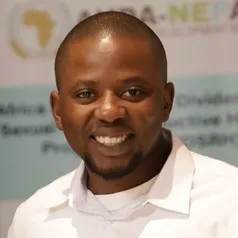
Neo Letswalo is a post-doctoral fellow at the Southern Centre for Inequality Studies (SCIS) at Wits University.
Image: Supplied.
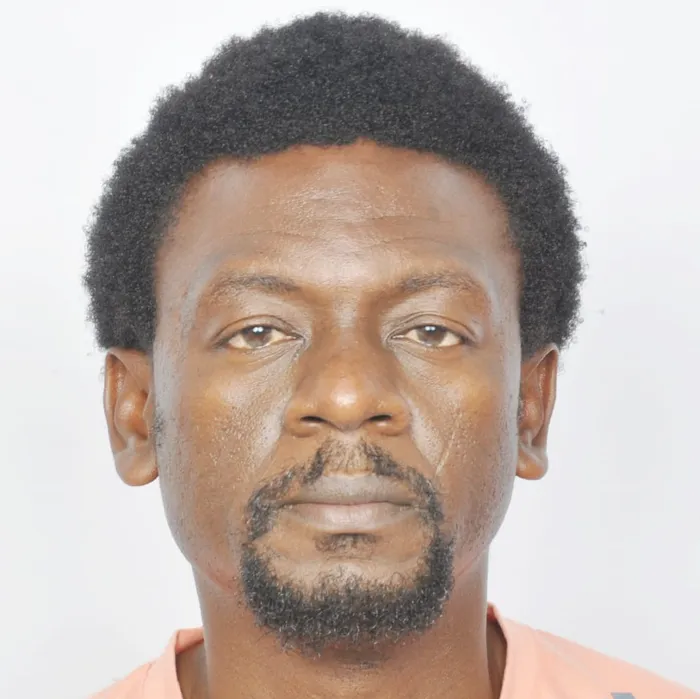
Samuel Olaniran is a digital media and computational social scientist whose research at Wits University sits at the intersection of technology and politics.
Image: Supplied.
Follow Business Report on Facebook, X and on LinkedIn for the latest Business and tech news.