

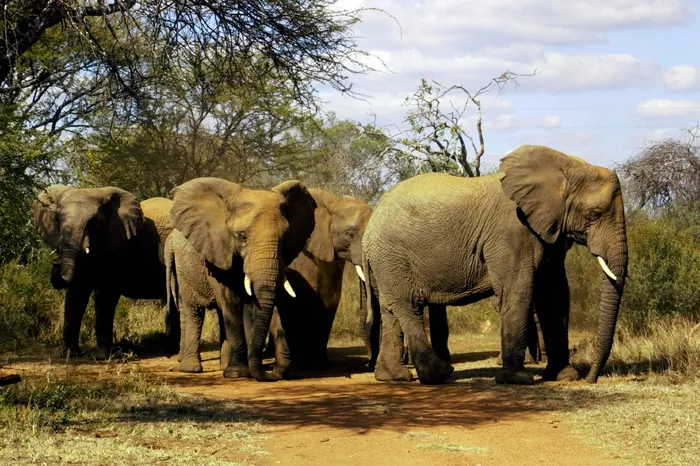
With the tourism sector recovering swiftly post-pandemic, South Africa's economy finds a rare source of optimism. Explore how this vibrant industry is defying challenges and revitalising GDP growth in the country. Discover the critical role of domestic travel and the Western Cape's pivotal contribution as South Africa charts a path to economic renewal.
Image: Bongani Shilulbane / Independent Newspapers
South Africa's story of economic growth is often overshadowed by tales of constraints and structural bottlenecks that have hindered its potential for years.
Yet, amidst this challenging backdrop, the tourism sector shines brightly as a rare beacon of hope.
As highlighted by Eighty20, a leading consumer data consultancy, this nimble industry has begun to recover robustly, proving to be a vital component of the country's GDP growth narrative.
South Africa’s diverse natural beauty, from pristine beaches and dramatic mountain ranges to world-renowned winelands and unique wildlife, continues to attract tourists, especially with the nation's competitive exchange rate enhancing its appeal.
“While residents (particularly in Cape Town) may voice concerns about congestion and rising rental costs, the economic case for tourism is difficult to dispute,” said Andrew Fulton, Director at Eighty20.
“More than 10% of all jobs in South Africa are linked to the sector in some way, and following the severe disruption of Covid-19, tourism has emerged as one of the fastest-recovering sectors of the economy,” he added.
In the context of South Africa's broader GDP situation, the latest 2025 Q4 data revealed a quarter-on-quarter growth of 0.4%, marking five consecutive quarters of expansion.
However, with GDP growth having risen by less than 1% quarter-on-quarter since the Covid ‘bounce-back’ phase, the outlook remains muted.
Full-year GDP growth for 2025 was reported at 1.1%, the strongest since 2022, but significant acceleration continues to evade the economy, weighed down by persistent structural constraints including electricity supply shortages, logistics failures, and high public debt.
What sets tourism apart from other sectors is its ability to navigate the myriad constraints that constrain economic growth.
It is not energy-intensive, as accommodation and entertainment venues can effectively utilise cost-efficient backup power solutions.
Furthermore, it relies minimally on underperforming freight rail and port infrastructure.
The sector generates foreign exchange revenues without necessitating large capital investments and is spearheaded by private operators rather than relying on government interventions.
Importantly, it is a labour-intensive industry, providing employment opportunities for low- and mid-skilled workers who might lack higher educational qualifications.
The employment figures tell a compelling story.
In 2024, tourism supported approximately 954,000 direct jobs, around 5.7% of total employment, but when accounting for indirect effects, this figure surges to almost 1.9 million jobs.
The benefits of these jobs disproportionately favour youth, women-owned enterprises, and small and medium-sized enterprises (SMMEs) in rural and township economies, positioning tourism as a critical means to tackle South Africa's societal challenges.
International tourism made significant contributions to the economy, with spending estimated at R114 billion in 2024.
Notably, domestic tourism has surged, with South Africans now accounting for around 85% of total tourism expenditure, surpassing R665 billion in spending.
The MAPS dataset revealed that 15.4 million South Africans travelled over 100km from their homes in the past year, with leisure being the primary motive for about 12 million of those trips.
The pandemic wreaked havoc on the tourism industry, especially following the travel bans prompted by the discovery of the Omicron variant in late 2021.
However, recovery has gained traction, with South Africa welcoming 10.5 million out of 81 million visitors to Africa in 2025, a landmark achievement that surpasses pre-pandemic levels for the first time.
The Western Cape province has consistently outperformed others in economic and governance metrics.
It contributes approximately 25% of South Africa's international tourism revenue and attracts the greatest share of overseas leisure visitors as well as Meetings, Incentives, Conferences, and Exhibitions (MICE) business.
MICE tourism, in particular, is invaluable.
It generates higher spending per visitor than leisure tourism and effectively sustains the sector year-round, benefiting local businesses directly linked to venues such as the Cape Town International Convention Centre.
Looking ahead, according to projections from the World Travel & Tourism Council (WTTC), tourism could contribute as much as 10.3% to South Africa's GDP by 2035, supporting an estimated 2.6 million jobs and injecting R912 billion annually into the economy.
In a landscape desperately seeking growth engines capable of functioning within existing constraints, few sectors present a more persuasive path forward than tourism.
Follow Business Report on Facebook, X and on LinkedIn for the latest Business and tech news.