

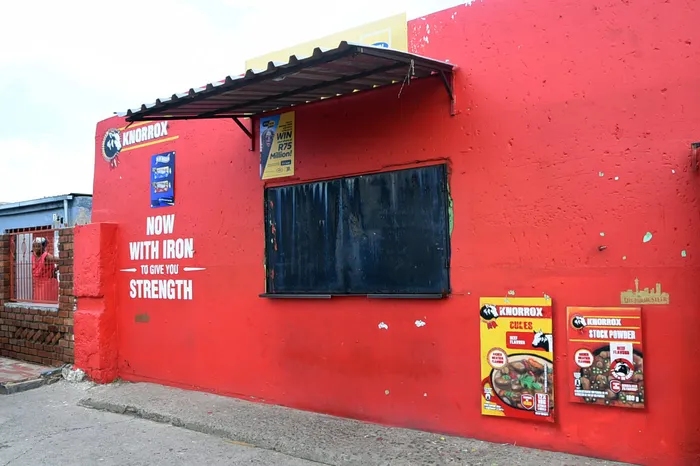
As spaza shops thrive, they illuminate the pathway for informal traders in South Africa, challenging the narrative of vulnerability. Explore how empowering these local businesses could reshape the economic landscape and enhance community resilience.
Image: Itumeleng English/Independent Newspapers
In an economy characterised by complexity and resilience, spaza shops and informal traders often go unnoticed despite their profound impact on South Africa's socio-economic landscape.
A recent report by 27four highlighted the township sector, valued at R900 billion, as a crucial pillar in the livelihoods of nearly a third of the country’s population.
These small businesses, encompassing spaza shops, street vendors, and tuck shops, are not merely surviving, they are thriving against the odds.
Annele Dippenaar, Chief Business Officer at Shop2Shop said that instead of viewing these traders as vulnerable entities, it is essential to acknowledge their significant contributions to local economies and to empower them with the tools necessary for further success.
Statistics indicated that the informal economy is not just a fallback plan for its participants but a vital section of the labour market, serving as a lifeline for millions.
Despite the myriad challenges, including extensive red tape, permit delays, and security threats, informal traders exhibit remarkable entrepreneurial instincts, often leveraging instinct and experience over formal training to navigate the complexities of their operations.
These traders do more than just meet local demand, they build supply chains that benefit larger South African companies and manufacturers.
"The interplay between spaza shops and formal businesses demonstrates a robust economic dynamic. Many multinationals, including Unilever, have recognised this potential and have tailored strategies to engage with the informal sector, often bypassing the limitations that formal retail establishments face," Dippenaar said.
Dippenaar added that the spaza shop ecosystem requires a supportive framework to unlock its full potential.
"Key practical solutions are needed to integrate these traders into the broader economy more effectively. Access to safe trading tools, simplified licensing processes, and recognition as vital economic contributors are critical areas for improvement," she said.
Dippenaar said that infrastructure is paramount.
"Traders need reliable systems that allow them to operate effectively. Modernizing the payment landscape, as showcased by the South African Reserve Bank's Payments Ecosystem Modernisation (PEM) programme, is a significant step towards achieving financial inclusion. Companies like Shop2Shop are at the forefront of this initiative, providing affordable point-of-sale devices that offer immediate benefits to informal traders," she said.
With innovative payment solutions and policy improvements, the tools available for spaza shops can transform their business operations, allowing them to contribute even more significantly to their communities.
"The reality is that informal traders have demonstrated exceptional resilience and ingenuity. They are already pivotal in their ecosystems, and the time has come to equip them further. Spaza shops are not a disenfranchised sector in need of rescue, they are vibrant businesses that have already carved their niche in the economy. The opportunity lies in harnessing their potential with the right support structures, turning their invisible impact into a visible force driving the South African economy forward," Dippenaar said.
Follow Business Report on Facebook, X and on LinkedIn for the latest Business and tech news.