

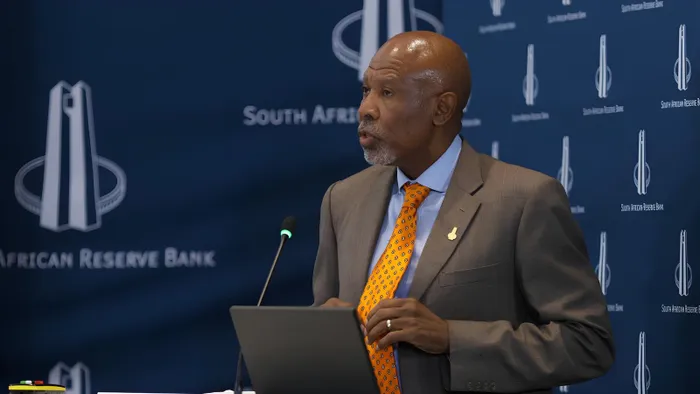
Trade unions and economists say the Reserve Bank’s latest interest rate hike will place further pressure on already stretched South African households.
Image: SARB
South Africa’s decision to increase the repo rate by 25 basis points to 7% has sparked concern among labour groups, economists and financial analysts, many warning that the move could deepen financial strain on households already battling rising living costs and mounting debt.
The South African Reserve Bank raised the repo rate for the first time since May 2023, pushing the prime lending rate to 10.5% as inflation risks intensified following ongoing conflict in the Middle East and disruptions to global energy supply chains.
UASA spokesperson Abigail Moyo said the increase would have a direct impact on workers with home loans, vehicle finance and credit card debt.
“Sadly, the impact of the repo rate increase on consumers with various loans, such as home, vehicle(s), and credit cards, means new repayment amounts based on the announced increase,” said Moyo.
She added that the rate increase comes as households continue to battle sharp fuel price hikes and broader inflation linked expenses.
“Considering the challenging economic outlook ahead, UASA encourages its members and all consumers to be cautious of their finances and make positive financial decisions that can help them going forward,” she said.
Congress of South African Trade Unions (Cosatu) also criticised the decision, describing it as untimely and harmful to workers.
“Home loans and other debt linked to the repo rate will now become more expensive and difficult to service for millions of workers and their families,” Cosatu said in a statement.
“It will squeeze workers’ overstretched wages further. It will take money out of an already weak economy.”
The federation argued that inflationary pressure was being driven primarily by external geopolitical factors rather than domestic demand.
“The cause of the current rise in inflation is solely due to the war in the Middle East and not domestic demand,” Cosatu said.
“Squeezing already struggling workers and consumers makes no economic sense.”
Economists remain divided on whether the Reserve Bank’s move was necessary.
Frank Blackmore, Lead Economist at KPMG South Africa, said the central bank was reacting to growing risks linked to global energy markets and agricultural costs.
“The risks to inflation remain on the upside, not only from energy markets and the ongoing elevated prices, given the situation in the Strait of Hormuz, but also because of the agricultural sector,” Blackmore said.
He noted that the Reserve Bank had outlined severe inflation scenarios involving prolonged energy shocks and drought conditions, which could require additional rate hikes later this year.
Nedbank’s Economic Unit said the Monetary Policy Committee’s hawkish stance reflected growing concern around prolonged supply disruptions caused by the ongoing conflict in the Middle East.
“The longer the US Iran war continues and the Strait of Hormuz remains closed, the greater the risk of supply shortages in oil and other key commodities,” Nedbank said.
The bank warned that another rate hike in July now appears increasingly likely.
At PPS Investments, Head of Portfolio Management and Analytics Mark Phillips said the Reserve Bank had acted pre emptively to avoid second round inflationary pressures becoming entrenched.
“The combination of risks was too significant to ignore,” Phillips said, pointing to prolonged conflict, rising fuel prices and the threat of El Niño related drought conditions.
He added that improvements in domestic fundamentals, including a more stable rand and improved fiscal conditions, helped prevent the need for a more aggressive response.
Lara Hodes, economist at Investec, said the Reserve Bank’s focus remained on preventing inflation expectations from becoming embedded in the economy.
“The prevention of second round inflationary effects from becoming embedded is key,” Hodes said.
She noted that inflation forecasts had now been revised upwards, with headline inflation expected to average 4.4% this year before easing towards the 3% target in 2028.
Patrick Buthelezi, economist at Sanlam Investments, said the hike effectively ends the easing cycle that began in 2024.
“The hike is in response to a deterioration in the inflation outlook, triggered by higher energy prices stemming from the conflict in the Middle East,” Buthelezi said.
He warned that further increases may still be possible depending on how long global instability persists.
Meanwhile, Raymond Parsons from the NWU Business School questioned whether the timing of the increase was appropriate.
“The minority MPC view believing that the timing was not yet right for a rise in rates is convincing,” Parsons said.
He argued that South Africa still had sufficient economic buffers and policy space to adopt a wait and see approach while signalling a hawkish stance to markets.
Follow Business Report on Facebook, X and on LinkedIn for the latest Business and tech news.