

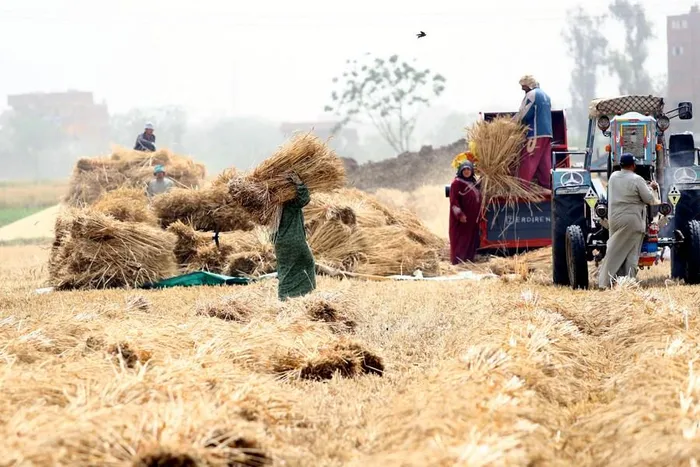
South Africa’s latest interest rate hike is expected to increase pressure on farmers already facing rising fuel costs, input inflation and climate uncertainty.
Image: XINHUA
South Africa’s agriculture sector is facing renewed pressure following the South African Reserve Bank’s decision to raise the repo rate by 25 basis points to 7%, a move expected to increase borrowing costs for farmers already grappling with rising input prices and global uncertainty.
The increase, which also pushed the prime lending rate higher, comes after consumer inflation rose to 4% year on year in April, driven largely by escalating fuel costs linked to conflict in the Middle East and ongoing disruptions in global energy markets.
According to Brendan Jacobs, Head of Agribusiness at Standard Bank Business and Commercial Banking South Africa, the timing of the latest rate hike presents significant challenges for the farming sector.

According to Brendan Jacobs, Head of Agribusiness at Standard Bank Business and Commercial Banking South Africa
Image: Supplied.
Jacobs said the Reserve Bank’s decision reflected a proactive approach to managing inflationary risks in an increasingly uncertain economic environment.
“With fuel costs driven higher by Middle East conflict feeding into broader price pressures, the timing is particularly challenging for agriculture,” he said.
The rate hike marks the first increase since May 2023 and arrives at a time when farmers are already dealing with rising production costs, commodity price volatility and concerns around a possible El Niño weather event forecast for 2026.
Agriculture remains highly sensitive to interest rate movements because of the sector’s reliance on financing for equipment, infrastructure, production inputs and operational expansion.
Higher borrowing costs are expected to place additional strain on producers across the value chain, particularly smaller and medium sized farming operations.
The latest increase also raises concerns around food inflation, as higher production and transport costs may eventually filter through to consumers.
Despite the mounting pressure, Jacobs said the sector continues to demonstrate resilience.
“Despite these headwinds, the sector’s resilience and coordinated efforts across the value chain are expected to sustain performance,” he said.
The agriculture sector has remained one of the country’s more resilient industries in recent years despite logistical bottlenecks, power disruptions and adverse weather conditions.
However, economists and industry leaders continue to warn that prolonged inflationary pressure, higher fuel prices and climate risks could test the sustainability of food production and affordability in the months ahead.
The Reserve Bank has indicated that inflation risks remain tilted to the upside, with global geopolitical instability and supply chain disruptions continuing to shape the outlook for interest rates and broader economic growth.
Follow Business Report on Facebook, X and on LinkedIn for the latest Business and tech news.